Copper price plunges in New York after hitting new high in London
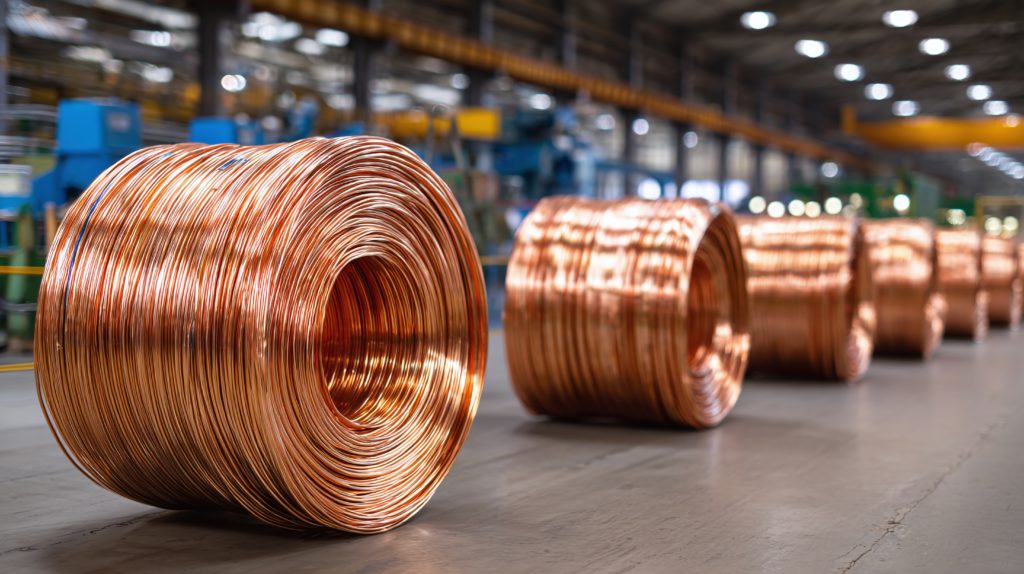

Copper prices surged toward $13,000 a tonne on Monday in London, capping a volatile year marked by mine outages and trade disruptions that have put the metal on track for its biggest annual gain since 2009.
Prices jumped as much as 6.6% in early trading, the largest intraday rise since 2022, before paring gains to trade about 1.6% higher by mid-afternoon in London. New York futures plunged by as much as 6%, erasing Friday’s advance while the London Metal Exchange was closed.
CME copper for delivery in March was last trading at $5.56 a pound or $12,260 a tonne, down from a peak of $5.92 a pound in early trading on Monday. The bellwether metal boasts a 35% rise this year, bouncing back from a precipitous drop in July as the copper squeeze on US markets abated.
Speculation that US President Donald Trump could impose tariffs on copper has been a key driver, prompting a surge in US imports and forcing manufacturers elsewhere into fierce competition for supply. That front-loading of shipments has helped sustain the rally even as demand softens in China, which accounts for roughly half of global consumption. Traders continue to treat copper as a barometer of industrial health, betting tariff risks will keep US-bound flows elevated.
Disruptions at mines across the Americas, Africa and Asia have tightened supply just as governments ramp up spending.
While most copper price predictions factor in supply disruptions of as much as 6%, 2025 was in many ways an exceptional year with high profile mines and top producers undershooting output targets.
A deadly accident at the world’s second-largest copper mine – Grasberg in Indonesia – saw owner Freeport McMoRan declare force majeure on deliveries and slash its 2026 output guidance. Freeport updated on progress at Grasberg in November saying full production is expected to be restored in 2027.
In May, an underground flood in the Democratic Republic of Congo at another high profile copper complex – Ivanhoe’s Kamoa-Kakula mine – and a fatal rock blast at Codelco’s El Teniente mine in July all crimped global production. Before the incident Kamoa-Kakula was set to become the world’s third largest copper operation.
Building new supply continues to be difficult as projects face slow permitting and rising costs. “Nearly everything the global economy wants to invest in is copper-intensive, including the energy transition and AI,” Benchmark Minerals copper analyst Albert Mackenzie told MINING.COM earlier this month.
Long-term game
Longer term, analysts see mounting strain. BloombergNEF’s Transition Metals Outlook 2025 forecasts copper demand linked to the energy transition could triple by 2045, pushing the market into deficit as early as 2026.
Disruptions this year in Chile, Indonesia and Peru, combined with a thin project pipeline, could drive shortages to as much as 19 million tonnes by 2050 without major investment in new mines and recycling.
Kwasi Ampofo, head of metals and mining at BloombergNEF, said the predicted copper market imbalance reflects rapidly rising demand colliding with slow project delivery.
{{ commodity.name }}
{{ post.title }}
{{ post.date }}
Comments