Aclara jumps on US heavy REE plant plan
Aclara Resources (TSX: ARA) plans to invest $277 million to build a heavy rare earth separation facility in Louisiana, marking what it calls a milestone for US critical minerals independence.
The plant is to process feed from Aclara’s ionic-clay projects in Brazil and Chile and is scheduled for completion in 2027, subject to financing and permitting, the company said on Friday. Louisiana is supporting the project with $46.4 million in tax incentives and grants. Currently, nearly all heavy rare earths are refined in China.
The facility is slated for a 33-hectare (82-acre) site at the Port of Vinton near Lake Charles, offering access to the Gulf Intracoastal Waterway and nearby chlor-alkali facilities used in Aclara’s refining process. The site’s infrastructure, chemical industry base and access to logistics were key factors in its selection, the company said in a release.
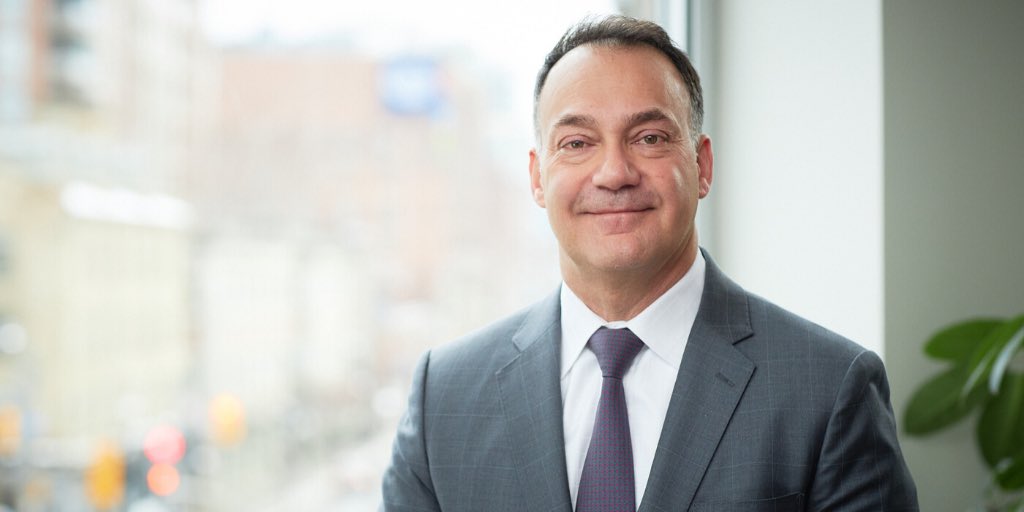
“Our project is unique in the Western world,” Aclara CEO Ramon Barua said. “With direct access to our ionic clay deposits, this will be the only fully integrated heavy rare earth separation operation currently capable of producing material volumes of heavy rare earths at scale.”
Aclara shares rose 14% on Friday morning in Toronto to C$3.15 apiece, valuing the company at C$686 million ($489 million).
Virgina Tech
Aclara, which is 57% owned by Hochschild Mining (LSE: HOC), says it plans to supply more than three-quarters of US dysprosium (Dy) and terbium (Tb) demand by 2028. That amounts annually to 200 tonnes dysprosium, 30 tonnes terbium and 1,400 tonnes neodymium praseodymium (NdPr) of separated high-purity oxides.
The goal represents about 14% of China’s official DyTb production, positioning the Louisiana plant as the anchor of a Western supply chain for magnets and electric motors used in electric vehicles, wind turbines, drones and defence systems.
The company plans to use technology co-developed with major public research university Virginia Tech, whose pilot plant is expected to be operational in early 2026. Engineering partner Hatch is coordinating the design with Aclara’s Carina project in the central Brazilian state of Goiás, where a pre-feasibility study is expected in November and a full feasibility study in the second quarter of 2026.
Ucore plant
Aclara joins Ucore Rare Metals (TSXV: UCU) in Louisiana, where the rare earths technology company is building its own processing plant in Alexandria. Ucore also operates a rare earths demonstration facility in Kingston, Ontario.
Carina hosts 236.3 million indicated tonnes grading 293 parts per million (ppm) NdPr, 43 ppm Dy and 6.8 ppm Tb for 371,492 tonnes of total rare earth oxides (TREO), the company reported this month. It also has 48 million inferred tonnes grading 236 ppm NdPr, 41 ppm dysprosium and 6.4 ppm terbium for 61,675 tonnes TREO.
The project could generate as much as 191 tonnes of Dy and Tb annually, according to a January 2024 preliminary economic assessment. The study estimated a mine life of 22 years and a net present value of $1.5 billion, using an 8% discount rate, with an internal rate of return of 27%. In September, Aclara received $5 million in US government support for development work at Carina under a bilateral critical minerals cooperation framework.
Penco project
In Chile, Aclara is advancing the smaller Penco project on a similar timeline. It hosts 27.5 million measured and indicated tonnes grading 2,292 ppm TREO for 62,900 tonnes of contained TREO. Penco received environmental approval last year after revisions to improve its social and water management standards.
The Louisiana plant is being designed for scalability, allowing it to process material from other ionic-clay deposits or compatible feedstocks. Aclara intends to expand production as its South American resource base grows. Earlier this year, the company commissioned a semi-industrial pilot plant in Brazil to test metallurgical recovery and refine its proprietary separation process.
The move into Louisiana builds on a wave of North American investment in rare earths separation, processing and magnet manufacturing, including stakes by Apple and the federal government in MP Materials (NYSE: MP). The US Department of Defense has supported several magnet and processing projects under its Title III program to reduce reliance on Chinese supply chains.
Founded in 2021 following its spinout from Hochschild Mining, Aclara focuses on extracting rare earths from ionic clays using a patented water-based process that avoids traditional acid leaching. It says the method reduces waste and eliminates radioactive by-products, addressing one of the key environmental hurdles facing the sector.
{{ commodity.name }}
{{ post.title }}
{{ post.date }}
Comments