How long would critical minerals last in a supply shock?
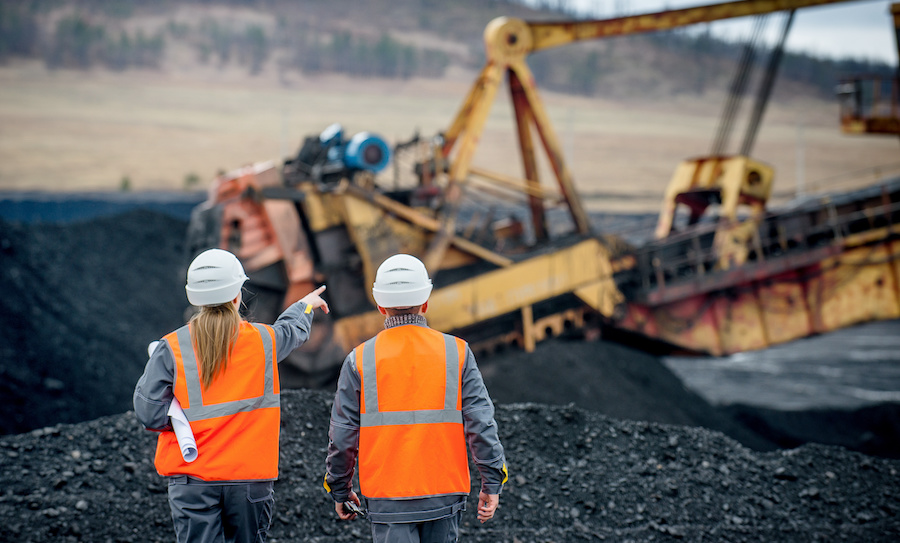
Critical mineral stockpiles would keep most economies running for only weeks if global supply were suddenly cut.
That vulnerability matters because critical minerals sit at the core of the modern economy, from lithium in electric vehicles to rare earths in wind turbines and defence systems, while production and processing remain heavily concentrated in a small group of countries, leaving supply chains exposed to geopolitical shocks, according to the International Energy Agency.
Governments have responded by building strategic stockpiles meant to cushion industries against trade restrictions, conflict, or technical failures, but those reserves remain thin in most jurisdictions.
A global review of disclosed stockpiles shows sharp differences in preparedness, with only a handful of countries holding reserves capable of sustaining priority demand for more than a few months under a major disruption. Where governments withhold data for strategic reasons, coverage remains undisclosed rather than estimated.
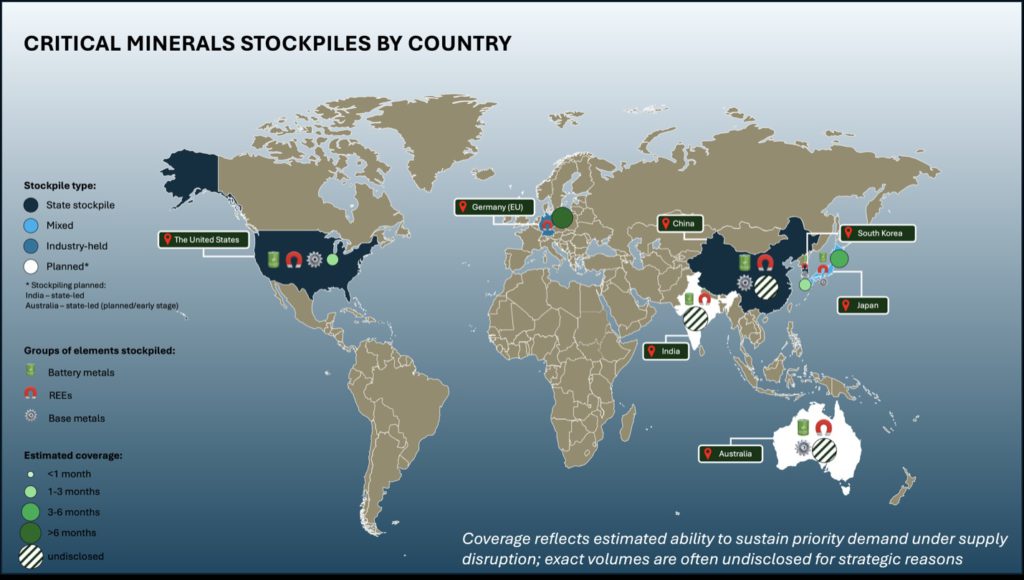
China stands apart. It dominates both mining and processing across many critical minerals and holds the world’s largest known state reserves. Industry estimates suggest Beijing’s stockpiles of rare earths and battery metals could sustain domestic demand for months, giving it significant leverage over global markets. Recent export controls on gallium, germanium and graphite highlighted how quickly that leverage can be applied.
Japan and South Korea are the most prepared among major importers. Japan built a structured stockpiling system after a rare-earth supply shock in 2010 and now maintains reserves covering several months of demand for key minerals such as cobalt and nickel. South Korea has expanded its reserves to about two months of demand, with a focus on rapid release during emergencies, reflecting the importance of speed as well as volume.
The US and Europe are more exposed than often assumed. US strategic mineral reserves are largely defence-oriented and would likely last only weeks in a broad supply disruption. While Washington has begun rebuilding stockpiles of rare earths, cobalt and antimony, coverage for the wider economy remains limited. Europe is only starting to debate coordinated stockpiling under the Critical Raw Materials Act, leaving industry vulnerable in the near term despite the region’s industrial scale.
Australia is pursuing a different model. As a major producer, it is developing a strategic reserve based on domestically mined minerals, initially focusing on rare earths, antimony and gallium, with the aim of strengthening national resilience while supporting allied supply chains.
India, by contrast, remains at an early stage, with a new critical minerals strategy that recognizes the need for stockpiles but has yet to translate into substantial reserves.
The uncomfortable reality is that if global production stopped tomorrow, most economies would measure their remaining runway in weeks, not years. Governments would prioritise defence, energy systems and essential manufacturing, while other sectors would face shortages almost immediately.
Counting tonnes in warehouses, however, tells only part of the story. Stockpile effectiveness depends on how reserves align with real-world demand, trade flows, substitution limits and price dynamics. A reserve that looks ample on paper can be depleted quickly once sectoral priorities are applied, while smaller, targeted stockpiles can meaningfully reduce exposure when combined with diversified supply and flexible markets.
For miners and investors, the message is clear. Critical minerals are no longer just industrial inputs. They are strategic assets whose value is increasingly shaped by resilience and geopolitics as much as by cost curves and demand growth.
* Alina Karpunina is project manager at GEM Mining Consulting, a Chile-based industrial engineering firm providing strategy, analytics, evaluation, and optimization services to the mining industry.
The views and opinions expressed in this column are those of the author and do not necessarily reflect the official position of MINING.COM or The Northern Miner Group.
{{ commodity.name }}
{{ post.title }}
{{ post.date }}

Comments
Donald Lee
Beautiful