Mark Bristow’s shocking exit shakes up Barrick leadership
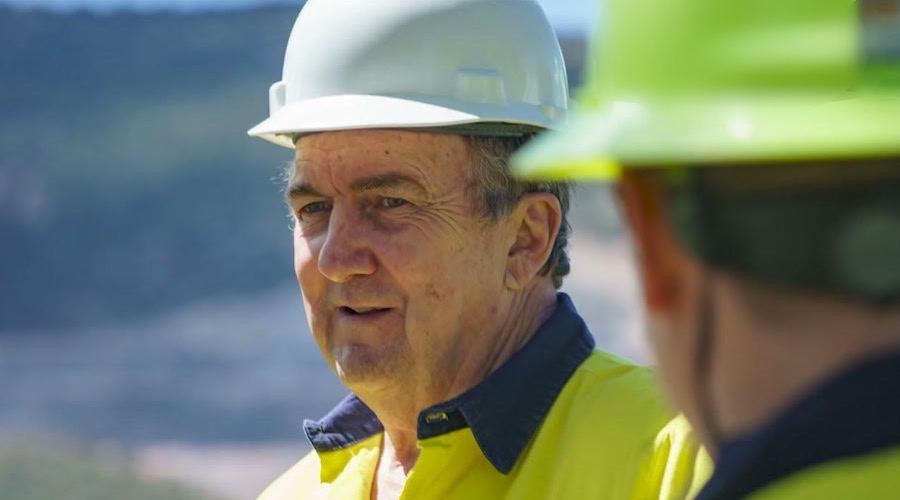
Barrick Mining (TSX: ABX) (NYSE: B) shocked markets Monday with the abrupt resignation of president and CEO Mark Bristow, who departs after nearly seven years at the helm without explanation.
Bristow, who steered Barrick since its 2019 merger with Randgold, will be replaced on an interim basis by Mark Hill, a veteran executive overseeing the miner’s Latin American and Asia Pacific regions. Hill, with the company for two decades, takes charge immediately as the board launches a global search for a permanent successor with the help of an external firm.
The leadership shake-up drew surprise on Bay Street. Alexander Hacking, an analyst at Citigroup Inc. who covers Barrick, noted that Bristow had previously said he planned to remain until Reko Diq, the company’s massive copper-gold project in Pakistan, began production in 2028.
“One question is whether this will lead to bigger changes at Barrick,” Hacking wrote in a note. “A new CEO could bring a new strategy in Mali, at Reko Diq or for the portfolio. Barrick’s particular mix of assets … is arguably holding back its valuation.”
Analysts at BMO Capital Markets noted that media reports have historically spoken about succession planning for Bristow. “But this is clearly an abrupt transition,” Matthew Murphy wrote on Monday.
TD Securities analyst Steven Green called the news “unexpected”, adding that Bristow’s exit will be viewed by investors with mixed emotions.
Bristow’s tenure included the integration of Randgold, $6.7 billion in shareholder returns, a $4 billion cut in net debt, and a series of strong quarterly results. But his record was overshadowed by a long dragged out dispute with Mali over the Loulo-Gounkoto gold complex, once Barrick’s largest African mine.
Thorn in Bristow’s side
The clash traces back to Mali’s 2023 mining code, which increased government royalties and equity stakes in joint ventures. While competitors such as Allied Gold and B2Gold reached agreements with the ruling junta, Barrick resisted.
Tensions escalated last year when the government demanded a greater share of profits. Authorities responded by jailing four Barrick executives, issuing an arrest warrant for Bristow, blocking exports, and seizing bullion.
Barrick responded by seeking international arbitration late last year, and in January 2025 shut down the mine entirely.

The standoff took a turn for the worse in June, when Malian authorities placed Loulo-Gounkoto under state control. Barrick booked a $1 billion impairment charge in August, cutting the carrying value of its 80% stake in the mine, which once generated 15% of the company’s gold output.
The crisis deepened further when Hilaire Diarra, Barrick’s former Tongon mine manager and key negotiator with Malian authorities, switched sides. In late August, Diarra was appointed as a special adviser to Mali’s president Assimi Goïta.
Earlier this month, Malian prosecutors appealed a court order to release the jailed executives, prolonging legal uncertainty around the Canadian miner’s operations in the country.
Matthew Hasson, a partner at Hannam & Partners, wrote on Monday that the “failure” of Barrick under Bristow to come to a “resolution with the Malian government is weighing on the company”.
Hasson noted the new management should “come to some sort of commercial agreement” and sell the Malian assets to another miner since Barrick was in effect “persona non grata” there.
Underperformance
Barrick was once the largest gold miner by market capitalization, but has since been surpassed by US miner Newmont Corp. (NYSE: NEM) and, more recently, Toronto-based Agnico Eagle Mines (TSX, NYSE: AEM).
BMO’s Murphy said that Bristow’s departure was a decision of the board that may be related to stock underperformance in relation to peers in recent years. “We also believe that Barrick’s business is in decent shape at this point to deliver better Q3 and Q4 results,” he said.
The analyst noted the leadership change increases near-term uncertainty over the company’s strategic direction. The market may also speculate about value-creation opportunities to offset any potential decline in multiples, Murphy said.
Jefferies Canada analysts said they see a potential shift in the company’s strategy. “Given the market’s recent positive reception to Barrick’s growing Fourmile deposit in Nevada, we see focus turning to that region. We would not be surprised if the company reduces exposure to geopolitically-sensitive regions,” they wrote.
The news comes on the same day that Newmont, the world’s largest gold miner, named chief operating officer Natascha Viljoen as its new CEO. She’ll replace Tom Palmer on January 1, 2026.
Both announcements come as gold prices are surging, consistently breaking records. As of Monday, gold has reached an all-time high of $3,865 per ounce, marking a 99% price increase over the past five years.
New York-listed shares of Barrick were slightly down at $34.48 mid-morning on Monday. In Toronto they were mostly flat at C$48.43 a piece.

{{ commodity.name }}
{{ post.title }}
{{ post.date }}



Comments