Massive critical minerals deposit found in Utah
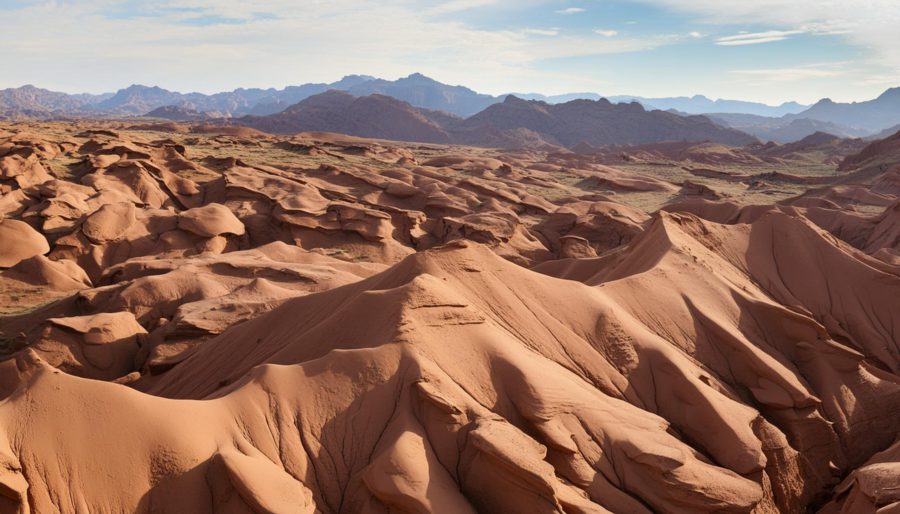

A Utah-based mining company says it has discovered a massive deposit of rare earths and other critical minerals, calling it potentially “one of North America’s most significant” finds to date.
Ionic Mineral Technologies — also known as Ionic MT — revealed last week that assays from its fully permitted Silicon Ridge project in Utah confirmed it as a halloysite-hosted ion-adsorption clay (IAC) system, which, compared to the conventional “hard-rock” geological system, is easier to extract minerals from.
According to the company, IAC represents the same geological formation that supplies approximately 35-40% of China’s total rare earth production and over 70% of the world’s heavy rare earth elements.
Ionic MT characterized the deposit as an “IAC-Plus” profile, referring to the magmatically enriched grades of not only rare earths but also a suite of critical minerals including gallium, germanium, rubidium, cesium, scandium, lithium, vanadium, tungsten and niobium.
Ready for production
Andre Zeitoun, founder and CEO of Ionic MT, calls the discovery a “watershed moment” for America’s resource independence. “For the first time, we have a domestic, shovel-ready source for a full spectrum of critical minerals, all extractable with a faster, cleaner process than traditional hard rock mining and extraction,” he stated in a press release dated Dec. 12.
In an interview with the Wall Street Journal last week, he said the Silicon Ridge project “may be the most significant critical mineral reserve in the US.” The project hosts as many as 16 different elements used in key applications, ranging from AI semiconductor chips and permanent magnets to defense surveillance systems and energy technologies.
Zeitoun noted the project already has mining permits in place, supplemented by an existing 74,000-square-foot processing facility in Provo, where the company is headquartered. This would enable “a rapid timeline to commercial production,” it said.
The project and processing facility are part of Ionic MT’s vertically integrated business model centered on converting a single halloysite clay feedstock from its Silicon Ridge and Halloysite Hills projects into three high-value, co-product streams: critical minerals, high-purity alumina and nano-silicon.
This co-product approach captures maximum value, minimizes waste, and creates a cost-competitive, domestic supply chain for materials vital to the US economy and military, the company said.
PEA underway
The discovery at Silicon Ridge follows an extensive exploration program by ISO-certified ALS Chemex laboratories, which analyzed assays from 106 boreholes (over 10,000 meters) and 35 trenches across a 650-acre area of the project.
Initial results showed a combined rare earth and critical metal grade of approximately 2,700 parts per million (ppm) or 0.27%. This grade, Ionic MT claims, “compares favorably” to Chinese ion-adsorption clay deposits, which typically range from 500 to 2,000 ppm. The critical minerals grade was confirmed across only 11% of the total resource area and is limited to 100-foot depth, indicating significant potential for expansion, it said.
“This is a district, not a mine,” Zeitoun told the WSJ. “A lot of things that bog down mining is access to roads and water, but that’s already established here.”
Using the ALS exploration results, the company has initiated a preliminary economic assessment (PEA) on the project, with completion targeted for the first half of 2026.
The Utah-based company noted it has engaged Citigroup as its market adviser.

{{ commodity.name }}
{{ post.title }}
{{ post.date }}


Comments
David Gignac
Interesting project, please keep me in the loop