Op-Ed: From Allende to Maduro – the price of resources and defiance
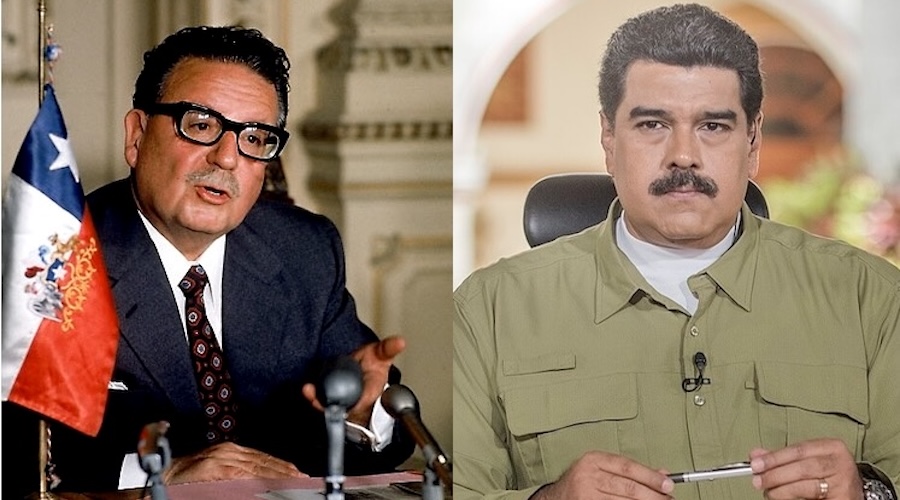
From Chile to Venezuela, battles over who controls strategic resources have repeatedly shaped regime change, foreign intervention and political fallout across the Americas.
When Chilean socialist President Salvador Allende nationalized the copper industry in 1971, he moved to bring foreign-owned copper mines —primarily controlled by US corporations such as Anaconda and Kennecott— under state control through the creation of Codelco (Corporación Nacional del Cobre de Chile/ National Copper Corporation of Chile).
With this, Allende directly challenged corporate and US strategic interests tied to the country’s most valuable export. Washington responded with economic pressure, diplomatic isolation and covert destabilization by the CIA. Two years later, a US-backed military coup overthrew Allende, who died during the assault on the presidential palace, cementing his legacy as a cautionary example of the risks faced by leaders who seek to reclaim control over resource wealth.
Venezuela followed a similar trajectory, with resource nationalism reshaping its economy and foreign relations and culminating most recently in the capture and extradition of President Nicolás Maduro to New York to face criminal charges, another instance of a leader removed after defying foreign control over critical assets.
The roots of that confrontation stretch back decades. In the mid-2000s, then-president Hugo Chávez accelerated the nationalization of the oil sector, imposing tougher contract terms on foreign producers. Exxon Mobil and other major companies left the country. Chávez framed the move as a defence of economic sovereignty, but it carried lasting geopolitical consequences.
After his death, Maduro’s government struggled to offset collapsing oil output. In 2019, Maduro and Delcy Rodríguez, then vice president and now acting president, announced a five-year mining plan to expand mineral extraction as an alternative source of revenue.
Venezuela also moved last year to revive its coal industry, aiming to export more than 10 million tonnes in 2025, though it remains unclear whether that target was reached. The US Geological Survey estimated coal production at about 100,000 metric tons in 2019 from reserves totalling 731 million metric tons. Output of other minerals, including nickel, bauxite, iron ore and gold, has declined sharply over the past decade, mirroring the broader deterioration of the oil sector.
Absolute gain
On Saturday, the US launched “Operation Absolute Resolve”, a large-scale strike against Venezuela that resulted in the capture of Maduro and his wife, Cilia Flores, with US authorities accusing them of leading a narco-terrorism conspiracy.
The operation marked the largest US military intervention in Latin America since the 1989 invasion of Panama and its most direct bid for regime change since the 2003 invasion of Iraq.
The Trump administration said Maduro would face corruption charges linked to major drug flows into the US. The strike followed months of escalating pressure, including the interception of oil tankers off Venezuela’s coast and actions against vessels Washington said were involved in narcotics trafficking. Trump openly linked the intervention to Venezuela’s energy wealth, saying the US would oversee a transition and suggesting US oil companies could return within about 18 months to rebuild production after years of collapse.
Few international observers expressed sympathy for Maduro or his inner circle. His government has been widely described as undemocratic and repressive, and as a source of regional instability. A recent United Nations report documented more than a decade of killings, torture, sexual violence and arbitrary detention by state-linked forces against political opponents. Maduro is also accused of stealing Venezuela’s 2024 presidential election and of fuelling economic and political disruption across the region by presiding over the exodus of nearly eight million migrants.
Broken system
Venezuela’s economic breakdown had already accelerated after oil prices fell below $30 a barrel in 2016, pushing the country into a deep political and financial crisis, according to the Council on Foreign Relations.
Chronic power failures further crippled oil and mining operations, eroding the state’s ability to monetize its resources.
While oil dominates headlines, analysts say Venezuela’s longer-term relevance to the US may lie in minerals critical to modern industry and defence. Chilean mining consultancy GEM says the country’s geology, particularly the Guiana Shield, is highly prospective for iron ore, bauxite, gold, nickel and other minerals aligned with US critical-mineral priorities.
Production data show how far the sector has fallen. Official gold output dropped from 5.95 tonnes in 1999 to about 30 kg in 2023, a decline of roughly 19% a year. Iron ore production fell from 14.1 million tonnes to about 2.5 million tonnes, while bauxite slid from more than 4 million tonnes to roughly 250,000 tonnes. According to GEM, the losses reflect failing power supply, infrastructure decay, security risks and regulatory instability, not depleted resources.
Juan Ignacio Guzmán, GEM’s CEO, said the opportunity lies in rehabilitation rather than new mine development. Restarting idle mines and processing plants could take one to three years if governance and market access are restored, while formalizing informal gold and coltan production would require a longer horizon. Any reintegration into global supply chains, he said, depends on sanctions clarity, restored rule of law and credible environmental and social safeguards.
The comparison with Chile remains instructive. Chile’s copper nationalization ultimately stabilized a core industry under stronger institutions. Venezuela’s experience, capped by direct US intervention, shows how resource wealth can instead become a lever for external power when infrastructure and governance collapse.
Across decades and ideologies, the pattern has been consistent. In the Americas, asserting control over strategic resources has carried heavy consequences, while the ability to seize them has rested with those willing and able to intervene.
{{ commodity.name }}
{{ post.title }}
{{ post.date }}

Comments