Opinion: Awakening the Argentine giant
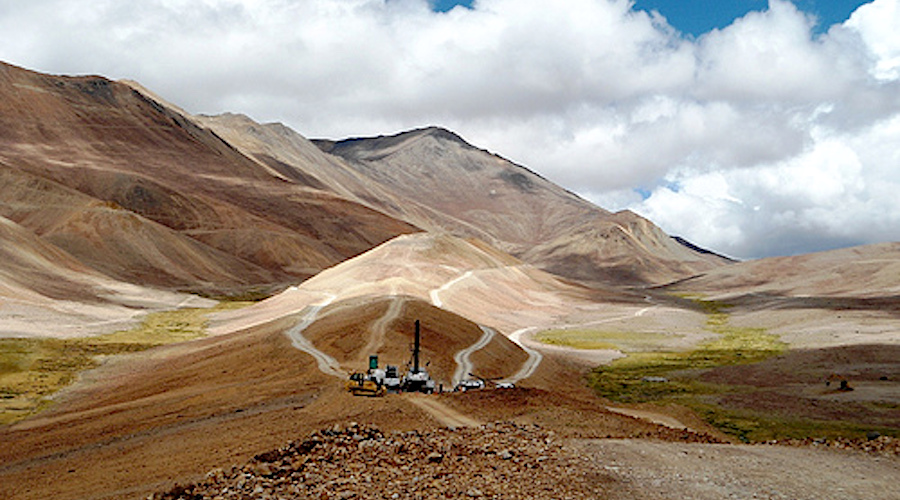
What place holds the highest probability for a new world-class discovery?
As an Australia-based geologist and investor, I tend to look in my own backyard first, which is the home bias effect. But the thing is, thanks to decades of a supportive mining environment, well-trained staff, and advanced exploration methods, the prospect of discovering another giant deposit in Australia is fading.
Don’t get me wrong, there could still be potential in remote outback locations, like the Tanami.
But compared to places like West Africa, where high-grade gold can still be found close to surface, Australia’s giant discovery potential is diminishing.
Then there’s Canada. Like Australia, Canada has been heavily explored thanks to its supportive governance and skilled labour force. It has also lost its discovery potential.
But like Australia, there are still some remote frontiers – especially in the far north – that hold discovery potential.
But if you want to stack the odds firmly in your favour and pick a place with the highest potential for a major discovery, look no further than Argentina.
Land of the giants
Argentina sits as one of the best places for explorers and their shareholders. And there are a few reasons why that’s the case.
To understand the potential here, you must look at its neighbour, Chile and what it has achieved in its mining industry over the last several decades.
Chile is the world’s largest copper-producing nation. That’s enabled it to remain one of the wealthiest nations in South America. Its economy feeds off its vast copper exports, thanks to discoveries made 30, sometimes 50 years ago. It holds mega-copper projects that have left a legacy of long-term production.
But across the border, Argentina’s copper output has gone from modest to virtually nil. So, is there less copper in Argentina or is something else happening here?
The critical thing to realize here is that the same geological system hosting giant porphyry copper-gold deposits in Chile crosses into Argentina. South America’s ‘porphyry copper belt’ straddles the border between Argentina and Chile.
Yet only one country has realized this potential over the last several decades.
Here’s the opportunity
A lack of copper mining in Argentina has nothing to do with geology and all to do with politics. Mega-mining projects take up to 20 years to develop and remain in production for decades.
These mines leave a legacy for the mining companies that own them and for the host country. It’s why political stability is essential for developing giant copper mines.
And that’s the key element that’s been missing in Argentina. Thanks to decades of hostile business conditions and economic chaos, the miners haven’t ventured into Argentina. And that’s why the country holds a vast untapped wilderness of geological potential.
Geology ignores borders
The key point is that the same geological setting that hosts giant copper porphyry deposits in Chile also exists in Argentina. And that’s why for geologists, Argentina represents Chile, perhaps 50 or 60 years ago, when discoveries were far larger and higher grade.
So, why should investors start taking notice? In case you’re not familiar, Argentina has been experiencing a tidal wave of reform since its new president, Javier Milei, swept into power in 2023.
Milei implemented a series of austerity measures, including slashing energy and transportation subsidies, laying off tens of thousands of government workers, freezing public infrastructure projects and imposing wage and pension freezes below inflation.
While it has been controversial, inflation has plummeted since Milei took office. Bonds have also rallied while Argentina’s country-risk index, a measure of the risk of default, is at its lowest point in five years.
Milei also secured a political victory in late October, extending his ability to push reforms and encourage investment. And clearly, he’s moving the dial on the country’s mining investment.
Late last year, the world’s biggest miner, BHP, announced a multi-billion-dollar takeover deal for Filo Mining, a stock I recommended to my readership group back in 2023. Meanwhile, Glencore is weighing two significant copper developments in the country that would require about $13.5 billion in investments. Barrick, Lundin Mining, and Rio Tinto are other big names starting to build a presence in the country.
For geologists, Argentina is the Chile of 50 years ago.
Open for business
So, what happens when modern exploration techniques are used on ground that’s barely been explored. Major discoveries happen.
And that’s what’s happening in Argentina.
James Cooper is a geologist based in Australia who runs the commodities investment service Diggers and Drillers. You can also follow him on X @JCooperGeo.
{{ commodity.name }}
{{ post.title }}
{{ post.date }}

5 Comments
Me. Myself
Good article. I’ve been interested in economic developments under Pres. Milieu, and now you’ve got me aware of the country’s mining potential.
But what I really want to say is that ypur mention of Filo Mining should, perhaps, have provided some company background to help the reader (“Canadian mining Co. operating in Argentina, on its border with Chile…”. I googled it).
Keep up the good work!
Blessings.
Curran Kemp
This hopeful will be a brighter future for mining in Argentina. The article also is correct that geologist ignore borders, given when mentioning the deposits between the two countries one can’t help to think about the number of deposits in the Antarctic Peninsula., let alone the Russian oil find.
Steve N.
I worked in northern Argentina based out of Chile in 1995 for Canadian major, first with an huge data compilation of recce geochem data and available geology, then a series of confirmation field exams. We identified at least three geochemically anomalous base metal regional target areas. On seeking funding for further work including opening an exploration office in Salta, senior management turned it down mainly on the basis of uncwrtanties of heir federal government and currency instability. I agree fully with the article and have always seen the country as huge missed opportunity 30 years ago. Politics is one thing but the rocks don’t change.
Paul Tymoschuk
I’m Argentinian and live in Argentina. The article is correct but that is a second Revolution coming to this country. The first one is happening right now and it’s called “Vaca Muerta”.
Roberto Cantalapiedra
Argentina has already lived through three “market‑oriented reform” cycles that ended in crisis and rising poverty: the liberalization under the 1970s dictatorship, the 1990s Washington Consensus experiment, and the 2015–2019 turn to orthodox shock therapy. Presenting Milei’s program as something novel ignores this repeated pattern of social and economic damage, and reads like history written from afar rather than from lived experience.
The comparison with Chile is equally shallow. Chile’s mining‑driven “stability” was built under a long military dictatorship with systematic repression, not under the kind of institutional and social conditions investors like to invoke when they talk about “rule of law.” Treating Argentina as “Chile 50 years ago” without acknowledging the authoritarian foundations of that model suggests the author knows little about Chile and even less about Argentina’s own reform history. The geology may be attractive, but the political and social story in this piece is mostly wishful thinking.