Japan adds to steel scrutiny with probes on China, Taiwan, Korea
Investigation adds to signs of trade stress in a sector suffering from global overcapacity.

Grand Baie, MAURITIUS, April 09, 2026 (GLOBE NEWSWIRE) -- Alphamin Resources Corp. (AFM:TSXV, APH:JSE AltX)( “Alphamin” or the “Company”), is pleased to provide the following update for the quarter ended 31 March 2026:
Operational and Financial Summary for the Quarter ended March 20261
| Description | Units | Quarter ended March 2026 | Quarter ended December 2025 | Change |
| Ore Processed | Tonnes | 201,519 | 202,360 | 0% |
| Tin Grade Processed | % Sn | 3.4 | 3.4 | 0% |
| Overall Plant Recovery | % | 74 | 73 | 1% |
| Contained Tin Produced | Tonnes | 5,026 | 5,008 | 0% |
| Contained Tin Sold | Tonnes | 5,016 | 5,045 | -1% |
| EBITDA2,3 (Q1 2026 guidance) | US$'000 | 157,761 | 108,326 | 46% |
| AISC2, 3 (Q1 2026 guidance) | US$/t sold | 17,968 | 16,815 | 7% |
| Net Cash/Debt3 | US$'000 | 140,000 | 11,961 | 1070% |
| Average Tin Price Achieved | US$/t | 49,278 | 37,995 | 30% |
__________________________________________________________________________________________ 1Information is disclosed on a 100% basis. Alphamin indirectly owns 84.14% of its operating subsidiary to which the information relates.2Q1 2026 EBITDA and AISC represent management’s guidance. 3This is not a standardized financial measure and may not be comparable to similar financial measures of other issuers. See “Use of Non-IFRS Financial Measures” below for the composition and calculation of this financial measure.
Operational and Financial Performance
Contained tin production of 5,026 tonnes for the quarter ended March 2026 was in line with the target guidance of 20,000 tonnes per annum and that of the previous period. Tin sales of 5,016 tonnes were achieved compared to 5,045 in Q4 2025, with improved road conditions and a strong tin price resulting in a net cash increase of US$128m.
EBITDA for Q1 2026 is estimated at a record US$158m (Q4 2025: US$108m). The EBITDA variance compared to the prior quarter is attributable to a 30% increase in the tin price, from a US$37,995 average in Q4 2025, to US$49,278 average in Q1, 2026 (current price circa US$48,000). Guidance for AISC per tonne of tin sold in Q1 2026 is US$17,968, up 7% from the previous quarter of US$16,815 largely due to increased royalties, export duties, marketing commissions and net smelter returns, which are calculated with reference to the higher tin price. Increased fuel prices did not affect Q1 2026 but are expected in Q2, with additional fuel being sourced at premiums in the range of 25% to 35% since early March. The Company has approximately 30 days of diesel at site with a further 75 days consumption in the DRC in transit to site. Direct diesel consumption contributed just over $2,000 per tonne of AISC before price increases.
Alphamin’s unaudited consolidated financial statements and accompanying Management’s Discussion and Analysis for the quarter ended 31 March 2026 are expected to be released on or about April 29, 2026.
Exploration update
Alphamin’s exploration strategy remains focused on three primary pillars:
Drilling Progress
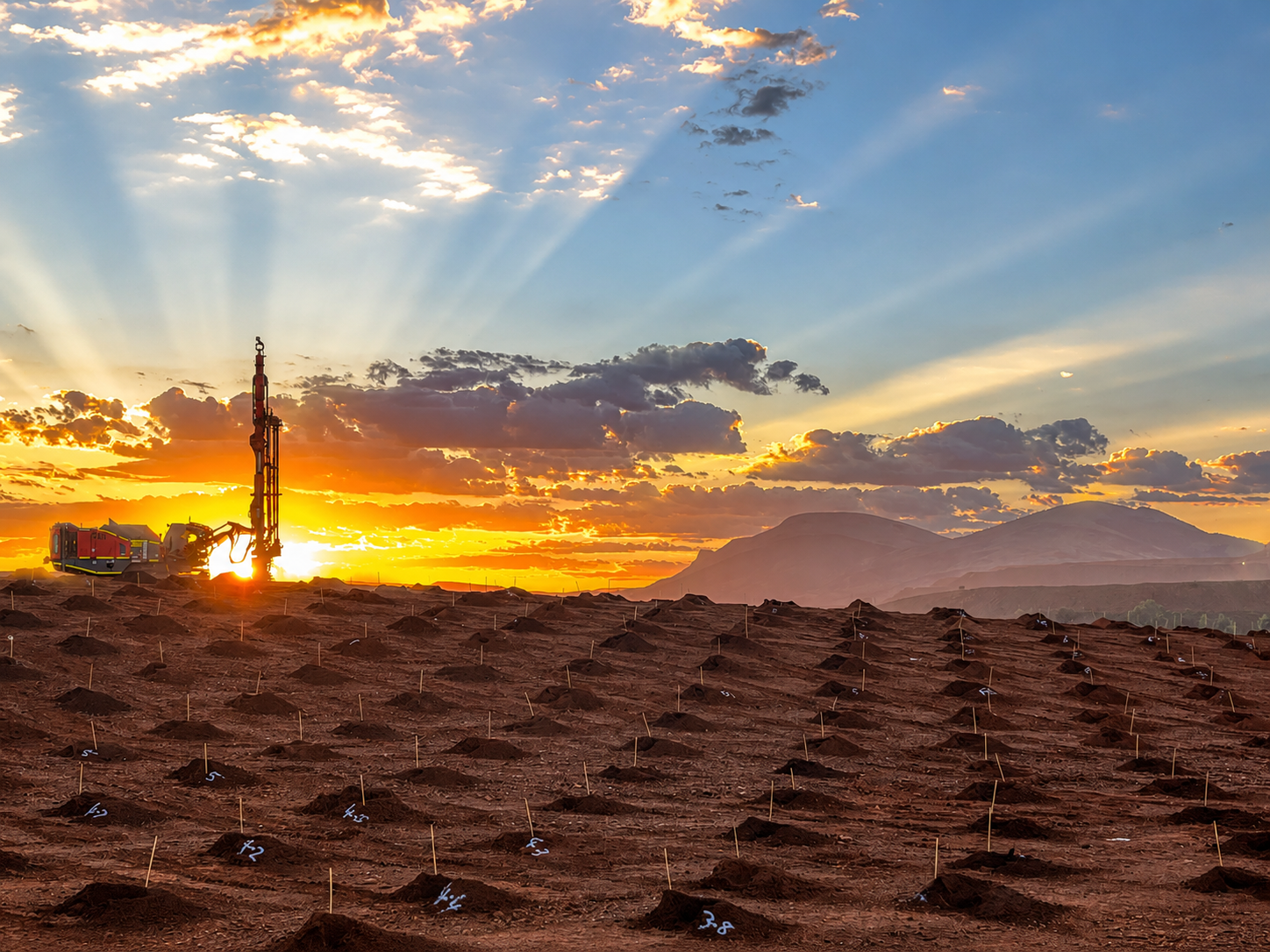
Drilling activity intensified in Q1, 2026, with surface rig counts increasing at both Mpama South and Mpama North.
Drilling Results & Analysis
Since the end of Q3 2025, ten boreholes have been completed. Two of these intercepted visible cassiterite (tin mineralization):
Mpama North
Figure 1: Mpama North section showing completed boreholes from October 2024 to present.Please click to view image
Mpama South
Figure 2: Mpama South long section showing completed boreholes from October 2024 to present.Please click to view image
Table 1: Preliminary Assay Results (In-House XRF)Note: These are indicative values from the Alphamin-Bisie laboratory. Final results from ALS-Johannesburg are pending.
| Location | Hole ID | From (m) | To (m) | Length (m) | Sn % |
| Mpama North | MND056A_D1_T1 | 567.63 | 568.44 | 0.81 | 0.63% |
| Mpama South | BGH196A (Zone 1) | 407.84 | 414.85 | 7.01 | 2.46% |
| Mpama South | BGH196A (Zone 2) | 417.00 | 420.78 | 3.78 | 3.01% |
Forward-Looking Initiatives
Liquidity and dividend update
The Company’s cash position increased to US$183m as at 31 March 2026 (Net Cash3: US$140m) from US$56m at the end of the prior quarter (31 December 2025 Net Cash: US$12m).
The Company intends to make a final FY2025 dividend decision in late April 2026 to align with the timing of holding the annual general meeting of Alphamin Bisie Mining SA (ABM), the Company’s DRC operating subsidiary, to approve ABM’s annual financial statements and to consider the declaration of a dividend for distribution to its shareholders. The ABM annual general meeting has been scheduled for 23 April 2026. Alphamin Resources has scheduled a board meeting for 29 April 2026 to consider a final FY2025 dividend.
Amendments to Omnibus Plan and Correction to Awards
Alphamin has amended its Omnibus Incentive Plan (the “Plan”) to make certain clarifying changes to meet the requirements of the TSX Venture Exchange. The changes relate to clarifying that awards granted to a participant prior to becoming an insider are included in the insider limits contained in the Plan and to clarify that, with respect to SAR Equivalent Shares (“SARES”) awarded under the Plan, dividends are not permitted on such shares other than in settlement of such awards and not earlier than one year from the date of award, and that the SARES count towards Plan limits until settled. The amendments are contained in an Amended and Restated Omnibus Incentive Plan dated March 10, 2026 which has been filed and is available for viewing and download under the Company’s profile on SEDAR+ at www.sedarplus.ca.
On March 11, 2026 the Company announced the award of certain stock options and SARES under the Plan. That press release incorrectly identified the date of the awards as March 11, 2026 instead of the correct date of March 10, 2026, and incorrectly identified the reference price for the SARES awarded as C$1.26 instead of the correct reference price of C$1.27.
Qualified Person
Mr. Clive Brown, Pr. Eng., B.Sc. Engineering (Mining), is a qualified person (QP) as defined in National Instrument 43-101 and has reviewed and approved the scientific and technical information contained in this news release other than in the section “Exploration update” and Appendix 1. He is a Principal Consultant and Director of Bara Consulting Pty Limited, an independent technical consultant to the Company.
Mr. Jeremy Witley, Pr. Sci. Nat., BSc. (Hons) Mining Geology, MSc (Eng), is a qualified person (QP) as defined in National Instrument 43-101 and has reviewed and approved the scientific and technical information contained in the section “Exploration update” and Appendix 1. He is Head of Mineral Resources at the MSA Group (Pty) Ltd and is an independent technical consultant to the Company.
_________________________________________________________________________________________
FOR MORE INFORMATION, PLEASE CONTACT:
Eoin O’Driscoll CEO Alphamin Resources Corp. Tel: +230 269 4166E-mail: eoin.odriscoll@alphaminresources.com
CAUTION REGARDING FORWARD LOOKING STATEMENTS
Information in this news release that is not a statement of historical fact constitutes forward-looking information. Forward-looking statements contained herein include, without limitation, statements relating to EBITDA and AISC guidance for Q1 2026; guidance for contained tin production for the year ending 31 December 2026; the expected timing regarding the next dividend assessment; expected timing for the release of financial results for the quarter ended 31 March 2026, the expectation that higher fuel prices will negatively affect financial results for Q2 2026; and anticipated exploration activities. Forward-looking statements are based on assumptions management believes to be reasonable at the time such statements are made. There can be no assurance that such statements will prove to be accurate, as actual results and future events could differ materially from those anticipated in such statements. Accordingly, readers should not place undue reliance on forward-looking statements. Although Alphamin has attempted to identify important factors that could cause actual results to differ materially from those contained in forward-looking statements, there may be other factors that cause results not to be as anticipated, estimated or intended. Factors that may cause actual results to differ materially from expected results described in forward-looking statements include, but are not limited to: the availability of ore at expected quantities and grades, uninterrupted processing of ore at targeted processing recoveries, uncertainties regarding global supply and demand for tin and market and sales prices together with the impact of reported and unreported global tin stocks on the tin price, uncertainties with respect to social, community, environmental and safety impacts, uninterrupted access to required infrastructure and third party service providers, uncertainties regarding the state of inbound and outbound roads and truck availabilities impacting sales and the availability of spares and consumables, adverse political events and risks of security related incidents or security threats which may impact the ongoing operation or safety of its people, uncertainties regarding the legislative and permitting requirements in the Democratic Republic of the Congo which may result in unexpected fines and penalties or the ability to continue with normal operations, impacts of the global Covid-19 pandemic or other health crises on mining operations and commodity prices as well as those risk factors set out in the Company’s most recent annual Management Discussion and Analysis and other disclosure documents available under the Company’s profile at www.sedarplus.ca. Forward-looking statements contained herein are made as of the date of this news release and Alphamin disclaims any obligation to update any forward-looking statements, whether as a result of new information, future events or results or otherwise, except as required by applicable securities laws.
Neither the TSX Venture Exchange nor its regulation services provider (as that term is defined in the policies of the TSX Venture Exchange) accepts responsibility for the adequacy or accuracy of this news release.
USE OF NON-IFRS FINANCIAL PERFORMANCE MEASURES
This announcement refers to the following non-IFRS financial performance measures:
EBITDA
EBITDA is profit before net finance expense, income taxes and depreciation, depletion, and amortization. EBITDA provides insight into our overall business performance (a combination of cost management and growth) and is the corresponding flow driver towards the objective of achieving industry-leading returns. This measure assists readers in understanding the ongoing cash generating potential of the business including liquidity to fund working capital, servicing debt, and funding capital and exploration expenditures and investment opportunities.
This measure is not recognized under IFRS as it does not have any standardized meaning prescribed by IFRS and is therefore unlikely to be comparable to similar measures presented by other issuers. EBITDA data is intended to provide additional information and should not be considered in isolation or as a substitute for measures of performance prepared in accordance with IFRS.
CASH COSTS
This measures the cash costs to produce and sell a tonne of contained tin. This measure includes mine operating production expenses such as mining, processing, administration, indirect charges (including surface maintenance and camp and head office costs), and smelting, refining and freight, distribution and royalties. Cash costs do not include depreciation, depletion, and amortization, reclamation expenses, capital sustaining, borrowing costs and exploration expenses. On mine costs, exclusive of stock movement, are calculated on a cost per tonne produced basis, off mine costs are calculated on a cost per tonne sold basis.
AISC
This measures the cash costs to produce and sell a tonne of contained tin plus the capital sustaining costs to maintain the mine, processing plant and infrastructure. This measure includes the Cash Cost per tonne and capital sustaining costs together divided by tonnes of contained tin produced. All-In Sustaining Cost per tonne does not include depreciation, depletion, and amortization, reclamation, borrowing costs, foreign exchange gains and losses, exploration expenses and expansion capital expenditures.
Sustaining capital expenditures are defined as those expenditures which do not increase payable mineral production at a mine site and excludes all expenditures at the Company’s projects and certain expenditures at the Company’s operating sites which are deemed expansionary in nature.
Net Cash/Debt
Net cash/(debt) demonstrates how our net cash/(debt) is being managed and is defined as net cash and cash equivalents less total current and non-current portions of debt and lease liabilities.
Appendix 1: SIGNIFICANT INTERCEPTS (0.5% Sn lower threshold) of drillholes from October 2024 to present.
Mpama South Drillholes prefixed “BGH”
Mpama North Underground Drillholes prefixed “MNUD”
Mpama North Surface Drillholes prefixed “MND”
Appendix 2: SAMPLE PREPARATION, ANALYSES AND QUALITY CONTROL AND QUALITY ASSURANCE (QAQC)
After receipt of diamond drillcore from the drillers at the drill rig in marked core trays, core was transported to the Company’s core shed by the site geologist for logging and sampling. After sample mark up, lithological and geotechnical logging and photography, the core was split longitudinally in half using a water-cooled rotating diamond blade core saw. The cut core was replaced into the core tray with the half to be sampled facing upward. Based on previous experience at Bisie with high density variability and at the qualified person’s instruction (Mr J. Witley of MSA Group), specific gravity (SG) was performed exclusively on the half core that was to be sampled. The Archimedes method of weight in air vs weight in water was used on the whole length of the half core that was to be sampled and then replaced in the core trays.
Air dried samples were placed in pre-numbered sample bags together with pre-printed numbered sample tickets, which were cross-checked afterwards to prevent sample swaps. Sample bags were sealed using a plastic cable tie and then placed into poly-weave sacks which were in turn sealed with plastic cable ties. Each poly-weave sack was marked with a number and the sample numbers contained within, ready for delivery to the on-site Alphamin-Bisie laboratory for sample preparation.
At the laboratory, samples were first checked off against the submission list supplied and then weighed and oven dried for 2 hours at 105 degrees Celsius. The dried samples were crushed by jaw crusher to 75% passing 2mm, from which a 250g riffle split was taken. This 250g split was pulverised in ring mills to 90% passing 75μm from which a sample for analysis was taken. Samples were homogenised using a corner-to-corner methodology and two samples were taken from each pulp, one of 10g for on-site laboratory assaying and another 150g sample for export and independent accredited 3rd party laboratory assaying.
For the initial on-site laboratory assay, 10 grams of pulverised sample is mixed with 2 grams of binder before press pellet preparation at 20t/psi for 1 minute. Press pellets are analysed in a desktop Spectro Xepos XRF analyser, twelve at a time, for Sn, Fe, Zn, Cu, Ag, Pb and As along with a standard, duplicate and blank. The analytical method conducted on the pressed pellet has an expected 10% precision and an upper detection limit of 70,000ppm and lower detection limit of 500ppm. Over-limit samples are titrated by wet chemistry with an upper limit validation of 70% Sn. The on-site laboratory assays produces preliminary results which are later confirmed by ALS, and were not used for Mineral Resource estimates, which are based solely on the ALS assays.
The 150g sample is packaged in sealed paper sample envelopes and packed in a box for export in batches of approximately 500 samples and prepared for export authorisation with national authorities. Once authorisation is received, samples are air-couriered to ALS Group in Johannesburg South Africa, a subsidiary of ALS Limited, which is an independent commercial analytical facility. ALS operations are ISO 9001:2015 certificated and the Johannesburg office is ISO 17025 accredited for Chemical Analysis by SANAS (South African National Accreditation System, facility number T087), although the accreditation does not extend to the methods used for tin.
Received samples at ALS Johannesburg are checked off against the list of samples supplied and logged in the system. Quality Control is performed in the way of sieve tests every 50 samples and should a sample fail, the preceding 50 samples are ground in a ring mill pulverizer using a carbon steel ring set to 85 % passing 75μm. Samples are analysed for tin using method code ME-XRF05 conducted on a pressed pellet with 10% precision and an upper limit of 5,000ppm. The over-limit tin samples are analysed as fused disks according to method ME-XRF15c, which makes use of pre-oxidation and decomposition by fusion with 12:22 lithium borate flux containing 20% Sodium Nitrate as an oxidizing agent, with an upper detection limit of 79% Sn.
Method code ME-ICP61 (HF, HNO3, HClO4 and HCl leach with ICP-AES finish) is used for 33 elements including base metals. ME-OG62, a four-acid digestion, is used on ore grade samples for lead, zinc, copper and silver. Both methods are accredited by SANAS.
The program is designed to include a comprehensive analytical quality assurance and control routine comprising the systematic use of Company inserted standards, blanks and field duplicate samples, internal laboratory standards and analysis at an accredited laboratory. The pulps were accompanied by blind QAQC samples inserted into the sample stream by the Alphamin-Bisie geologists. These comprised blank samples, certified reference materials and pulp duplicates each at an insertion rate of approximately 5%.
The QAQC results demonstrate that the assay results are both accurate and precise with an insignificant amount of contamination (in the order of 10pmm Sn on average) and negligible sampling errors. Further verification work is in progress by additional check assays by SGS South Africa (Pty) Ltd.