Why Mine Closure in Australia is a Growth Industry
One of the most vexing problems that mining companies face has nothing to do with mining at all: it’s what happens to the mine after the minerals have been depleted, the mine is no longer economic, and it’s time to shut the operation down.
In North America building closure into every step of a mine’s lifecycle has become an industry standard that is pervasive and well understood throughout the sector. A mining company operating in Canada and the United States, for example, can’t even get a mining permit without submitting a detailed closure plan; most are required to post sizeable bonds to satisfy regulators that they are able to cover the considerable cost of site remediation.
The situation now is considerably improved from decades ago, when governments and mining companies didn’t worry much about mine closure until it actually happened. The most serious environmental concern then and now is acid rock drainage caused by underground workings, open pit mine faces, waste rock piles or tailings ponds, resulting in contamination of the water supply. Abandoned mines are also dangerous. Hazards to the public include unblocked pits, shafts and tunnels, hazardous mine wastes and unstable ground.
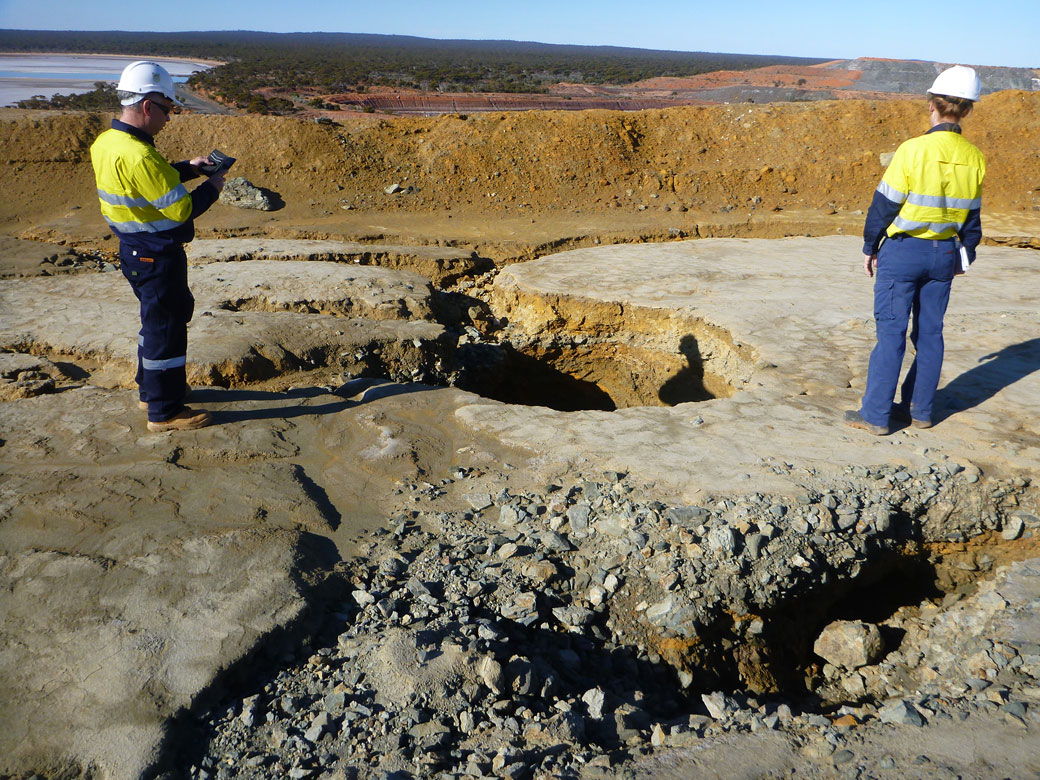
In 2001 the United Nations Environmental Program described abandoned mine sites as “one of the major outstanding international environmental problems related to mining. It is a legacy of centuries old practices and of inadequate, insufficient or non‐existent mine closure. The potential costs of rehabilitation, the lack of clearly assigned (or assumed) responsibility, the absence of criteria and standards of rehabilitation and other factors have delayed action by all parties ‐ industry, governments, and communities”(UNEP & Cochilco 2001).
While mine closure in North America has been increasing regulated and collaborations developed between government and industry – for example Canada’s National Orphan/Abandoned Mines Initiative (NAOMI) and the AML Web Portal in the United States, which gets federal agencies working together on Abandoned Mine Land – in Australia concerns about mine closure are a relatively recent phenomenon.
That’s because in Australia, very few mines have been closed. The reason has to do with the way mining is administered at the state level. In Australia, states grant mining leases, and collect royalties from active mines. When the mine closes, rarely is the mining lease relinquished. More commonly, the lease is maintained and the mining company will put the mine on care and maintenance and wait for mineral prices to go up or other factors that could bring the operation back to life.
While that system worked well during the boom and bust of the mining cycle, over the last decade or so mine closure in Australia has entered public consciousness more, due for example to foreign ownership of Australian mines. Especially for coal mines – which many consider a sunset industry due to coal-fired power plant emissions and more price-competitive renewable energies – Australians worry that offshore owners will abandon mines and leave a negative environmental legacy.
As for government oversight, only in the last 10 years has a mine closure plan been part of the requirements for new mines in Australia. The regulations are different for each state, but in Western Australia for example, the closure plan has to be updated every three years.
Peter Waters, Mining Sector Lead, Asia Pacific with Stantec Australia, said up to now, decisions about mine closure in Australia have tended to be short-term, with little consideration of how the land might be used after mining – for example agriculture or tourism. That however is beginning to change, especially as non-governmental organizations begin to agitate governments over what to do about abandoned or orphaned mines.
“What we’re now seeing is that the more progressive proponents in Australia are saying we need to look at more than a walk-away solution. [The mining companies] understand that they won’t be mining here forever and, in fact, they don’t want to have any environmental legacy,” says Waters. “Their preference would be to ultimately relinquish the land that they have and give it back to the state so that whoever wants to use it next can do so. So that’s where, in Australia, there is more of a focus on having a vision.”
Having a vision for mine closure is something that Stantec, a global consulting firm, has taken to heart through a program it calls PRAC™.
Progressive Rehabilitation and Closure was developed to provide mining companies with a “one stop shop” that captures all closure-related data in one location. In over 20 years’ experience of working with companies planning and executing closure, Stantec found they often had all the information needed, but it was stored by different departments and libraries, and sometimes knowledge crucial to closure activities was being lost. PRAC™ is a tool that helps companies manage closure-related information, and to provide a more efficient means to implement closure tasks developed through the mine closure planning process.
A cloud-based software that runs with a SharePoint interface, PRAC™ has the same capabilities as other SharePoint or Microsoft Office applications and is accessed via a web login. Generally Stantec will build the basic site, provide training and a user manual, and then the client will maintain the site’s information, with support from Stantec as required.
All information is accessed through a graphical interface that can store any type of data, information or report. Data can be categorized in many different ways, enhancing the way data can be archived and searched. It includes closure task planning and management – Gantt charts and email alerts. Tasks can be accessed and updated remotely or in the field via any Apple device. Dashboard reporting is designed to generate monthly or annual reports tailored to a client’s specific requirements.
By undertaking closure progressively during operations, the liability of the operation at closure is reduced. PRAC™ can help track this liability reduction, and the one-stop-shop approach saves resources and costs.
“It allows you to zoom in on different land forms and different features and it will actually outline what needs to happen in those features by when. It has hyperlinks for the various reports that are associated with that land form. So it’s a very quick and easy way for the site guys to be able to navigate through the different plans and see what’s required in the different land forms at different times and acts as a library, as well, for their data,” says Waters.
He said the PRAC™ tool was an integral part of the closure and rehabilitation process at the St. Ives mine in Western Australia that Stantec was recently involved with.
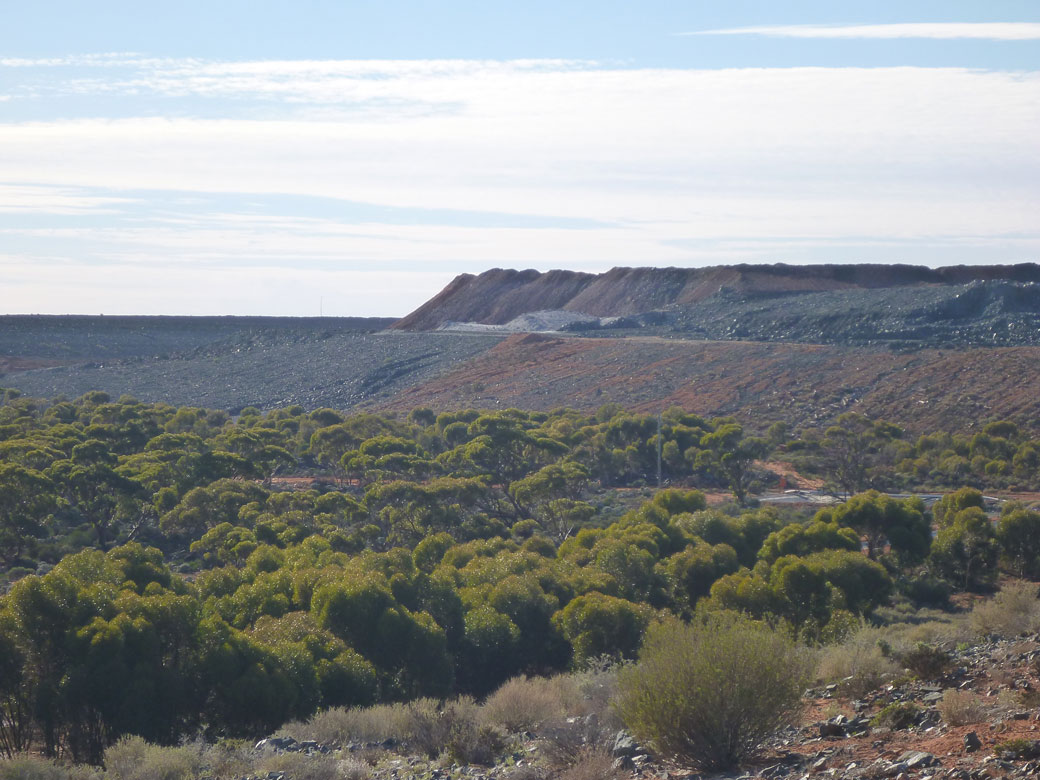
The underground and open-pit gold mine, operated by Gold Fields, is located in an arid region of Western Australia which hosts a number of salt lakes. The mine has been operating since the 1960s but will be depleted within the next five years.
Gold Fields wanted to develop three more pits but the state government wouldn’t allow them to do so until they submitted a closure plan. The main issue for Gold Fields was the cost of closure. Due to the climate, the company was concerned that the land would be useless for agriculture and may require expensive remediation.
Stantec completed an 18-month closure planning study, culminating in 11 technical studies and a four-volume mine closure plan.
The consultancy conducted material characterization work in order to test which materials were inert versus those with the potential to cause acid rock drainage, then plotted those materials on a map. It also did land form modelling, which identified the slopes of the waste dumps and whether they would be suitable for growing vegetation.
“They were able to demonstrate that there would not be any value in spending money trying to get vegetation back onto land forms because there was no vegetation there in the first place. A lot of it was on a salt lake so the vegetation pre-mining was pretty low,” said Waters. “It really came back to, as long as we can make the land forms safe and stable and non-polluting that would be acceptable to the government.”
Along with having detailed knowledge of the land forms and materials at the mine, Stantec advises mining companies to begin their closure process early. That way, costs can be spread out over the life of the mine rather than deferred to the end of life when the mine is seeing depleted resources and revenues at the same time as closure costs are ramping up. This also gives an opportunity for mine stakeholders to be consulted and give input about how closure may affect them – reducing the chance of conflicts and raising the opportunities for a satisfactory land-use plan that satisfies all stakeholders.
Peter Waters is an experienced mining professional based in Western Australia. With qualifications in geology and environmental management, he has worked in a variety of technical, supervisory and leadership roles across the mining cycle from greenfields exploration to post-mine closure.
{{ commodity.name }}
{{ post.title }}
{{ post.date }}

Comments