University of Arizona research aims to turn mine waste into US critical minerals domestic resource
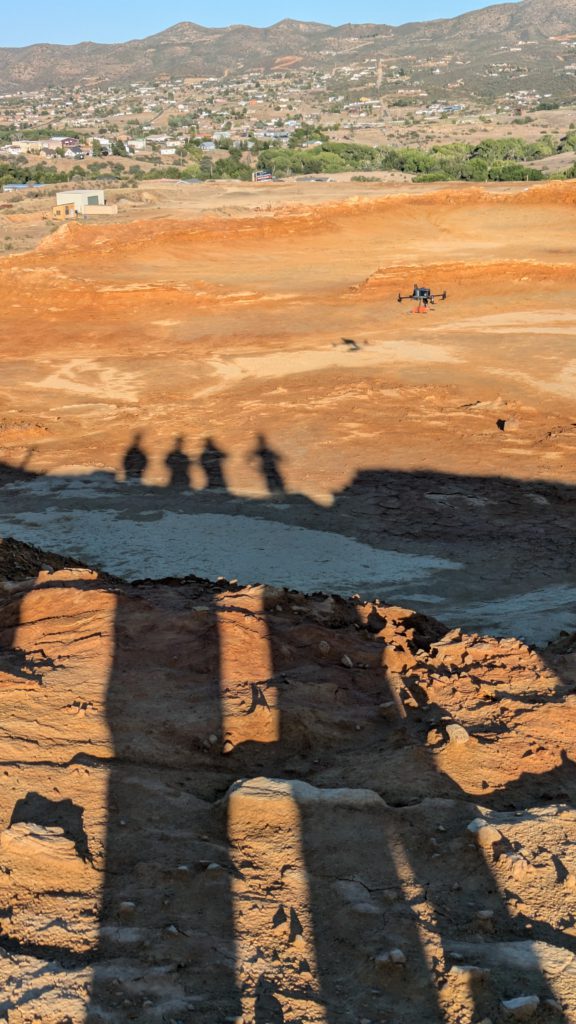
A University of Arizona–led, $3.6 million ABOR-funded research initiative is assessing whether Arizona’s historic copper mine tailings—amounting to billions of tonnes—can be economically reprocessed to recover both critical minerals and hazardous elements while reducing environmental risk.
The University Tailings Center initiative, led by Dr. Isabel Barton, Associate Professor of Mining Engineering, is focused on recovering critical minerals such as arsenic, zinc and possibly tungsten from copper mine tailings, using advanced geometallurgy and mineral characterization to turn mine waste into a domestic resource.
The project combines remote sensing, industry data-sharing, field sampling, mineralogical characterization, and techno-economic analysis, with early findings suggesting unexpected mineral occurrences at some sites, according to Barton.
While not a full resource definition, the work aims to de-risk future reprocessing and byproduct recovery, including potential changes to current mining flowsheets to prevent valuable elements from first entering tailings. Finding out how much actual usable metal can be extracted from the tailings is the end goal of the project.
“The Arizona state mine inspector for research’s office was interested in finding out whether Arizona’s billions of tons of copper mine tailings constitute a potential resource of critical elements, which many of them are also hazardous in various ways to the environment,” Barton told MINING.COM in an interview.
“The idea is that if any of them is recoverable, then recovering that would contribute to the US critical metals supply as well as reducing the environmental hazards.”
The project kicked off in Q1 2024 with 17.5 billion tons of mine waste, including copper tailings, and is accumulating at a rate of upwards of 100 million metric tons a year, Barton said.
Re-characterizing tailings
For many years public awareness about tailings was extremely limited, Barton pointed out.
“It was by definition a waste product, and so why waste money characterizing it?” And while many companies have very strong characterization programs now, and they know what they’re putting out in tailings facilities, that wasn’t always the case. I would say for most of the 20th century it was not, and so where we’ve been playing catch-up, on figuring out what’s actually in these, added to which they’ve been active geochemical systems.”
The research team is working on sampling and characterization to start, conducting remote sensing studies to characterize tailings, both at a statewide level and more focused UAV-based mapping of individual tailings facilities, working towards developing new methods.
“We are getting data from partner companies in industry, many of whom have characterized their own tailings and have been kind enough to share that information with us,” Barton said.
“The surface samples from drilling down into the tailings become the basis for extraction studies to look at how much of which critical elements we can get out relatively easily. It ends with a techno-economic analysis to look at under what, if any, market conditions extraction would make sense.”
Historical backlash
There has been significant historical backlash against projects and products that contained arsenic, mainly because of concerns about its toxicity, threats to public health and environmental hazards.
The irony is that the US needs arsenic — its classified as a critical mineral by the US Geological Survey (USGS) and other nations because it’s crucial for gallium arsenide (GaAs) semiconductors used in LED lights, lasers, integrated circuits, solar panels, and telecommunications. It also hardens lead and copper alloys, used in ammunition.
“We’re 100% import reliant on arsenic, as well as most of these other semi-metallic elements,” Barton said. Being able to produce even a small amount of those domestically would significantly help US critical metals supply.”
This year, the team is starting the techno-economic analysis using standard extraction methods, such as magnetic separation and basic leaching, and is beginning to feed data to that team.
“We have found a few exciting things,” Barton said. “Minerals that we didn’t expect in a few places have been turning up, and that actually makes me somewhat optimistic that we’ll continue to find results that we didn’t think we were going to that might lead to viable tailings reprocessing.”
“I promise you, if you put me in a fully equipped lab, I can extract anything out of any source material,” Barton said. “The difficulty is doing it cheaply enough that you don’t break the bank with the materials and labor cost of the extraction. That’s one of the things we’re trying to find out in this project…[so] we can point the way for future work.”
Career momentum
Barton noted there has been a growing recognition that the US has outsourced most of its mineral production, and that it is problematic in a geopolitical context.
“For a long time, I think people were either unaware of the drawbacks or ignored them, but recently they’ve become too obvious to ignore.”
What bodes well is that the shift could potentially attract a new generation of talent.
“The workforce is rapidly decaying, and capacity to meet the material demands of a technological future is seriously in doubt. What we’re seeing is a scramble to make up some of that ground,” she said.
“It’s an industry with a stable and bright future, and I realize that calling the mining industry stable is going to raise a few eyebrows, but the fact is we always need metals. We always need industrial minerals – the demand for them isn’t going away. It’s only increasing.”
“The other thing I would point to is a workforce retiring en masse. We’re going to need more mining engineers in 10 years than we have now, more economic geologists, more metallurgists, more of everybody related to mining.”
{{ commodity.name }}
{{ post.title }}
{{ post.date }}

3 Comments
Miner fourty-niner
So true.
Gdawg: AAbb Rgo technology Investor
I strongly believe this Rgo technology that is owned by AABB will solve all your problems! The technology can be licensed! A great write up. Search for Memestocker Rgo Technology.
KMS
I’m glad to see this topic & conversation making it to the general public. Many have known this for years. Excited to see where this goes.