Lockheed Martin reboots Pacific seabed mining plans
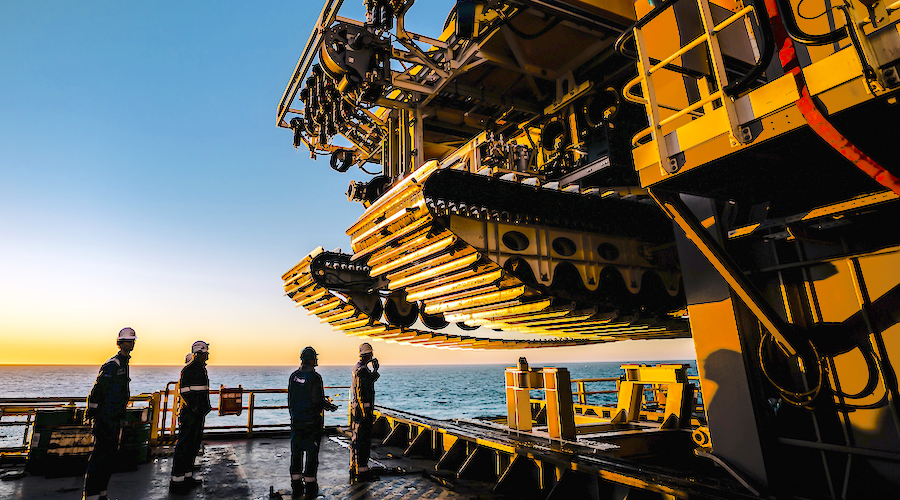
Lockheed Martin (NYSE: LMT) is back in the deep-sea mining game, holding talks with several mining companies about partnerships to access its long-held seabed licences in the Pacific Ocean.
The US defence giant holds two licences in the Clarion-Clipperton Zone (CCZ), a mineral-rich area of international waters in the eastern Pacific. These were granted by US regulators in the early 1980s during the first wave of interest in ocean mining but remained unused for decades.
Lockheed appeared to exit the sector in 2023, when it sold its UK-based deep-sea mining subsidiary, UK Seabed Resources, to Norway’s Loke Marine Minerals. That firm filed for bankruptcy in April, prompting an asset auction that returned the two licences to Lockheed’s control.
Renewed opportunity
Chief operating officer Frank St John told the Financial Times there was “large interest” from undersea mining groups in accessing the licences. He said Lockheed is evaluating options to secure supplies of critical raw materials and is working closely with the Pentagon to identify resources that could support stockpiling or alternative sourcing strategies.
President Donald Trump issued an executive order in April asserting US rights to issue mining licences in international waters and proposing that seabed metals be treated as strategic assets. Lockheed says the US has a chance to set a global standard for commercial recovery of seabed nodules “in an environmentally responsible manner”.
Polymetallic nodules — rock-like formations packed with nickel, cobalt, copper, manganese and other minerals critical for electric vehicles and electronics — are believed to be abundant in the Pacific ocean. US government estimates suggest over one billion metric tonnes of these nodules lie within American-licensed zones, with the potential to add $300 billion to GDP and create 100,000 jobs over a decade.
Interest from mining firms has surged. Companies based or listed in North America, including Canada’s The Metals Company (Nasdaq: TMC), have recently applied for seabed mining licences.
Hurdles remain
Seabed mining ambitions still face turbulent waters. The International Seabed Authority (ISA), created by the UN Convention on the Law of the Sea — a treaty the US has never ratified — continues to develop environmental and regulatory frameworks for deep-sea mining.
Representatives from 169 countries and the EU have been negotiating standards on royalties, taxation, and environmental impact, including acceptable levels of underwater noise and sediment.
The ISA is holding crucial talks in Jamaica this month to decide under what conditions mining operations may begin. In parallel, the US continues to operate its own licensing regime through the National Oceanic and Atmospheric Administration.
{{ commodity.name }}
{{ post.title }}
{{ post.date }}
4 Comments
Richard C. Fox
Not enough is known about the seafloor. It is known, however, to be a complex ecosystem that will be severely disturbed by deep sea mining. Mining on land has had many unintended negative impacts. Deep sea mining might be an uncontained disaster. Metals demand is predicated on an ever growing World population. Recycling and substitution by necessity, may prove deep sea mining unnecessary and driven only by averice.
Lyono
So now the rich are off gathering precious metals from lovely already half destroyed mother Ocean, we will do whatever it takes to keep you type of subhuman from Bottom feeding in our Taranaki Region New Zealand.Stay on land and do ya Gathering.
Zorus
Douglas R. Smith
It would take longer than 5 minutes to adequately discuss my opinions on birthright citizenship and it never being the law of the land. Keep it up and I’ll send you my thoughts on the subject and more if you like.
Gaza Strip and the U.S. involvement should only address the rebuilding of the cities including schools and colleges that will teach the truth to the Palestinians.
I have a tax plan that will generate trillions of dollars. Simplify and unify the taxes so corporations know what the tax liability is years in advance so as to plan strategic financial goals.
Douglas R. Smith
Per deep sea mining article. Equipment necessary to mine in waters 5,000 ft deep is #1 yet to be invented or #2, if in existence is costly and complicated to operate. As far as environmental impacts are concerned, a system could be developed that would take only that desired and leave the rest without chemical residues. However, considerable mineral wealth is still untouched on terra firma and we should exploit this in conjunction with development of the seabed mineral wealth. Sure, man’s quest is always motivated by the saying “Because it’s there”.