BHP leans on copper growth, not big deals
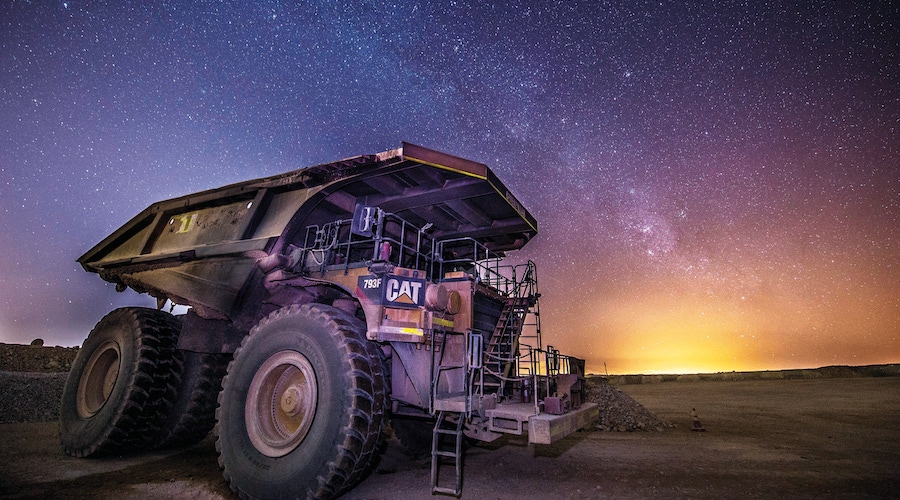
BHP (ASX: BHP) will prioritize organic copper growth over major acquisitions, as chief executive Mike Henry says the miner already holds the sector’s strongest development pipeline.
Speaking after the company’s half-year results on Tuesday, Henry said he was not surprised that smaller players were pursuing mergers and acquisitions to bolster copper exposure. He said more companies had recognized copper’s appeal over the past five to seven years and were now seeking growth.
“In our case, we’ve got the luxury of starting from a very strong base,” Henry said. “We are now the largest [copper producer], we’ve grown by 30%, and we’ve got multiple large growth options already in the portfolio, so we don’t feel the need.”
BHP walked away late last year from a potential bid for Anglo American (LON: AAL), a move that paved the way for Anglo to merge with Teck Resources (TSX: TECK) in a $53 billion deal. Earlier this month, Rio Tinto (LON: RIO) and Glencore (LON: GLEN) also abandoned merger talks.
Copper takes the lead
Copper overtook iron ore as BHP’s top earnings driver for the first time, with EBITDA of $8 billion, up 59%. The company aims to lift copper equivalent production to 2.5 million tonnes a year by the 2035 financial year, from 1.9–2 million tonnes this year.
BHP expects to produce about 1.4 million tonnes a year from its Escondida and Pampa Norte assets in Chile and an initial 500,000 tonnes a year from its South Australian portfolio, with potential to reach 1 million tonnes.
At the Vicuña project in Argentina, its joint venture with Lundin Mining (TSX: LUN), released on Monday a new technical report for the project. It estimates the Josemaría and Filo deposits contain about 47 million tonnes of copper, 97 million ounces of gold and 1.8 billion ounces of silver. It means that Vicuña could produce 800,000 tonnes a year of copper equivalent at first-quartile cash costs.
The partners plan to spend about $800 million on the project this year and target a final investment decision on the initial stage by year-end. Henry confirmed they had applied under Argentina’s RIGI scheme, which offers incentives for major foreign investments, and said BHP wanted to move quickly given the project’s advanced stage and attractiveness.
Deal capability
As of the end of 2025, BHP’s net debt stood at $14.7 billion, with gearing of 20.9%. The company has identified up to $10 billion in undervalued capital it could unlock, including $6.3 billion already realized through the sale of Pilbara power infrastructure and a silver streaming deal at Antamina with Wheaton Precious Metals (TSX: WPM).
While that financial capacity gives BHP room to pursue acquisitions, Henry said the strategy does not depend on M&A.
“That’s a dangerous place for a company to be, where they can only unlock growth through M&A,” he said.
Henry also said that focusing on productivity gains and advancing existing projects over the next decade would deliver strong returns for shareholders. Although BHP has the balance sheet and capability to execute deals, he said the pool of large, long-life, low-cost assets that meet its criteria remains limited.
“The real focus is on running our existing business even better and unlocking the organic growth that we have in the portfolio,” Henry said. “For the discrete few opportunities that might come along that fit the very strict criteria that we have, we’ve got the wherewithal to pursue them, but we’re not feeling any burning need to.”
More News
{{ commodity.name }}
{{ post.title }}
{{ post.date }}
Comments