Op-Ed: Antidumping duties can blunt China’s playbook
The West can shield its critical mineral producers from China’s predatory pricing by deploying existing antidumping laws that neutralize supply flooding before it destroys domestic investment.
In the iconic American comic strip Peanuts, Lucy promises to hold the football for Charlie Brown, then yanks it away at the last second. In critical minerals, China plays Lucy and the West keeps charging at the ball convinced that this time will be different.
China’s playbook runs in two directions. It restricts exports to drive prices high enough to make Western projects look viable, extracting a windfall as markets tighten. Once Western capital mobilizes, projects advance and new supply threatens its dominance, Beijing reverses course. It floods the market, prices collapse, and unsubsidized competitors fail.
Andy Home argued in a recent Reuters column that the West needs independent pricing to loosen China’s grip on rare earths. He is right that better price discovery would improve transparency and reduce information asymmetry. The US Department of Defence’s floor-price agreement with MP Materials (NYSE: MP) demonstrates how structural protection can underpin a project’s economics.
But pricing efficiency is not the same as market security. The MP deal works because the US government stands behind it as buyer. Every other domestic producer remains exposed to a pricing cycle China can weaponize at will. A more accurate Western price index would record the rise and fall perfectly. It would not prevent the fall.
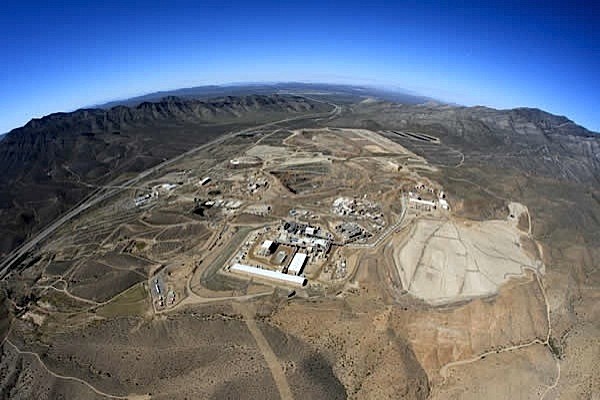
Molycorp’s collapse illustrates the pattern. China’s 2010–2011 rare earth export restrictions sent prices to historic highs, making Western projects briefly compelling. Molycorp attracted more than $1 billion to restart Mountain Pass. When China relaxed controls and restored supply, prices plunged. Molycorp filed for bankruptcy in 2015. This was not a conventional market failure. It was a deliberate exercise of supply discipline by a state actor willing to subsidize losses to protect strategic dominance.
Existing law, strategic intent
The problem is not a lack of market data. It is structural vulnerability. As long as Chinese producers can price below cost with state backing, any Western project serving the open market can be undercut.
The solution does not require new legislation or novel executive authority. The instrument already exists in US law and survived last week’s Supreme Court ruling that curtailed IEEPA-based tariffs. Antidumping duties under the Tariff Act of 1930 were designed to counter foreign producers that price below cost to eliminate competition. That description fits China’s conduct in critical minerals with precision.
Unlike fixed-rate tariffs, which impose a static % regardless of how aggressively imports are priced, antidumping duties can function as a floating mechanism. If authorities set the duty as the gap between the import price and a defined fair-value threshold, the levy automatically rises as export prices fall. The lower China prices its exports, the higher the compensatory duty. Predatory pricing becomes self-defeating rather than strategically rewarding.
Crucially, this approach extends the logic of the MP Materials floor agreement across the domestic sector without turning Washington into a permanent buyer of last resort or forcing the government to take equity stakes in individual projects.
The legal footing is also stronger than critics suggest. The Supreme Court did not invalidate tariffs as such; it rejected broad-based measures enacted under emergency authority without clear statutory grounding. Antidumping duties rest on explicit congressional authorization and align with Article VI of the General Agreement on Tariffs and Trade and the WTO Antidumping Agreement. They are among the most litigated and internationally recognized tools in trade law.
US law also permits findings based on threatened material injury, not just damage already done. China’s documented use of export restrictions, its capacity to subsidize production indefinitely, and its history of market flooding provide a substantial evidentiary record. Policymakers do not need to wait for the next bankruptcy to act.
This framework also creates room for coordination with allies. Instead of directing trade measures at Canada, the EU, Australia, Japan or South Korea, the US and its partners could initiate parallel antidumping proceedings against Chinese critical mineral imports. A coordinated response would establish effective price floors across multiple Western markets simultaneously, aligning trade enforcement with shared geopolitical interests.
Independent pricing benchmarks, strategic stockpiles and targeted procurement agreements all have merit. But none removes China’s ability to pull the football away from producers that lack structural protection. Systematic use of antidumping duties across USGS-designated critical minerals would.
The legal authority exists. The historical pattern is clear. If the West wants durable critical mineral supply chains, it must stop running at the football and start taking it out of China’s hands.
* Erik Groves is Corporate Strategy and In-House Counsel at Morgan Companies.
The views and opinions expressed in this column are those of the author and do not necessarily reflect the official position of MINING.COM or The Northern Miner Group.
{{ commodity.name }}
{{ post.title }}
{{ post.date }}
Comments