Nevada tops Fraser survey as Ontario, Saskatchewan rise
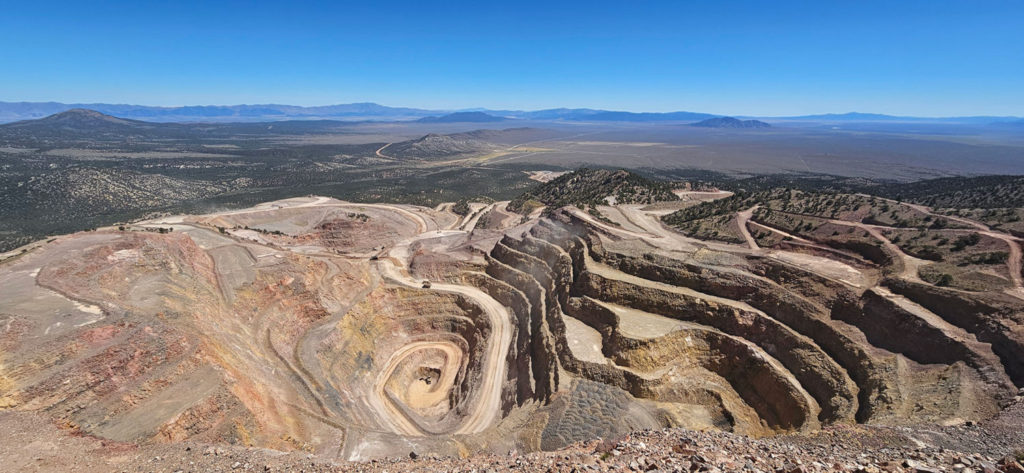
Nevada has unseated Finland as the best jurisdiction for mining investment globally while two Canadian provinces – Ontario and Saskatchewan – have climbed into the top three, a new survey says.
The findings are contained in the Fraser Institute’s most recent Annual Survey of Mining Companies, which was released Thursday. The Vancouver-based think tank has been polling mining executives since 1997 to assess how mineral endowments and public policy factors such as taxation and regulation affect exploration investment.
The United States, Canada, Australia and Europe all placed two jurisdictions each in the Top 10 – a list that also includes South Australia, Arizona, Western Australia, Botswana, Norway, Sweden and Saudi Arabia, which moved up from No. 20 in 2024. Finland, Alaska, Wyoming, Newfoundland & Labrador and Guyana all exited the Top 10 in 2025.
Nevada owes its advance from No. 2 in 2024 to a combination of rich mineral endowments — particularly gold, silver and critical minerals — and a policy environment that is perceived as stable and predictable. The state received the highest policy perception index score of any jurisdiction, reflecting favourable views on permitting, taxation, regulatory clarity and overall governance. Nevada has ranked consistently in the top 10 over the last 11 surveys.
The report is based on a survey of 256 respondents working in exploration, production and consulting operations. It was distributed to 2,304 senior executives between Aug. 5 and Nov. 26, which translates to an 11% response rate. Some analysts have criticized Fraser’s ranking, saying the process lacks clear definitions of political stability, labour markets and geology.
New rules
Ontario’s emergence as Canada’s most attractive mining jurisdiction comes after the provincial government introduced rules in October designed to cut mine approval times by half – a move that Energy and Mines Minister Stephen Lecce insisted would make the province more competitive in the global race to extract critical minerals. Ontario had ranked 15th in the 2024 survey.
Saskatchewan, which moved up from No. 7, ranked 2nd globally for its potential in a district known for world-class deposits of uranium and potash.
Some Canadian jurisdictions are failing to capitalize on their strong mineral potential due to a lack of a solid policy environment that would attract investment, the Fraser Institute says. Although they rank 11th and 13th respectively for mineral potential, Yukon and Manitoba rank 47th and 39th when considering policy factors alone, the think tank says.
“Policymakers in every province and territory should understand that mineral deposits alone are not enough to attract investment,” said Elmira Aliakbari, director of the Fraser Institute’s Centre for Natural Resource Studies and co-author of the study. “A sound and predictable regulatory regime coupled with competitive fiscal policies help make a jurisdiction attractive in the eyes of mining investors.”
Investor concerns
Among other Canadian provinces, British Columbia dropped seven ranks to No. 20 largely due to investor concerns over disputed land claims and protected areas, the Fraser Institute said. Newfoundland & Labrador fell to No. 14 as miners expressed increased concern over the province’s regulatory duplication and its legal system, among others.
Quebec held steady at No. 22, with miners surveyed expressing heightened concern over the province’s trade barriers and infrastructure.
Uncertainty surrounding protected areas, land claims disputes, environmental regulations and regulatory inconsistencies are all hindering mining investment in various Canadian jurisdictions, the think tank says.
Bottom 10
When considering both policy and mineral potential in the Investment Attractiveness Index, the least attractive jurisdiction in the world for mining investment is China, followed by Burkina Faso and Egypt, the Fraser Institute says. The Philippines, Mali, Chubut, Neuquen, Bolivia, Northern Ireland and Guinea Conakry were also judged to be unattractive.
Responses from the participating executives were used to evaluate 68 jurisdictions on the Investment Attractiveness Index — a composite measure that blends geologic potential with perceptions of government policy and regulatory frameworks.
Mining executives indicate that about 40% of their investment decisions are influenced by policy factors, the think tank says. The remainder rest on mineral potential and economic parameters.
{{ commodity.name }}
{{ post.title }}
{{ post.date }}
Comments
Alex
You do get that the Fraser Institute is a right wing propaganda mill and not an actual research center, right?