Gold price rebounds as investors buy the dip on safe-haven metal
Gold climbed higher on Wednesday as investors took advantage of the previous session’s dip to accumulate more of the safe-haven metal amid rising Middle East conflicts.
Spot gold rose as much as 2.3% to above $5,200 an ounce, recovering some losses from the Tuesday selloff that sent prices down toward the $5,000 level. US gold futures had a moderate gain of around 1%.
The move followed a broader market drawdown triggered by concerns surrounding the war in Iran, namely its potential inflationary impact.
While gold is sometimes seen as an inflation hedge, the higher interest rates that accompany rising prices can sometimes weigh on bullion, as they did in 2022. Elevated prices for commodities like oil would diminish the likelihood of US interest rate cuts, making the non-yielding bullion less appealing to investors.
The inflationary fears prompted some gold investors to liquidate their positions to meet margin calls elsewhere in their portfolios, resulting in prices dropping as much as 6% on Tuesday.
Gold’s heavy loss “raised eyebrows, having initially benefited from safe haven demand,” analysts at BMO Capital Markets including Helen Amos wrote in a note to Bloomberg. The pullback happened as “spiking treasury yields on inflation concerns, strong US dollar, and forced liquidation for balance sheet protection overpowered its safe haven characteristics,” she added.
Underscoring a sharp pullback in bullish bets, money managers’ net-long position in gold has fallen since late January to approach the lowest in a decade, according to data from the Commodity Futures Trading Commission.
That relatively low level “should limit the extent of any down move” in gold, said Peter Kinsella, global head of forex strategy at Swiss bank UBP.
Long-term thesis unchanged
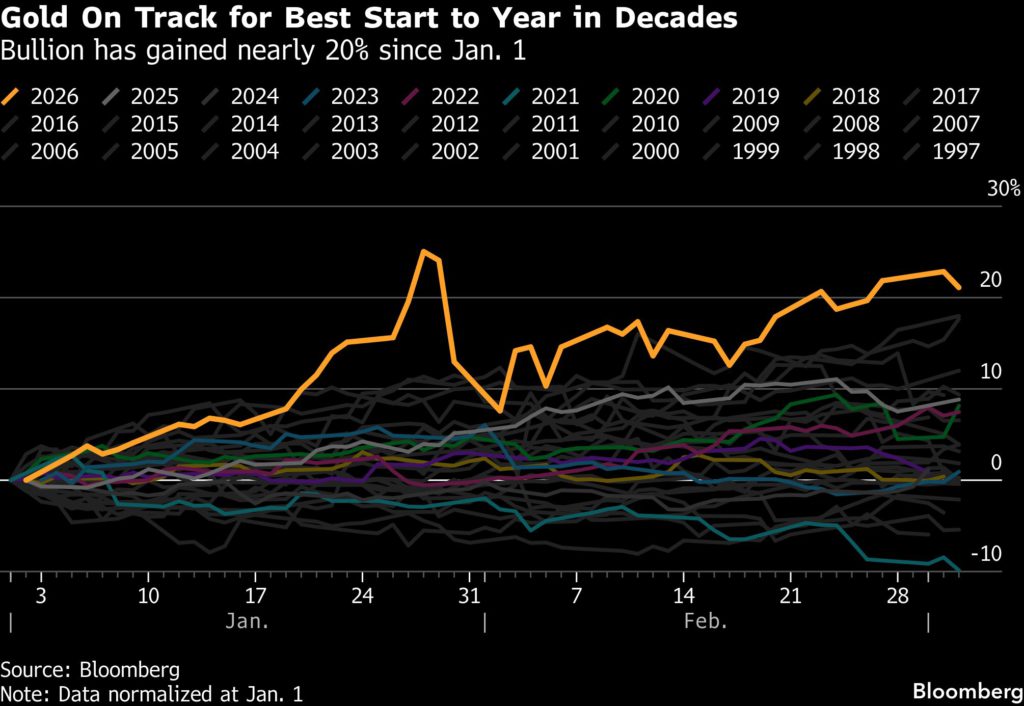
Despite experiencing two significant pullbacks — one in late January and one this week — bullion is still up 17% through the first nine weeks of 2026, its best start to a year in decades, fueled by persistent geopolitical and trade tensions that bolstered demand for safe havens.
“I think we will definitely see a recovery for gold,” said Kinsella, adding that longer-term drivers remain unchanged. “If anything, an inconclusive outcome to the war highlights ongoing geopolitical risks to a greater extent than before.”
The long-term bull thesis is reflected in the price forecasts given by the major banks. JPMorgan sees gold reaching $6,300 an ounce by the end of 2026 as more private investors enter the market. BNP Paribas also sees prices hitting $6,000 as long as macroeconomic and geopolitical risks persist.
The metal is best described as a hedge against extremes, according to George Cheveley, portfolio manager at asset manager Ninety One. “So if you’ve got high inflation, gold works. If you’ve got deflation, gold works,” he said. “The worst thing for gold is a stable economic environment.”
(With files from Bloomberg)
More News

{{ commodity.name }}
{{ post.title }}
{{ post.date }}
Comments