BRICS+ nations hold over 17% of world’s gold reserves: Report
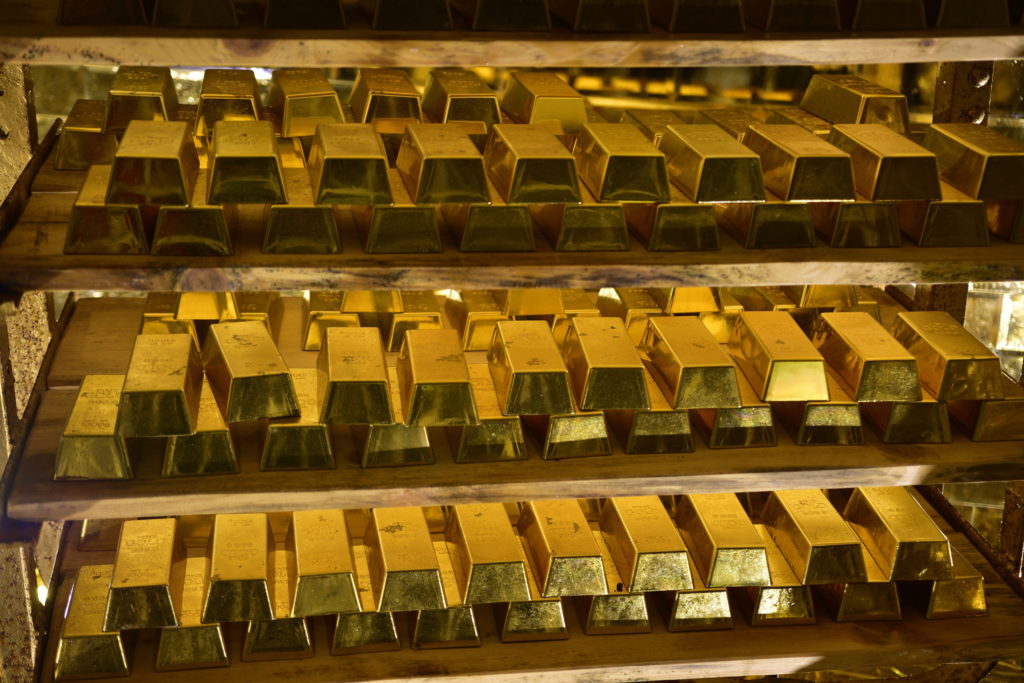
Global central banks have been buying up gold at a record pace, purchasing on average about 1,000 tonnes over the past four years, and the momentum has continued into 2026.
A large part of that can be attributed to emerging economies, led by BRICS+ nations, which have used bullion as a go-to strategy to shield themselves against geopolitical risks and US currency influence.
A new report by EBC Financial Group estimates that the bloc now holds about 6,000 tonnes of the world’s gold reserves, or 17.4% of the global total, up from 11.2% in 2019. Russia leads the group with 2,336 tonnes, followed closely by China at 2,298 tonnes. The next largest holder is India at 880 tonnes.
Between 2020 and 2024, BRICS+ nations accounted for more than half of all gold bought by central banks globally, EBC said, highlighting what it views as a “structural shift” in their reserves strategy tracing back to Western sanctions against Russia in 2022, after which gold purchases doubled from about 500 tonnes to 1,000 tonnes.
Shift in reserve strategy
But, as the London-based financial group notes, the gold accumulation is only one side of the shift. The other is the declining share of the US dollar in global reserves. IMF data shows that dollar’s share fell from 71% in 1999 to roughly 57% by the end of 2025, its lowest reading since 1994.
Since 2014, central bank holdings of dollar-denominated assets have remained essentially flat, ECB noted.
Meanwhile, gold’s share of official reserve assets has more than doubled from below 10% in 2015 to over 23% today. Much of this reflects gold’s price appreciation, but it unmistakably highlights that central banks are allocating a growing share of their portfolios to gold, and the war in the Middle East only reinforced this urgency, the group said.
The report also cited the World Gold Council’s 2025 survey, which revealed that 73% of central bankers globally believe the dollar’s reserve share will decrease further over the next five years, and 43% of surveyed central banks plan to increase their gold holdings, both record-high readings.
Trends to monitor
On whether the gold-buying would accelerate, the ECB report highlighted several key developments that could be worth monitoring.
One is China, such as whether it would resume public reporting of gold reserve additions, which it has not done since May 2024. As of the end of March, the Chinese central bank has bought gold for 17 straight months.
Another potential driver is whether nations like Saudi Arabia or the UAE would follow the Russia-China playbook and increase their formal allocations of gold. Saudi Arabia, in particular, is considered as a wild card. A move to just 5% gold allocation would require purchases equivalent to the entire projected central bank demand for 2026 from a single buyer, ECB noted.
In addition, the group said to watch for further declines in the dollar’s reserve share in the next IMF COFER release, since each incremental drop reinforces the narrative driving sovereign gold demand.
More News
{{ commodity.name }}
{{ post.title }}
{{ post.date }}
Comments