Canadian steel sector faces deeper pain than aluminum as tariff uncertainty clouds outlook
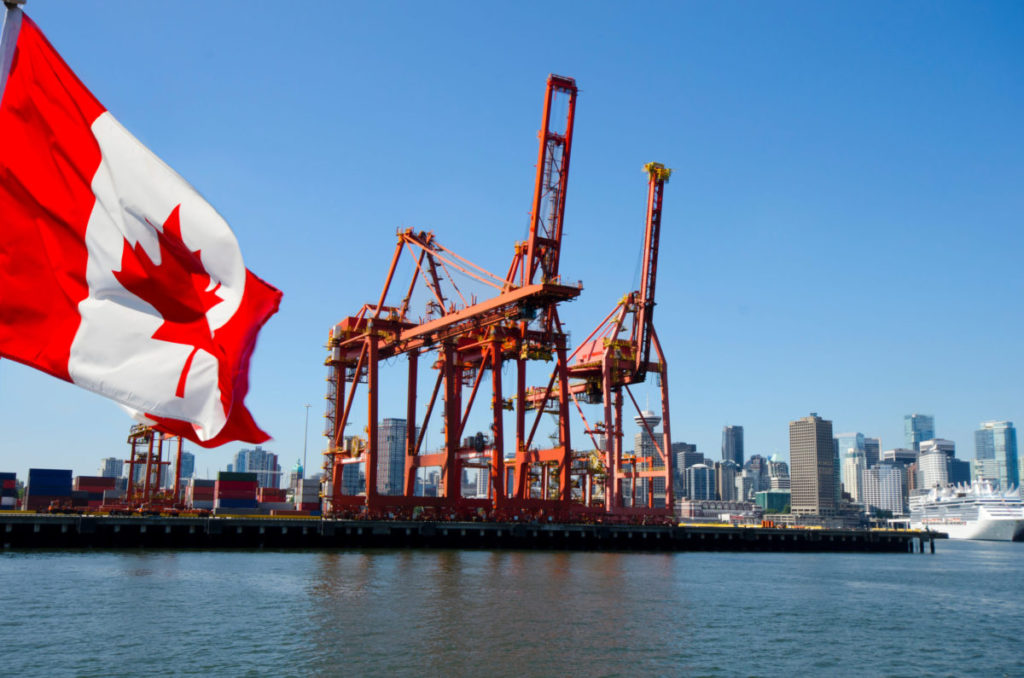
Canada’s steel industry is facing a more severe and potentially longer-lasting disruption from US tariffs than the aluminum sector, according to a senior PwC economist who says Ottawa’s recently announced support measures are primarily designed to buy companies time rather than solve the underlying problem.
In an interview with MINING.COM this week, Gemma Stanton-Hagan, director of economics and policy at PwC Canada said the federal government’s support package — including $1 billion in loans and $500 million for business diversification initiatives — is significant politically but modest compared with the scale of losses facing producers.
Canadian steel export values to the US have collapsed to roughly a third of pre-tariff levels.
“So far this year on a monthly basis, steel exports are about $500 million lower than they were pre-tariffs,” Stanton-Hagan said. “That’s every month revenue is $500 million lower than it would have been.”
Stanton-Hagan described the funding as a “relatively short-term solution,” noting that many of the affected companies are large multinational firms with deeper capital reserves and longer-term operational strategies.
The comments come as Canadian producers continue grappling with trade volatility tied to US tariff policies and uncertainty surrounding the upcoming review of the Canada-United States-Mexico Agreement (CUSMA).
Steel sector particularly vulnerable
While aluminum producers have been able to redirect some shipments to Europe, the steel industry faces more structural challenges because of global oversupply and its heavy dependence on the US market, Stanton-Hagan said.
Historically, between 85% and 90% of Canadian steel exports went to the United States before tariffs were imposed, according to the interview. Aluminum exports were even more concentrated, with roughly 94% destined for the US market.
For aluminum, however, producers have managed to recover some export volumes by increasing shipments to Europe.
“We’ve seen actually a really good bounce back in aluminum exports, mostly because of growing exports to Europe,” she said, while cautioning that Europe is unlikely to become a major long-term growth market.
Steel producers have had far fewer alternatives.
“There’s global oversupply of steel,” Stanton-Hagan said. “Canada produces steel for domestic usage and then also mostly for the US, so we really don’t have those other trade relationships.”
The result has been mounting financial pressure across the sector, with companies reporting significant quarterly losses and reassessing investment plans.
Liquidity support versus long-term adaptation
Stanton-Hagan said Ottawa’s support package is effectively divided into two policy objectives.
The $1-billion loan program is aimed at easing immediate liquidity pressures caused by lower revenues and weaker export demand.
“That’s really about stopping the bleeding,” she said.
Meanwhile, the $500-million regional tariff response initiative is intended to help smaller and medium-sized businesses diversify into new export markets and build greater resilience against future trade shocks.
Stanton-Hagan suggested the federal government is still trying to determine whether the tariffs represent a temporary disruption or a more permanent restructuring of North American trade flows.
“Is this a blip we’re waiting out … or is this everyone needs to pivot to not sell anything to the US?” she said. “Those are very different policy questions.”
Strategic importance beyond jobs
Beyond employment concerns, Stanton-Hagan said the steel and aluminum industries are increasingly being viewed as strategically important sectors for Canada’s broader industrial and national security objectives.
The federal government’s push for housing, transportation, energy infrastructure and mine development depends heavily on domestic supplies of steel and aluminum, she pointed out.
“These are also strategic inputs for defense,” Stanton-Hagan added, noting policymakers must weigh the consequences of allowing domestic capacity to erode.
Stanton-Hagan also suggested US manufacturers may eventually push back more forcefully against tariffs if elevated metal prices continue feeding into inflation and production costs.
“The US actually cannot produce enough to satisfy its own needs,” she said. “It’s the US manufacturers that are going to be paying more for that.”
With US midterm elections approaching and concerns about high living costs already weighing on voters, the political sustainability of the tariff regime may increasingly come into question, Stanton-Hagan said.
More News

Vale chairman Stieler pushed out by pension fund
July 06, 2026 | 04:40 pm
South32’s Arizona $2 billion zinc and manganese mine to get US approval
July 06, 2026 | 04:22 pm

{{ commodity.name }}
{{ post.title }}
{{ post.date }}
Comments