BHP urged to assess rare earths at Olympic Dam
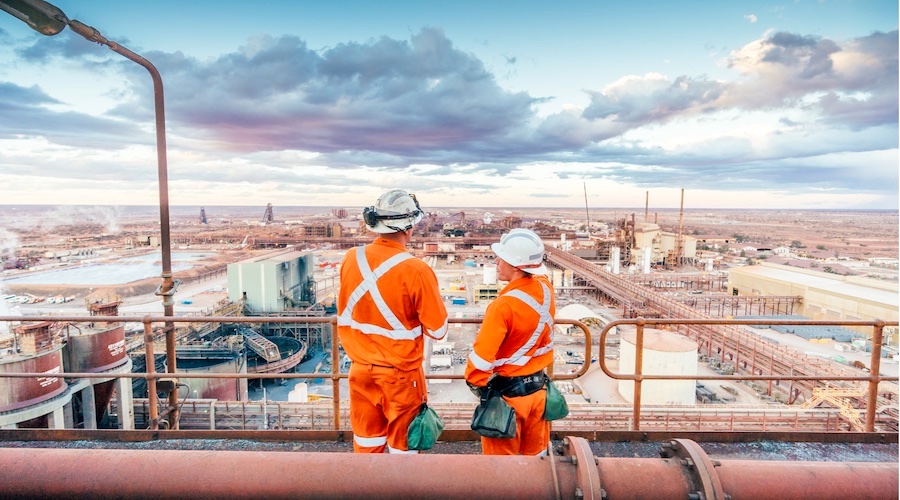
BHP (ASX: BHP) must assess whether rare earths and other critical minerals at its Olympic Dam mine complex can be commercially produced under a new agreement with South Australia signed this week.
The pact is part of a broader plan aimed at unlocking as much as $16.7 billion in investment in the state’s copper sector.
South Australia Premier Peter Malinauskas on Tuesday tabled a revised 78-page “indenture agreement” in parliament, marking the first overhaul in nine years of the legislative regime governing the Olympic Dam copper, gold and uranium operation.
The revised framework adds new obligations requiring BHP to study the recovery of minerals deemed critical or strategic by Canberra, including rare earth elements such as neodymium and praseodymium used in magnets for electric vehicles and wind turbines.
The world’s largest miner must submit a report within two years outlining whether those minerals can be commercially extracted. If they are judged technically or economically unviable, BHP must allow third parties an opportunity to commercialize them.
The updated arrangement also clears the way for BHP to consider a $4 billion expansion of the Olympic Dam copper refinery near Roxby Downs, with additional investment decisions worth as much as $12.7 billion by 2032 for mine and concentrator expansions across the state.
“This milestone agreement enables South Australia to deliver on the promise of a world-class copper province,” South Australian Infrastructure and Energy Minister Tom Koutsantonis said. “The pathway to a net zero future requires copper, and South Australia can play a transformative role as a major supplier to a world that is desperate for strategic and critical minerals.”
Olympic Dam, primarily a copper operation, also produces gold, silver and uranium as byproducts. The orebody contains another 131 minerals, including rare earth elements, that are currently discarded in waste streams because of their low concentrations.
Interest in those materials has surged as governments in Australia and the US intervene to support critical minerals supply chains and reduce reliance on China.
Doubling down on copper
BHP is considering doubling copper output in South Australia to 650,000 tonnes annually by the mid-2030s. Olympic Dam has consistently produced more than 300,000 tonnes of copper a year over the past three years and it’s considered central to BHP’s long-term growth strategy and Australia’s ambitions to remain a leading copper supplier for the low-carbon transition.
“We commend the South Australian Government for its leadership in making this indenture update happen, as well as for its strong long-term support for the mining industry,” BHP CEO Mike Henry said. “More efficient approval pathways and stable regulatory settings give us the confidence to invest and continue building South Australia’s world class copper province.”
Copper SA, BHP’s South Australian division, operates Olympic Dam alongside the Prominent Hill and Carrapateena mines, acquired through its A$9.6 billion takeover of OZ Minerals in 2023.
Exploration at Oak Dam could eventually support a fourth operation in the province. Combined with Escondida in Chile, BHP controls the world’s largest known copper resources.
The company produced more than two million tonnes of the metal in fiscal 2025, up 28% over three years, and expects output of 1.9 million to 2 million tonnes in fiscal 2026.
BHP has repeatedly floated and shelved Olympic Dam expansion plans over the past 15 years as costs, market conditions and technical challenges shifted.
The revised pact also addresses long-running concerns over water use. BHP must submit a plan by May 2031 detailing how it will end groundwater extraction from the Great Artesian Basin by May 2036.
The miner and the South Australian government are jointly advancing a seawater desalination project near Port Augusta to support plans to expand copper production over the next decade.
More News
Bomb attack damages Ecuador mining agency probing illegal gold
It’s the second blast in recent weeks affecting Arcom offices.
June 29, 2026 | 12:28 pm

{{ commodity.name }}
{{ post.title }}
{{ post.date }}
Comments