AI and subsurface intelligence reshape mining
The global mining industry faces intensifying pressure to secure critical minerals, not because they are scarce, but because discovering and extracting them economically and sustainably is becoming harder.
Beneath strong commodity prices lies a tougher reality: deposits are deeper, ore grades are declining, and development timelines now stretch 16 to 18 years from discovery to production. The industry needs a different kind of intelligence, one that combines geoscience expertise, integrated data, and AI to better understand the subsurface and make faster, more informed decisions.
Exploration itself is changing. Success no longer comes from drilling more holes, but from connecting fragmented datasets and extracting insight. Today, mining specialists spend nearly one-third of their time managing data, yet only 39% of organizations have a defined data framework. At the same time, 51% of geoprofessionals are already using or considering AI. Without stronger data foundations and a clear enterprise strategy, that interest will not translate into results.
Data to action
The shift from data wrangling to decision-making is critical. AI-ready subsurface data allows geologists to focus on interpreting the ground rather than organizing information. This matters because one of the biggest bottlenecks in mining is the so-called permitting paradox: companies must prove to regulators, investors, and communities that risks are understood and managed, even when their data is incomplete or fragmented.
AI-supported subsurface intelligence helps break that deadlock. It does not remove uncertainty, but it makes uncertainty manageable. The most effective approaches embed AI directly into workflows, grounded in reliable data and domain expertise. This enables faster interpretation, more rigorous testing of assumptions, and continuous updates as new information emerges.
No model will ever fully replicate the complexity of the underground, and pretending otherwise undermines credibility. What matters is improving how data, interpretations, and models come together so decisions reflect the best available understanding at any given time. Dynamic, traceable models replace static interpretations, allowing companies to show regulators and investors how their understanding evolves. That transparency strengthens trust without overstating certainty.
A $10M beakthrough
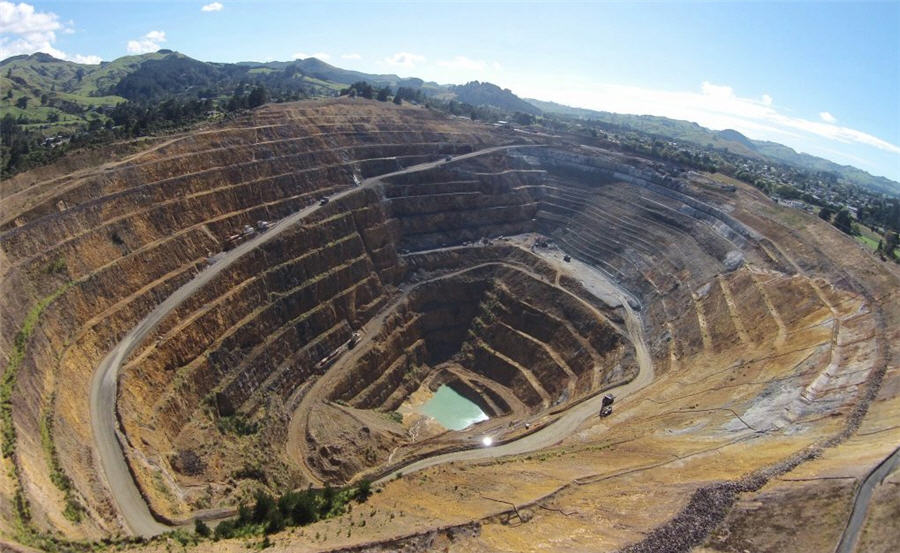
The financial impact is already clear. At OceanaGold’s (TSX: OGC) Waihi mine, a cloud-based AI tool re-analysed legacy drill data and identified a previously unmodelled vein in just 60 minutes, generating an estimated $10 million in value. This kind of insight reduces speculative drilling, cuts waste, and shrinks environmental impact. When companies can target drilling with greater precision, the economics of entire projects improve.
PT Stargate has seen similar gains, achieving a 10% improvement in grade control efficiency and reducing drilling needs by 80% through advanced digital workflows. These are not marginal gains. They translate into lower costs, higher productivity, and more sustainable operations.
Beyond economics, subsurface intelligence is becoming a geopolitical advantage. Countries that can accelerate mining timelines while maintaining environmental and safety standards will shape future supply chains. Better data and more reliable models influence which projects get funded, how quickly they are approved, and who ultimately controls access to critical minerals.
The path forward is clear. Mining will not advance by replacing human judgment, but by strengthening it. When geoscience, engineering, and data come together through open and intelligent systems, uncertainty becomes manageable and decisions become defensible. That is how the industry builds the foundation for a more resilient and sustainable future.
* Graham Grant is chief executive officer of Seequent
More News
{{ commodity.name }}
{{ post.title }}
{{ post.date }}
Comments