Fujimori leads Peru presidential vote as mining risks rise
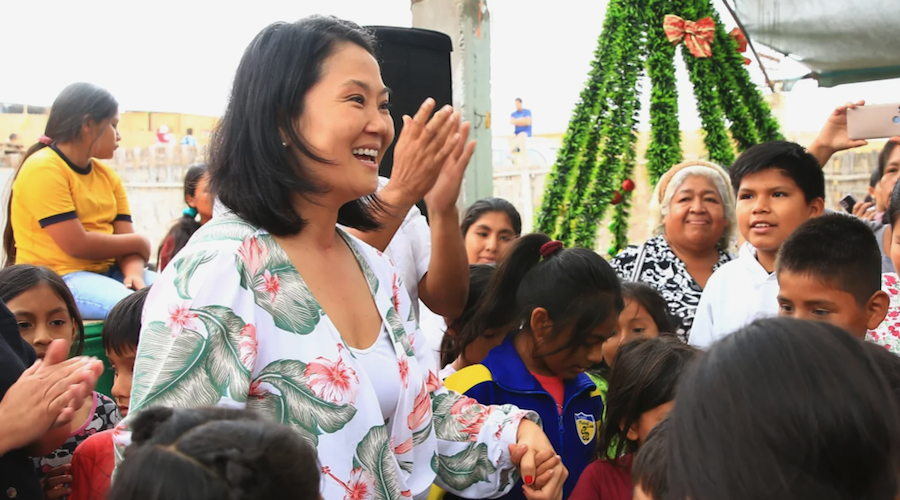
Keiko Fujimori led Peru’s presidential vote but fell short of an outright win, setting up a run-off that could reshape the outlook for the country’s critical mining sector.
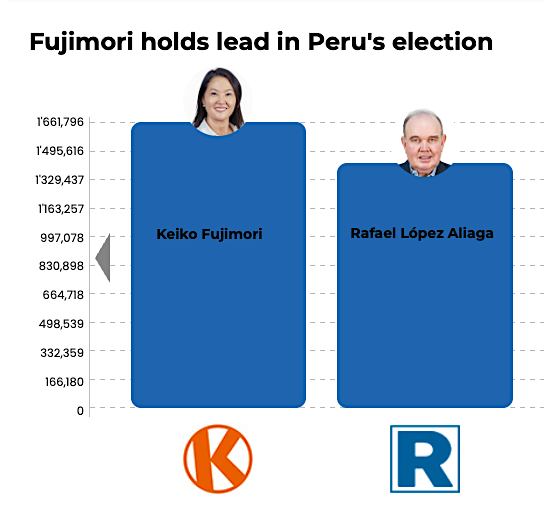
Exit polls and partial counts showed the 50-year-old right-wing candidate ahead in the first round of presidential and legislative elections with 17.17%, well below the 50% threshold needed to avoid a second vote. A tight race for second place determined her opponent: Rafael López Aliaga, a former mayor of Lima, has 16.97% of the votes. They will face each other in a run-off vote on June 7th.
Fujimori, daughter of jailed former president Alberto Fujimori, has cast herself as pro-US and investor-friendly, pledging clearer rules to attract foreign capital while portraying rivals as closer to Beijing.
Her campaign leaned heavily on law-and-order messaging reminiscent of her father’s 1990s presidency, echoing a broader regional shift that has helped elect leaders such as Chile’s Jose Antonio Kast and Argentina’s Javier Milei.
Her opponent, far-right businessman Rafael “Porky” Lopez Aliaga, struck a similar tone, warning that unused mining permits could revert to the state — a move that would signal a potential shake-up in one of Peru’s most important sectors.
“He is a person who is completely unpredictable in his opinions,” Xennia Forno, head of mining and energy at law firm PPU Legal, said. But he could have the upper hand given the widespread opprobrium of Fujimori senior’s authoritarian rule, she added.
The prospect of revoking unused mining concessions underscores rising political pressure on the industry in the world’s No. 3 copper producer, where informal miners are gaining influence and clashing with large operators. The idea could affect major companies including Southern Copper (NYSE, LON: SCCO), MMG Ltd (HKG: 1208) and First Quantum Minerals (TSX: FM) if implemented.
“Both present a fairly positive scenario for private investment, especially in mining,” analyst Daniel Palamino of MunizLaw said, highlighting industry optimism despite policy risks.
Billions at stake
The election comes at a pivotal moment for Peru’s mining sector, which has driven economic growth even amid political turmoil. Investment hit about $6 billion last year and had been expected to rise further in 2026, supported by strong copper and gold prices.
Mining investment has continued to drive Peru’s economic growth, which has 3% per annum since the pandemic, despite the lack of leadership in Lima.
The country’s mineral wealth continues to attract newcomers. In March, Australia’s Fortescue completed its acquisition of Alta Copper and its Cañariaco project for C$139 million. The open pit project could produce 140,000 tonnes a year.
The broader concern for investors is whether Peru’s next president can restore stability after years of political upheaval and curb the growing influence of illegal mining. Illicit operations are now believed to produce more gold than major formal miners such as Hochschild Mining (LON: HOC), Compañía de Minas Buenaventura (NYSE: BVN) and Newmont Mining (NYSE: NEM), underscoring the scale of the challenge.
Fresh pressure on the mining sector, including proposed legislation to halve the time companies can hold unused concessions and last week’s revocation of Southern Copper’s long-delayed $1.8 billion Tía María project licence, exemplify the challenging environment.
The run-off will determine whether Peru doubles down on investor-friendly policies, or shifts toward greater state intervention, with billions in mining investment and a key pillar of the economy at stake.
(With files from Tom Azzopardi)
———
2026 is shaping to be a key year for Latin America, with resources at the centre of a growing global power struggle, as governments and investors focus on who controls critical minerals and the supply chains behind them. If the region matters to you, don’t miss MINING.COM’s new series tracking the geopolitical forces reshaping it and why markets are increasingly driven by global alliances as much as local politics.
Countries in the series:
{{ commodity.name }}
{{ post.title }}
{{ post.date }}
Comments