British Columbia court reopens Seabridge Gold’s approval fight
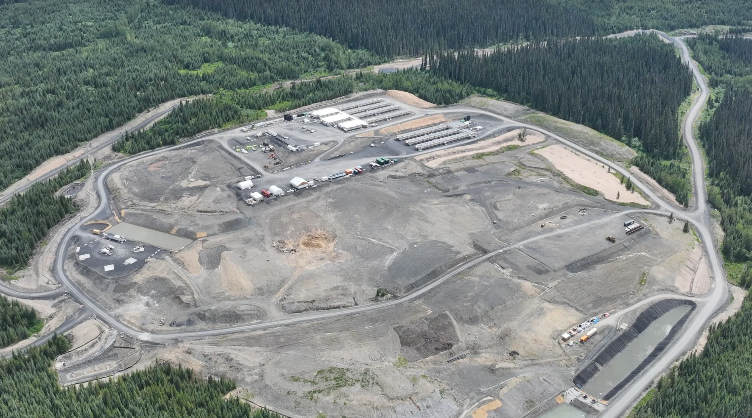
The B.C. Supreme Court has sent Seabridge Gold’s (TSX: SEA; NYSE: SA) KSM project back to the province after finding it failed to consult enough with the Tsetsaut Skii km Lax Ha Nation before deciding the mine had been substantially started.
Justice Emily Burke on Monday ordered the Environmental Assessment Office (EAO) to give the First Nation 90 days to file written submissions before it decides again whether the $8.8-billion (US$6.4-billion) capex development had been substantially started as of July 24, 2024. KSM sits about 65 km northwest of Stewart in northwestern B.C.’s so-called Golden Triangle.
“At a critical time…the province in effect disregarded those conclusions about the strength of the assessed claim without good reason,” Burke wrote, after finding B.C. changed its view of Tsetsaut Skii km Lax Ha’s claim around Treaty Creek Valley but failed to carry that change into the KSM substantial-start process.
The ruling calls into question the substantial-start finding that keeps KSM’s 2014 environmental certificate valid for the project’s life. Losing that ruling could force Seabridge back to a new environmental review on one of the world’s biggest undeveloped gold-copper deposits.
Seabridge’s Toronto-listed shares were down 3% on Tuesday afternoon at $37.60 apiece, after doubling in value over the past 12 months. The company has a market capitalization of $4.4 billion.
Delays
Burke’s decision hinged on the province’s own updated view of Tsetsaut Skii km Lax Ha’s claim around Treaty Creek Valley, where KSM plans its key processing and tailings works. The judge said that change required more notice than the province gave and left the decision-maker with incomplete information on Indigenous interests.
“We’re relieved the province is finally required to consult properly, based on its own conclusion that our territory bears the brunt of the environmental risks of the toxic waste dump for the world’s largest gold mine, threatening our pristine traditional waterways,” Tsetsaut Skii km Lax Ha Chief Darlene Simpson said in a Tuesday news release.
The nation says KSM’s planned tailings pond would be about 52 storeys deep and built on land it claims as exclusive traditional territory.
The ruling comes as KSM still sits unbuilt 12 years after winning provincial and federal approval, a delay Seabridge CEO Rudi Fronk recently pointed to as evidence of how hard it is to build a mine in Canada. KSM faces a separate permit fight with Tudor Gold (TSXV: TUD), with B.C. holding up amendments for the Mitchell Treaty Tunnels until the companies resolve a dispute over a 12.5-km stretch that crosses Tudor’s Treaty Creek claims.
Money sunk
The original substantial start determination had relied on physical work already done at the site. The EAO pointed to a completed 17-km access road to the processing and tailings area, foundations for the power system and early works including camps, mine roads, clearing, earthworks and fish habitat compensation.
Seabridge Chair and CEO Rudi Fronk said in a late-Monday release that the company is “satisfied that the court has confirmed the reasonableness of the EAO determination.”
Asked by The Northern Miner to clarify, Fronk said Seabridge stood by the wording, which he said was vetted by internal and external counsel.
Fronk cited Burke’s ruling in which she wrote that the deferential reasonableness standard “largely insulates” the substantial-start decision on the question of whether the physical work completed at KSM could support the finding.
But Burke did not uphold the substantial-start decision outright. She found the province failed in its duty to consult Tsetsaut Skii km Lax Ha, quashed the earlier decision and said she did not need to decide on the separate reasonableness challenge brought by SkeenaWild Conservation Trust. Burke found the conservation group had public-interest standing but said there was no need to weigh its petition in detail after the consultation ruling.
Fronk said the new 90-day process will be limited to whether KSM had been substantially started by the July 2024 decision date. He also said Seabridge could file a new substantial-start application if needed, citing more than $200 million in additional permanent works since its first application in January 2024.
Fronk thanked the Nisga’a and Tahltan Nations, and the Gitxsan Hereditary Chiefs Office, for their support of KSM.
The project hosts proven and probable reserves of 2.29 billion tonnes grading 0.64 gram gold per tonne and 0.14% copper for 47.3 million oz. gold and 7.3 billion lb. copper, plus 160 million oz. silver, according to Seabridge’s 2022 pre-feasibility study.
Seabridge plans to keep working at KSM during the renewed consultation. The company says that since acquiring KSM from Placer Dome in 2001, it has spent about $1.2 billion in total.
{{ commodity.name }}
{{ post.title }}
{{ post.date }}
Comments