Frik Els , Editor

Frik has 20 years’ experience as a business journalist across a range of industries including automotive, technology and entertainment markets. Frik has an entry in Global Mining Observer’s Who’s Who of Mining 2018, and contributions to publications and conferences including Business Insider, Investing.com, Mines & Money London and New York, Vancouver Resources Investment, Progressive Mine Forum in Toronto and Canadian Mining Symposium in London, UK. He’s been interviewed on CBC Radio and Korea State TV and quoted in the Financial Post.

Posts by Frik Els:

Record $8.5 billion likely spent in 2011 exploring for gold

Research firm Metals Economics Group reports gold continues to be top exploration target accounting for more than 50% of global exploration of non-ferrous metals for the second consecutive year in 2011. Latin America is set continue to be the industry's favorite regional exploration destination in 2011, while Canada will remain the top overall country. Copper will account for roughly a fifth of 2011 nonferrous exploration budgets that is expected to exceed US$17 billion for expenditures related to precious and base metals, diamonds, uranium, and some industrial minerals. It represents an increase of about 50% from the 2010 total and a new all time high.

India is now the elephant in the room

New economic numbers from India, the latest forecasts for the country's voracious appetite for gold, iron ore and in particular coal and its plans for a sovereign wealth fund to look at mining deals abroad mean that the GVK-Rinehart tie-up could be the first of many.

Keystone oil sands pipeline ‘absolutely’ will happen

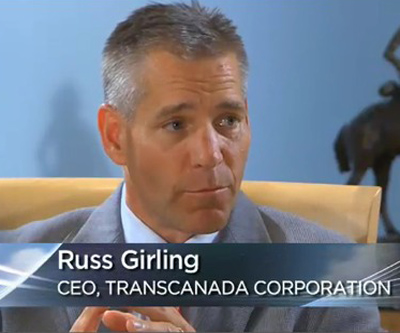
TransCanada CEO Russ Girling, told the EnergyNow program airing on Sunday that the proposed $7 billion, 3,190km Keystone XL pipeline connecting Alberta’s oil sands to refineries on the US Gulf Coast is “absolutely” going to happen and the show quotes US Energy Secretary Steven Chu as saying "having Canada as a supplier of our oil is much more comforting than to have other countries supply our oil.” The oil sands industry feeding Keystone XL has tripled in size since 1995 and the US government estimates that Canada may double its current output of heavy crude by the end of this decade. Canada currently pumps 2 million barrels per day to the US, with more than half coming from the oil sands. A final decision on Keystone XL by US President Obama is expected before the end of the year.

Industry must live with tax: Rio Tinto

The Daily Mercury reports Rio Tinto executive director Sam Walsh says the mining industry has to live with the new resources tax as the best deal that could be done with the current government. The final tax rate had been reduced from 40% to an effective 22.5% rate in the minerals resource rent tax (MRRT), he told the meeting organised by the American Chamber of Commerce in Australia. At a breakfast meeting in Perth on Tuesday, Mr Walsh defended his company's role in closing the tax deal, saying junior miners left out of final negotiations now have a chance to have their concerns heard. On top of the MMRT, Australian miners also have to contend with a proposed carbon tax set to kick in mid-2012.

India coal deal takes Rinehart a step closer to $100 billion personal fortune

India infrastructure giant GVK on Saturday said it would pay $1.3 billion for Australia's Hancock Prospecting coal, rail and port projects and spend a further $10 billion developing them as it lines up energy supplies for upcoming power plants. Hancock's owner and richest woman in the world, Georgina Hope Rinehart will join GVK Power's board and retain a 21% stake in the mines. Rinehart, 57, is predicted to become the world’s richest person as the coal projects and Hancock's massive 100%-owned iron ore mines start producing by 2014 and earn her annual profits of as much as $10 billion. The so-called queen of iron ore who inherited a debt-ridden mining company from her father 20 years ago had already doubled her wealth from 2010 before Saturday's deal.

Deal to build the world’s richest coal mine collapses

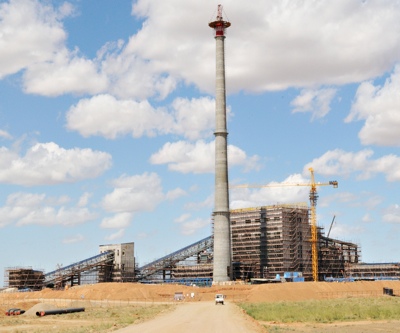
The China Post reports Mongolia's National Security Council has rejected a deal struck with foreign firms to develop the western block of Tavan Tolgoi in the South Gobi desert, the world’s largest deposit of high-quality coking coal used in steelmaking. Metallurgical coal has been trading at record levels of $330/tonne this year and the news is a blow to US mining giant Peabody Energy, China's Shenhua and a Russian-Mongolian consortium that were announced as winners in July. At the time the losing bidders from Brazil, India and South Korea were smarting and Japan went so far as to call the bidding process 'extremely regrettable'. Mongolia was hoping to privatize its Erdenes Tavan Tolgoi coal-mining company which controls the remainder of the 6 billion tonne resource for $3 billion next year.

China number two coal producer closes mine after fatalities

Xinhua News reports the mining operations of China National Coal in Shaanxi Province, the country's coal heartland, were ordered suspended after eight miners were confirmed dead in a colliery flooding on Saturday. Officials said the flooding exposed "serious problems" in the implementation of safety measures and the company would only resume operations after an overhaul. State-owned ChinaCoal is the country's second largest coal producer at 154 million tonnes/year. Due to a paucity of gas and oil China relies on coal for 70% of its energy needs and government analysts expect annual coal demand to reach at least 4 billion metric tons by 2020 even after taking into account unprecedented levels of investment in nuclear, wind, solar, and hydro. Official statistics show the death rate per million metric tons of coal produced stood at 2.63 in 2010.

Big miners needn’t worry about higher royalties in Peru, juniors should

Speaking in Arequipa at Peru's premier mining conference industry executives said on Friday a drive by Peru's leftist president to raise mining royalties should not derail multibillion-dollar investments, but added that the viability of smaller, less efficient operations will be affected. Peru's Buenaventura and US-based Newmont said their $4.8 billion Conga mine, the most expensive mine in Peru's history, was on track to come on line in 2014 while others including Barrick Gold, Xstrata, Anglo American and Gold Fields reiterated their commitment to the country.

Strong stomach needed as gold’s wild gyrations continue

Gold futures returned to above $1,800 an ounce Friday as investors sought the perceived safety of the precious metal ahead of the weekend and news emanating from Europe injected a dose of uncertainty back into markets. Gold for December delivery added $33, or just under 2%, to settle at $1,815 an ounce in afternoon trade. Reuters reports between gold’s highs and lows this year, there is a more than $600 gap, the largest since the 1960s, though its 32% range is below the 42% range seen in 1980.

First wave of coal plant closures due to EPA rules

Kentucky power companies Louisville Gas and Electric and Kentucky Utilities said on Friday new, stricter, federal environmental regulations will force them to retire three older, coal-fired power plants and recoup the $4 billion in EPA compliance costs through future price hikes for customers. A recent industry-sponsored study showed the US coal ash industry could suffer $110bn in lost economic activity and cut 300,000 jobs over the next 20 years under the new rules and between 50,000Mw and 70,000Mw of coal-fired power generation throughout US could be retired. The three Kentucky plants being shut down supplied less than 800Mw of power. One megawatt powers about 1,000 homes.
Featured Post

Top 50 mining companies power through Iran war – up $250 billion in 2026

The world’s 50 biggest mining stocks shrug off global turmoil, hitting a combined $2.4 trillion value in Q1, but the tide did not lift all boats.