Beyond mining: Oklahoma bets on refining to anchor US critical minerals supply chain
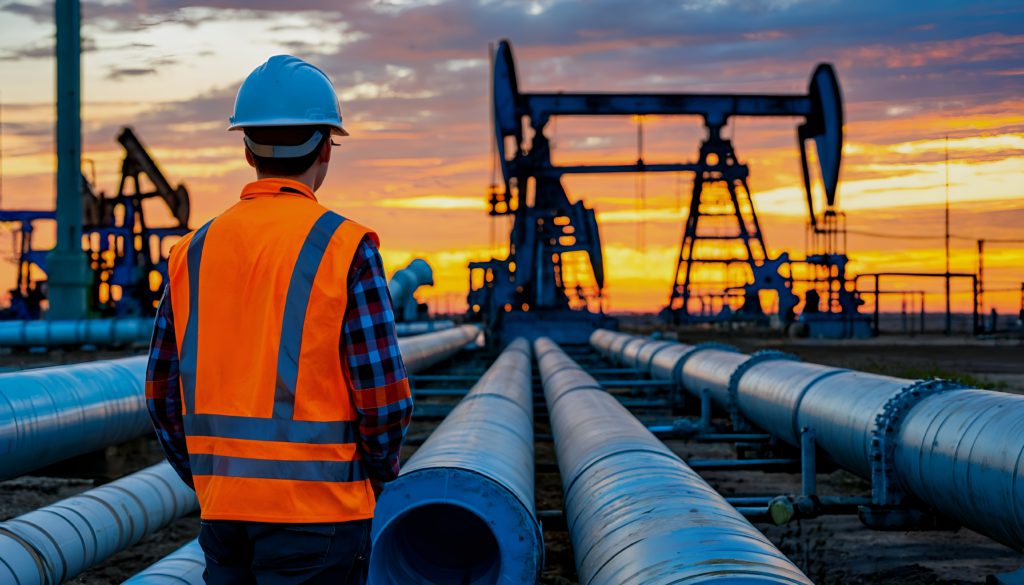
As the United States races to secure supplies of critical minerals, much of the policy discussion has focused on opening new mines. But industry leaders say the bigger bottleneck lies further down the value chain: refining, processing and manufacturing.
In Oklahoma, state officials believe they have found an opportunity in that gap.
Rather than positioning itself as a mining jurisdiction, the state is building a strategy around processing critical minerals into usable industrial materials — aluminum, rare earth magnets and batteries essential to aerospace, defense and advanced manufacturing.
A series of early-stage proposed investments and federal funding programs are now converging around that vision.
The goal is to plug Oklahoma into the middle of the domestic supply chain as the United States works to reduce dependence on overseas processing from China.
“Here in Oklahoma we’re not actually doing the mining of these minerals,” Jay Shidler, Advanced Technology Project Manager at the Oklahoma Department of Commerce told MINING.com in an interview. “It’s around the refining and the production side — being part of the supply chain that turns these materials into finished products.”
“One of the things we’re really focused on is strengthening domestic supply chains and not being dependent on other countries for these materials,” Shidler said.
The “missing middle” of the supply chain
For decades, the US gradually ceded much of the world’s mineral processing capacity to other countries. China built a dominant position refining rare earths and producing permanent magnets, key components used in everything from electric vehicles to defense systems.
As geopolitical tensions have grown and supply chain vulnerabilities have become more apparent, Washington has shifted its attention toward rebuilding domestic capacity.
Federal incentives, including funding tied to the CHIPS and Science Act and other industrial policy initiatives, have begun encouraging companies to establish processing and manufacturing facilities inside the US.
Industry analysts increasingly describe this stage of the value chain as the “missing middle” — the industrial infrastructure that connects raw materials to finished products.
Oklahoma’s pitch to investors centers on filling that gap.
The state’s strategy emphasizes refining, magnet manufacturing, recycling and smelting rather than primary mineral extraction.
Shidler said the approach aligns with broader national priorities around onshoring supply chains and supporting defense manufacturing.
A $4 billion aluminum bet
The most prominent project tied to Oklahoma’s emerging strategy is a proposed aluminum smelter from Emirates Global Aluminium.
The company announced plans to invest roughly $4 billion in a facility near Tulsa at the Port of Inola, a logistics hub that offers barge access for bulk materials moving through the U.S. inland waterway system.
Construction has been forecast to begin as early as 2026.
If completed, the plant would represent one of the largest aluminum investments in the US in decades.
Aluminum remains a critical industrial metal for aerospace, defense and transportation applications. However, the number of operating U.S. smelters has declined significantly over the past several decades due to high energy costs and global competition.
Power and location advantages
In Oklahoma, the combination of wind generation and natural gas resources gives the state a structural advantage, Shidler said.
The State produces roughly 65% more energy than it consumes, according to state figures, with a significant portion of that supply coming from wind power. It’s also a major producer of natural gas.
Those energy resources translate into relatively low electricity costs — a critical consideration for aluminum smelting and other heavy industrial processes.
Location also plays a role in the state’s pitch.
The Port of Inola, where the proposed EGA smelter would be located, is often described as the furthest inland ice-free port in the United States. Through the McClellan–Kerr Arkansas River Navigation System, the port connects to the Mississippi River and eventually the Gulf of Mexico, allowing raw materials to move inland by barge.
Combined with Oklahoma’s central location in the United States, the infrastructure allows materials to move relatively efficiently to manufacturing hubs across the country.
Rare earth magnets and national security
Another pillar of Oklahoma’s critical minerals strategy involves rare earth magnets — a technology that has become increasingly important for defense systems and advanced manufacturing.
USA Rare Earth is developing a vertically integrated rare earth magnet manufacturing facility in the State. The company is building a magnet manufacturing facility in Stillwater, a project that has received roughly $1.6 billion in funding from the Department of Commerce and from the private sector.
Permanent magnets made from rare earth elements such as neodymium and praseodymium are essential components in electric motors, precision guidance systems, wind turbines and a range of other technologies.
Yet global magnet production remains heavily concentrated in China.
The United States currently has limited domestic capacity to manufacture these magnets at scale, making them a key focus of industrial policy efforts.
Building that capability inside the country is seen as an important step toward securing supply chains for both civilian industries and defense systems.
Stardust Power (NASDAQ: SDST) in February joined the Cornerstone Consortium to Support U.S. Critical Minerals and Industrial Base Resilience.
Stardust is advancing development of its lithium refinery in Muskogee, with major engineering work completed and key permits secured, Stardust Managing Director, Oklahoma, John Riesenberg told MINING.com.
The project has secured a major offtake agreement with Sumitomo, and established multiple feedstock supply partnerships, Riesenberg said, adding that construction is expected to lead to commercial production roughly 24 months after initial construction begins.
said they are actively working to attract companies across the supply chain — from refining and recycling to component manufacturing.
Defense and aerospace demand
Another reason Oklahoma believes it can sustain such a cluster lies in its existing aerospace and defense industries, Oklahoma Department of Commerce officials said.
Aerospace and defense is already the state’s second-largest and fastest-growing industrial sector. Oklahoma hosts five military installations, including Tinker Air Force Base near Oklahoma City.
Tinker is widely considered the largest maintenance, repair and overhaul facility in the world, supporting aircraft and equipment used by the U.S. military.
The broader context for Oklahoma’s efforts is the evolution of the United States’ critical minerals strategy, Shidler noted.
Five years ago, much of the discussion centered on restarting domestic mining operations after decades of decline, but that conversation has expanded rapidly.
Policy makers increasingly recognize that mining alone cannot solve supply chain vulnerabilities. Without refining, processing and manufacturing capacity, raw materials must still be sent overseas to become usable products.
That realization has shifted attention toward building industrial capacity across the entire value chain.
Whether Oklahoma ultimately becomes a major processing hub remains to be seen. But the projects now being proposed suggest that the next phase of America’s critical minerals strategy may be less about digging new mines — and more about rebuilding the industrial infrastructure needed to turn those minerals into finished materials.
More News

Gold trims weekly loss as US jobs data raises Fed rate cut bets
March 06, 2026 | 01:53 pm
Peru taps fuel reserves to combat worst energy crunch in two decades
March 06, 2026 | 01:44 pm
{{ commodity.name }}
{{ post.title }}
{{ post.date }}

Comments