Denison builds Canada’s first new type of uranium mine
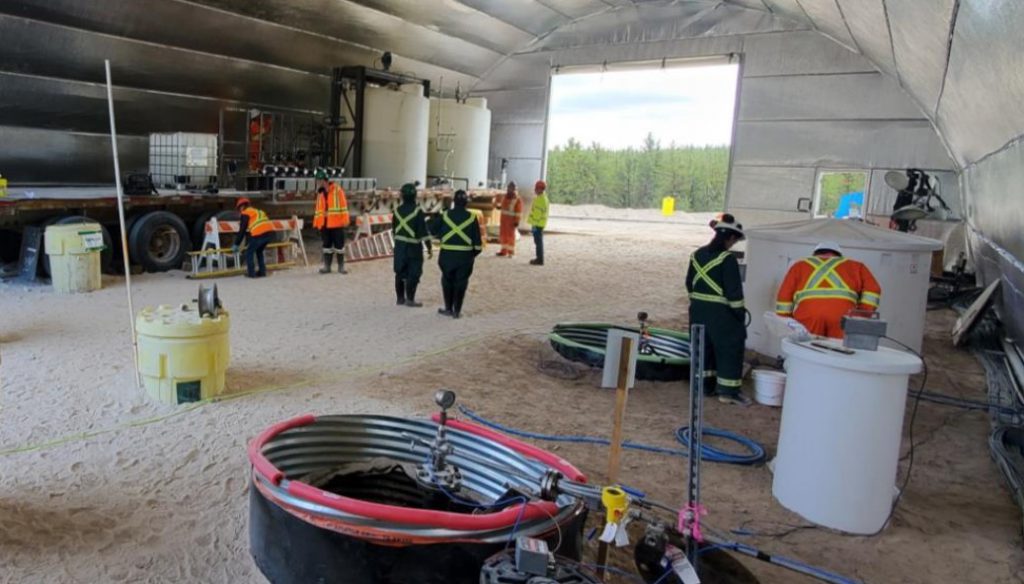
Denison Mines (TSX: DML) plans to start constructing its Phoenix uranium mine in northern Saskatchewan in March, the country’s initial in-situ recovery (ISR) operation for the nuclear fuel.
The C$419 million capex Phoenix build decision and site preparation come just days after the federal regulator approved Denison’s environmental assessment and other licences. The Phoenix/Wheeler River project is in the southeast Athabasca basin, about 550 km north of Regina.
“With construction anticipated to take approximately two years, commencing construction in March is expected to allow us to maintain our objective to achieve first production from Phoenix by mid-2028,” Denison CEO David Cates said in a release on Tuesday.
Output will position Denison among the few uranium suppliers globally able to provide a significant new source of uranium before the end of the decade, Cates added. The ISR method, already widely used in the United States, cuts costs and lessens mining’s local impact as uranium demand is forecast to rise along with nuclear energy’s resurgence as a low-emission power source.
ISR trail blazer
ISR mining injects a solution into underground wells, separates uranium from the ore and pumps it to the surface for extraction. It’s less expensive than hard rock mining, doesn’t require the digging of large pits and leaves fewer tailings. Construction is shorter than conventional mines because ISR doesn’t require ore handling, crushing and grinding infrastructure.
Company shares gained about 1% to C$5.92 apiece on Wednesday morning in Toronto, valuing Denison at C$5.3 billion ($3.9 billion).
Low-cost, high value
Wheeler River is relatively low cost for a uranium project. It has a post-tax net present value of C$1.16 billion and an internal rate of return of 90%, according to a 2023 feasibility study. Its mine life is estimated at 10 years.
Phoenix hosts proven reserves of 6,300 tonnes grading 24.5% uranium oxide (U3O8) for 3.4 million lb. of U3O8, and probable reserves of 212,700 tonnes at 11.4% U3O8 for 53.3 million lb. U3O8.
Denison owns 90% of the project and serves as the operator, with JCU (Canada) Exploration holding the remaining 10%. JCU is a private subsidiary jointly owned by Denison and UEX Corporation (TSX: UEX).
Wheeler River also comprises the adjacent Gryphon project, which is intended as a conventional underground mine.
Athabasca basin catalysts
Denison’s progress coincides with other developments for uranium players in Saskatchewan over the past few weeks. Paladin Energy (TSX, ASX: PDN) received environmental impact statement approval from the province for its Patterson Lake South project on Friday.
NexGen Energy (TSX, NYSE: NXE; ASX: NXG) advanced to the second part of its CNSC hearing for federal approval of its Rook I project earlier in February, the same step Denison successfully completed last week.
If all three projects become producing mines, they would rank in the top five largest operations in the Athabasca basin by reserve size.
{{ commodity.name }}
{{ post.title }}
{{ post.date }}

Comments