Glencore doubles down on copper, keeps M&A in play
Glencore (LON: GLEN) is stepping up its copper ambitions in the Democratic Republic of Congo and beyond, even as it posted a third straight annual earnings decline, while keeping the door open to fresh dealmaking.
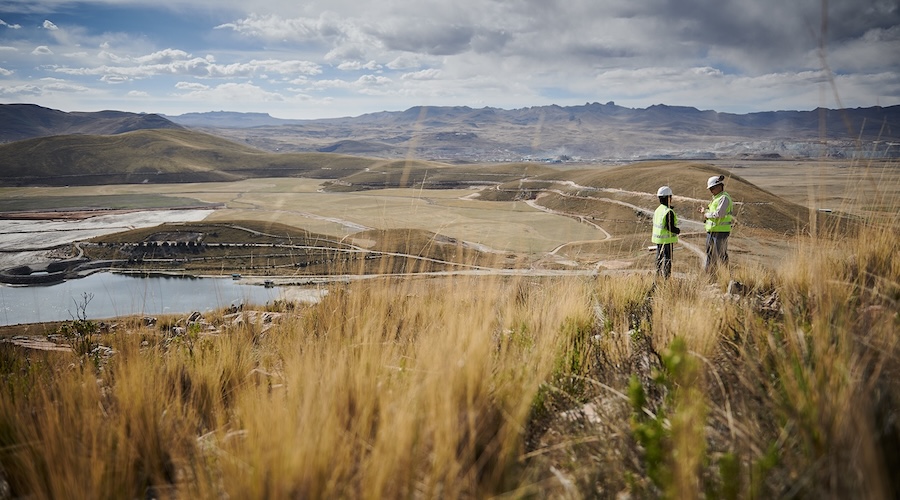
The Swiss miner and commodities trader has finalized a land access agreement with state miner Gecamines for its Kamoto Copper Company (KCC) operations. The deal extends the mine life, unlocks previously restricted ore zones and is expected to improve productivity and lower costs.
“This agreement will allow us to unlock the full potential of KCC,” Mark Davis, Glencore’s chief operating officer for Africa, said in the statement. The additional land in the Kolwezi mining hub will help KCC reach its annual copper output target of 300,000 tonnes and extend the asset’s life into the mid-2040s, he said.
Bloomberg Intelligence said removing this bottleneck clears the way for higher production in the DRC, a cornerstone of Glencore’s strategy to lift copper volumes.
Analyst Alon Olsha and Grant Sporre noted the company aims to almost double copper output by 2035 at a capital intensity of about $16,200 per tonne of copper-equivalent capacity, or $20,630 per tonne on a copper-only basis. Peak development spending could reach about $4.5 billion in 2031, when four major projects advance simultaneously. Including sustaining and other capital expenditures of $5.5 billion to $6.5 billion, total group investment could approach $11 billion at the peak, they wrote in a note.
Management says the growth plan can be self-funded. Consensus forecasts see EBITDA rising to between $16 billion and $20 billion by 2030, from about $12.8 billion in 2025, driven by higher output in the DRC and at Collahuasi, alongside firmer copper prices.
BI experts predict that, to ease funding pressure and manage risk, Glencore may bring in partners on large projects, including a potential minority sale in Agua Rica and a joint venture at El Pachon.
After several years of uneven performance, falling output and repeated downward revisions to production guidance, investors are watching whether the company can convert roughly 1 million tonnes of copper “optionality” into sustained production growth while maintaining financial discipline.
The company’s production is roughly 40% lower than it was in 2018. Nagle outlined a strategy late last year to nearly double copper output over the next decade and has indicated that 2026 should represent the low point for production, with volumes expected to begin climbing from 2027.
The copper push comes as Glencore reported adjusted EBITDA of $13.51 billion for 2025, down 6% from a year earlier as weaker energy and steelmaking coal prices weighed on results. The figure beat analysts’ consensus estimate of $13.3 billion.
Shares jumped 4.2% in afternoon trade in London and are up about 24% so far this year, leaving the company with a market capitalization of nearly £60 billion ($81 billion).
Fat dividend
Chief executive Gary Nagle said momentum improved in the second half, with core profit rising 49% in H2 on stronger metals prices and higher production volumes, particularly in copper.
Glencore will return $2 billion to shareholders, or 17 cents per share, compared with 18 cents last year. The payout includes a 10-cent base distribution from 2025 cash flow and a 7-cent top-up supported by the rising value of its stake in agricultural trader Bunge. Net debt held steady at $11.2 billion, including $1 billion of marketing lease liabilities, remaining above the company’s target of about $10 billion.
The results follow the collapse of takeover talks with Rio Tinto (ASX, LON: RIO) earlier this month. The miners had explored creating a $240 billion group, but discussions broke down over valuation and ownership.
Consolidation push
Nagle said his stance on consolidation remains unchanged despite the failed approach.
“I do believe that consolidation can be good for our shareholders, and obviously it can be good for the shareholders of any other company that we decide to do a transaction with,” he told reporters.
Since becoming CEO in 2021, Nagle has divested or closed 35 operations, raising $6.5 billion. Glencore is also in talks to sell a 40% stake in its copper and cobalt business in the DRC to a US-backed consortium, as it reshapes its portfolio while keeping M&A options in play.
{{ commodity.name }}
{{ post.title }}
{{ post.date }}


Comments