Gold price rally has legs, Scotiabank says
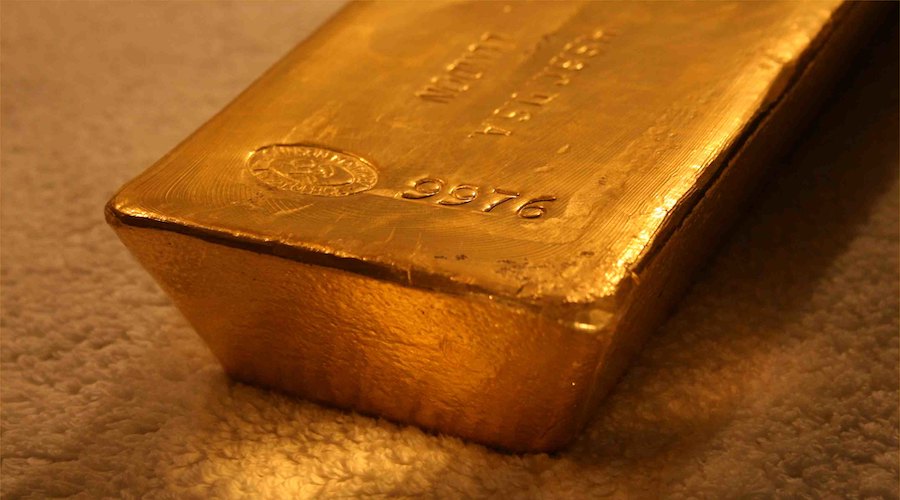
Sustained central bank buying, heightened geopolitical uncertainty and rising investor flows into exchange traded funds are some of the main factors that could keep propelling gold higher over the coming months, Scotiabank says.
“Despite recent volatility, we don’t think this bull cycle is over yet,” Scotiabank mining analysts led by Tanya Jakusconek wrote in a strategy note published Tuesday. “Historical drivers remain firmly in place, in our opinion, including high trade uncertainty, elevated geopolitical tensions, which appear unlikely to diminish in the short run.”
Spot gold dropped about 2.7% to $4,855.92 an oz. Tuesday afternoon, Trading Economics data show. That cut its year-to-date advance to about 13%, following a surge of more than 60% last year. Since Friday, the drop amounts to about 3.5%.
Fiscal situation
Two main macro themes are driving global demand for metals such as gold, Jefferies analysts wrote in a report published last month — inflation and what the firm calls “dollar debasement.” Escalating federal government debt in the United States is fueling growing concern over the US dollar among global institutional investors and central banks, Jefferies said.
This, in turn is fueling de-dollarization — or at least a “shift in global reserve preferences,” the firm added.
Roots of bullion’s climb can be traced back to the Covid-19 pandemic, which led governments globally to unleash unprecedented monetary and fiscal stimulus.
“With governments continuing to run large deficits five years later, with frankly no fiscal restraints in sight, the uptrend in government debt worldwide appears unlikely to stop any time soon,” Jakusconek and her colleagues wrote.
The subsequent seizure of Russian assets following Moscow’s 2022 invasion of Ukraine, widespread resource nationalism and increasingly aggressive steps by the Trump administration — such as the implementation of tariffs on imported goods — “have investors looking for safety in hard assets such as gold,” she added.
Central banks — mainly in emerging market countries — see gold as a key asset diversifier and have been strong net buyers, collectively owning under 30% of the physical metal, according to Scotiabank data. The banks bought 328 tonnes of gold in December 2025 via the International Monetary Fund and other public data sources, compared with 345 tonnes a year earlier, World Gold Council data show.
Investment demand
Physical gold ETFs attracted $19 billion in deposits in January, the strongest month on record, World Gold Council data show. Combined with a 14% monthly surge in the gold price, January’s net buying boosted global gold ETF assets under management 20% to a new record of $669 billion. Collective global holdings rose by 120 tonnes to 4,145 tonnes, another new all‑time high.
Demand for gold is also being underpinned by buying from stablecoin issuers like Tether.
Tether, the largest non-sovereign buyer of physical gold, ranks among the metal’s 30 biggest global holders, Jefferies mining analysts led by Fahad Tariq wrote in a note published Feb. 8. Tether held 148 tonnes of physical gold valued at about $23 billion as of Jan. 31 after purchasing 26 tonnes in last year’s fourth quarter and another 6 tonnes in January, Jefferies estimates.
While central bank and investment demand, geopolitical uncertainty and de-dollarization contributed to gold’s 49% rise from July through the end of January, “we continue to believe that Tether’s buying also played a role,” the Jefferies analysts wrote.
{{ commodity.name }}
{{ post.title }}
{{ post.date }}



Comments