Q&A: Neglected lime systems can halt mines
Miners are pushing existing operations harder as new projects face high costs, tight capital and long permitting schedules. That shift has made plant reliability and reagent use more important to growth.
Carmeuse Systems Sales Manager Zach Richardson tells The Northern Miner Video Anchor Devan Murugan why miners should treat lime handling as core plant equipment, not an afterthought.
Richardson said lime handling and slaking systems often receive little attention despite their effect on downstream chemistry, metal recovery, uptime and operating costs.
Devan Murugan: Are miners shifting investment from new projects to existing operations? What is driving the change?
Zach Richardson: We really are seeing that shift. A decade ago, mining companies put much more capital into new operations. Over the past few years, the pendulum has swung toward existing sites.
Customers are focused on getting more production and efficiency from the assets they already have. New mines require large investments and depend on factors outside a company’s control. Permitting has grown more complex and timelines have stretched.
Investing in an operating site can produce a faster return without the spending required to build a new mine.
DM: When companies invest in an existing operation, where do they look first?
ZR: They want more production, lower operating costs and better reliability. Most start with their core processes.
The systems feeding those processes often get overlooked. Lime equipment falls into that group. It may be treated as secondary, but the plant still depends on it.
DM: Why do lime handling and slaking systems receive so little attention?
ZR: Few people want to deal with them, so they are often neglected.
They may sit outside the plant’s main process, but they affect downstream chemistry and the speed and efficiency of metal recovery. A failure in one of these systems can create much larger problems across the operation.
Operators often pay attention only after something goes wrong.
DM: What are the risks of waiting for a failure before acting?
ZR: We often get the call when the site already has an emergency.
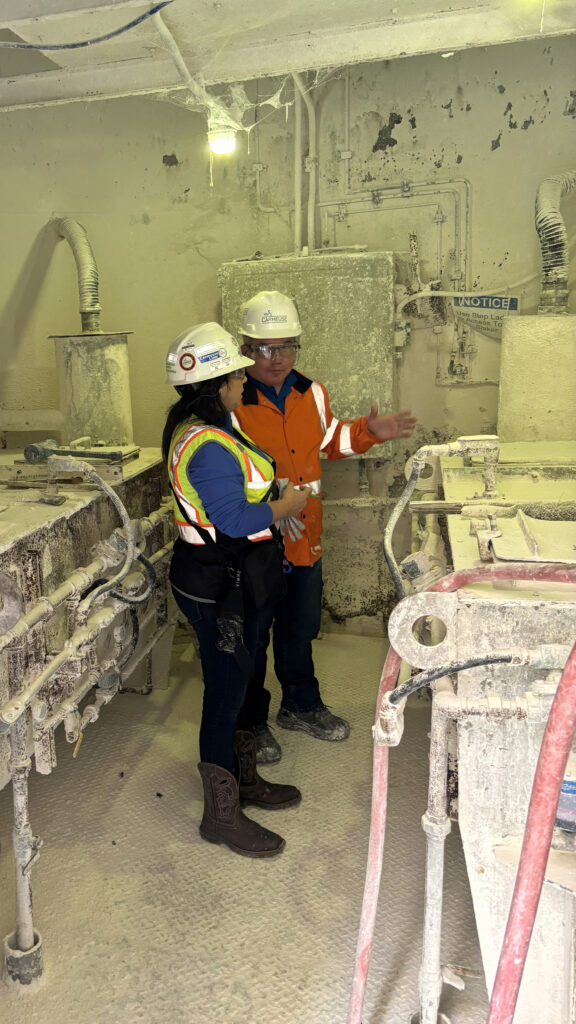
That creates safety risks because crews must carry out unplanned maintenance, sometimes in confined areas exposed to heat and dust. Operators may switch the system to manual mode, but much of the knowledge needed to run older equipment that way has been lost.
People can make the problem worse while trying to keep the plant running. If the lime system cannot operate, the mine may have to shut other parts of the processing plant.
DM: Does resistance to change make the problem worse?
ZR: It does. Operators may keep using the same approach because the equipment still runs, even if it runs poorly.
Lime has become a much more expensive process input since the pandemic. When a machine does not use it efficiently, the operation wastes reagent and money.
We are trying to move customers from a reactive approach to a proactive one. They need to understand how the equipment works, how to operate it efficiently and when to intervene before a problem becomes an emergency.
We call that lime utilization. The goal is to make as much of the lime as possible do useful work instead of wasting it.
DM: How is the loss of experienced workers affecting these systems?
ZR: It is one of the mining industry’s biggest obstacles. Experienced workers are retiring while younger employees move more often between companies. Sites are losing knowledge faster than they can replace it.
I recently spoke with a young operator who wanted to run the equipment properly but had not received the knowledge he needed.
“I want to do a good job, but I just don’t know how to operate this piece of equipment,” he told me. “I have no idea what we’re doing. Please help.”
We hear versions of that at site after site.
DM: What can mining companies do to close that knowledge gap?
ZR: They must work more closely with suppliers that understand both the equipment and the material moving through it.
A regional engineering manager told me his company had reached that point.
“We have to rely on our suppliers to know how to run these machines and these systems as efficiently as we can,” he said. “We just don’t have the knowledge in-house to do it.”
Because Carmeuse Systems is part of a lime producer, we understand the raw material as well as the handling and slaking equipment. That matters because lime quality, water and operating conditions all affect system performance.
The industry needs to preserve that knowledge and make it available to the people running the plant. Better equipment alone will not solve the problem. Operators must know how to use it.
DM: Zach Richardson, sales manager at Carmeuse Systems, thank you for joining us.
ZR: Thank you, Devan. I appreciate you having me on.
This sponsored video is PROMOTED CONTENT paid for by Carmeuse Systems and produced
Comments