Op-Ed: Critical mineral sovereignty starts with deep tech
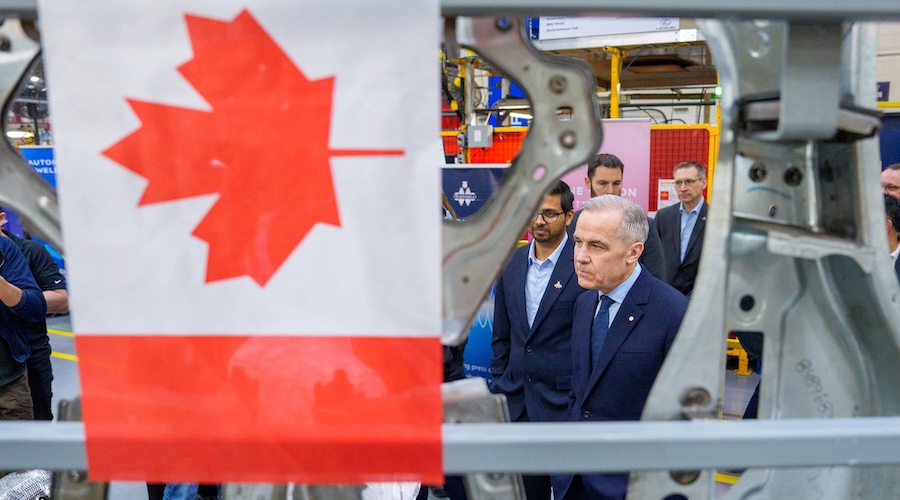
Sovereignty is one of those words governments use when they want to sound serious. In critical minerals, it should be taken literally. Ottawa’s March 2026 announcement of up to $40 million for the Canadian Digital Core Library is more than another mining news release, and an admission that geological data is strategic infrastructure. It also marks a shift toward treating drill samples as part of Canada’s competitiveness toolkit.
It is too early to treat this as mission accomplished. Sovereignty in critical minerals is synonymous with controlling enough of the value chain to matter, and the federal critical minerals strategy makes that plain. It frames the opportunity across the full chain, from exploration and extraction through processing, manufacturing, and recycling, and argues that value must be added across that system if Canada is to become a supplier of choice. Sovereignty, in other words, starts long before production.
Norway understood that in oil and gas, influence came from more than hydrocarbons alone. Since its early offshore discoveries, the country has turned that resource base into technical competence and an exportable service industry.
Critical minerals now sit in that same category. Historically, global supply was treated as a market problem, with the assumption that price signals would do the rest. China treated critical minerals as strategy, while much of the rest treated them as procurement. Canada’s own policy language shows the shift by explicitly frame critical minerals through sovereignty, economic resilience, and the risks of geopolitical threats, unfair market practices, and foreign control.
That is why a small investment in drill-core digitization matters far beyond a technical side project or modernization exercise. It is part of the upstream capability stack that determines how quickly geology is turned into strategic advantage. The federal drill-core initiative is a real opportunity, and related geoscience data efforts across the country point in the same direction. These are early pieces of a modern exploration system.
The argument turns blunt here. Scanning is absolutely necessary, and scanning is insufficient on its own. Institutions that capture data while leaving preprocessing, interpretation, hosting, and workflow integration to external dependency digitize the rock and export the advantage. Buying tools while outsourcing the brains creates dependence rather than sovereignty. The same is true when operation of equipment is mistaken for the competence to analyze, interpret, and apply data at scale. That is the line between procurement and nation-building.
The right policy funds the full capability stack around tools, workflows, and domestic analytical competence. In the near term, that means pairing any scanning program with Canadian-led hardware and software infrastructure. It also means procurement rules that reward domestic analytical capability over foreign pass-through arrangements or domestic front ends for foreign-controlled platforms, processing, or commercial capture.
Just as important, this cannot be treated as a one-time modernization project. There are better models. Australia’s National Virtual Core Library has been two decades in the making. Today, the system is large, open, and continuous.
The process and mechanism for digitizing geological assets are just as important as the outcome. The larger opportunity is to use that effort to build the domestic capability that critical mineral sovereignty requires.
––––––––––––––––––––––––––––––
*Masoud Aali is the founder and CEO of Nova Scotia, Canada-based Scient Analytics Inc.
More News
{{ commodity.name }}
{{ post.title }}
{{ post.date }}
Comments