Op-Ed: Why mining companies are rewriting their technology roadmaps
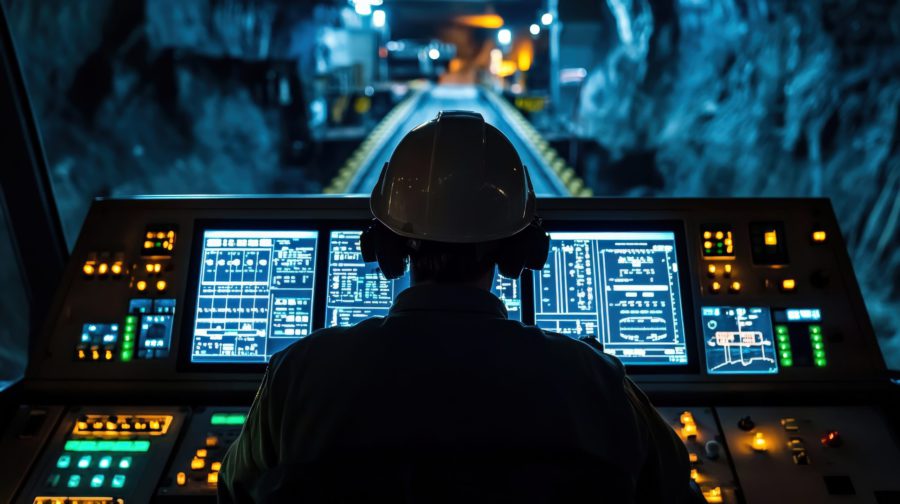
As volatility reshapes global markets and stakeholder expectations continue to rise, mining companies are entering a period of strategic reset. Commodity prices fluctuate, costs remain elevated. Environmental, social, and governance (ESG) scrutiny is intensifying across jurisdictions.
Operations now span continents and regulatory regimes, adding complexity to already demanding supply chains. In this environment, leaders need visibility.
For years, many mining organizations relied on a mix of legacy systems, spreadsheets, and manual processes to connect finance, maintenance, procurement, and site operations. That approach was manageable in steadier cycles, when slower reporting cycles and fragmented data posed fewer risks. Today, those same gaps create exposure. Investors expect transparency, and regulators require traceability.
In addition, boards want clear insight into cost drivers, capital allocation, and operational performance in real time. Technology modernization, once viewed as a future milestone, has quickly become a present-day strategic imperative.
At the center of this modernization is the enterprise resource planning (ERP) system. Modern ERP environments are becoming the operational backbone for mining organizations, providing a single system of record that connects finance, supply chain, maintenance, and site operations.
Here are the essential elements of the 2026 tech roadmap:
A fundamental shift in scale
The meaning of scale in mining technology is changing. Digital transformation once implied a sweeping, multi-year overhaul that only large enterprise, global producers could fund. Today, cloud delivery models and standardized architectures allow junior and mid-sized mining companies to modernize in phases faster and at lower overall cost.
Miners can establish a stable enterprise core across finance, capital management and procurement, then expand into supply chain and maintenance as complexity increases. Systems grow alongside the business instead of lagging behind it.
For many organizations, that core is anchored by a modern ERP platform, such as SAP, that provides the financial and operational structure needed to scale. By establishing a standardized ERP foundation early, miners gain the ability to extend capabilities across sites and jurisdictions without rebuilding core processes each time the business grows.
This flexibility lowers barriers for emerging and mid-market operators and helps them adopt stronger governance earlier in their lifecycle.
Making the invisible visible
Mining is inherently capital intensive. Heavy equipment fleets, spare parts inventories, contractor services, and fuel expenditures represent major cost categories. Yet, in many organizations, operational data and financial data still operate in separate systems. Maintenance activity may not align seamlessly with procurement records, while inventory balances may not reflect real-time usage. Financial reconciliation often happens after the reporting period closes.
When information moves slowly or inconsistently, leaders lack a clear picture of cost behavior. Excess stock accumulates, downtime trends remain hidden, and small inefficiencies compound across sites.
Modern enterprise platforms address this disconnect by unifying operational and financial data into a shared environment. Managers gain consolidated visibility into asset performance, reliability, working capital, and costs. With reliable data across departments, teams can identify anomalies earlier, adjust procurement strategies, and deploy capital with greater precision.
Finance as a strategic driver
Traditional reporting cycles often limit leadership to retrospective insight. By the time results are consolidated, market conditions have already shifted. Integrated financial architectures are compressing those timelines. Automated consolidations and standardized data models enable faster closes and near real-time visibility into cash position, capital spending, and operating performance.
This shift transforms the role of finance. Leadership can rebalance investment, pace development projects, or manage liquidity based on current data.
For junior and mid-tier miners, this agility is critical as exploration and development projects require disciplined capital management.
Designing for resilience
As modernization efforts advance, system design philosophy is evolving. Increasingly, mining companies are embracing a clean core approach, keeping essential processes standardized within the central enterprise platform while developing custom requirements through extensibility and integrating business solutions through open interfaces.
Applications supporting geology asset management, environmental monitoring, or safety are difficult to integrate without deeply customizing the core system. Using Extensibility and standard smart interfaces improves upgrade flexibility, reduces technical debt, and strengthens governance and reporting.
Preparing for advanced analytics
Artificial intelligence (AI) and predictive analytics are gaining momentum across mining, from forecasting equipment failure to optimizing supply chains and enhancing workforce safety. Yet advanced capabilities depend on disciplined data foundations. Companies realizing measurable returns, focus first on harmonizing master data, improving business process, and defining governance over information flows.
Modern ERP environments help provide the structured data foundation required for these AI applications. By standardizing financial, operational, and asset data across the enterprise, ERP systems support AI and predictive analytics initiatives across mining operations.
A strategic imperative
Mining has always operated on long investment horizons, with assets designed to produce value over decades. Yet the systems that support those investments can no longer move at the historical slow pace. Market volatility is no longer cyclical but often have large sporadic swings due to technology innovations, political climate and global markets.
In 2026, rewriting the technology roadmap is about reinforcing the digital backbone of the business. Integrated platforms enhance visibility across operations. Clean architectures enable adaptability as organizations grow. Trusted data supports faster, well informed decision making.
Cloud ERP platforms today are offering opportunities for mining organizations of all sizes to deploy what they need, when they need it, without massive IT teams and infrastructure. The new cloud-based approach provides standardization to keep a clean core while offering extensibility, faster implementation cycles, lower project costs, and have a higher return on investment with less impact to the business.
Forward-looking mining companies recognize that enterprise systems are no longer back-office infrastructure. They are central to performance, governance, and sustainable growth. By modernizing with intention, miners position themselves to manage uncertainty, attract investment, allocate capital, and compete with confidence in a demanding global market.
Nick Cecil is Industry Principal for Mining & Natural Resources at Syntax.

{{ commodity.name }}
{{ post.title }}
{{ post.date }}

Comments