Revival sees growth potential at Utah gold mine
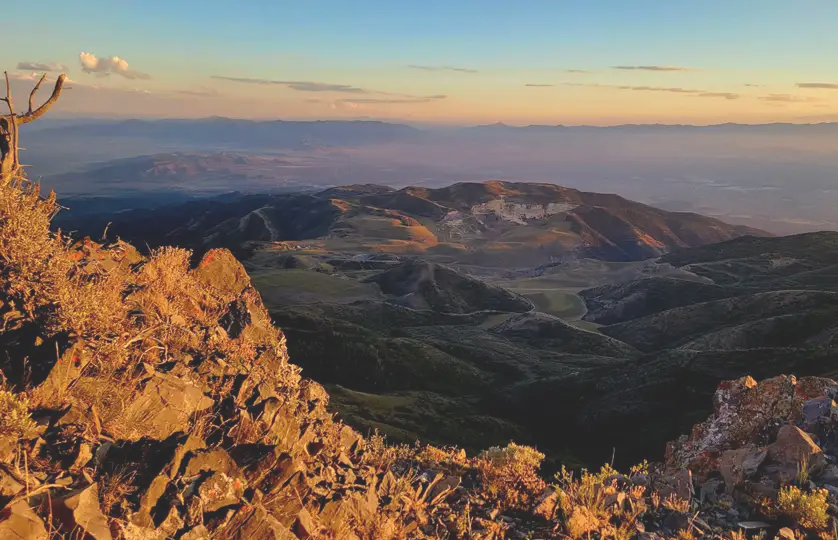
Revival Gold (TSXV: RVG) said final assays from its 2025 drill program at the past-producing Mercur gold project in Utah underscore the deposit’s expansion potential.
Highlight hole RMC25-031 — one of the strongest reported to date from the South Mercur area — cut 74 metres grading 2.8 grams gold per tonne from 91 metres downhole, Revival said Tuesday in a statement. This included about 13 metres of 8 grams gold from 13 metres depth.
The 2025 drilling program, which included 115 holes, furthers a push by Revival to expand resources at one of the few large undeveloped western US gold projects ahead of a pre-feasibility study that’s now planned for the first quarter of 2027. The study represents a “major milestone” on the path to restarting gold production at Mercur, according to the company.
Other notable results from South Mercur include hole RMC25-032, which cut 84 metres of 1.1 grams gold from 14 metres depth. In the Mercur Hill area, hole RMC25-172 cut 23 metres grading 1.8 grams gold from 102 metres downhole.
High-grade zones
As demonstrated with the results released Tuesday, “Revival Gold is seeing intact high-grades zones at South Mercur,” CEO Hugh Agro said in the statement. “The shoots not only benefit our current heap leach project but provide an exciting exploration opportunity.”
Revival – which bought Mercur in 2024 and acquired Barrick Mining’s (TSX: ABX; NYSE: B) remaining stake last week — is advancing Mercur as a heap leach operation. It’s targeting a construction decision in 2028 and potential production by 2029.
Ongoing drilling is focused on converting and expanding resources, particularly in underexplored areas such as South Mercur – which remains open for further expansion — and along strike from the historic Main Mercur pit.
Revival is planning to resume exploration and engineering drilling at Mercur later this month. The planned program stretches over 16,000 metres.
Existing infrastructure
Located 57 km from Salt Lake City, Mercur covers about 66 sq. km and benefits from existing infrastructure. A preliminary economic assessment released last year envisioned a $208 million investment to build a mine with a 10-year life that would produce 95,000 oz. gold each year.
Including its other projects, Revival aims to surpass 160,000 oz. in annual gold output over time.
Named after the German word for mercury, Mercur was one of the earliest recognized Carlin-type gold systems in the western US. It was most recently operated by Barrick from the mid-1980s until 1997, when the mine closed due to depressed gold prices.
Revival shares rose 3.9% to C$0.79 Tuesday morning in Toronto, boosting the company’s market value to about C$217 million ($156 million).
More News
Allied Critical surges to new high on Portugal tungsten hit
April 07, 2026 | 10:39 am
BRICS+ nations hold over 17% of world’s gold reserves: Report
April 07, 2026 | 09:43 am
{{ commodity.name }}
{{ post.title }}
{{ post.date }}
Comments