Empowering grinding mill operation: the impact of data-driven decisions
When it comes to operating grinding mills, many concentrator plants are turning to the power of data to give their performance an edge. However, as sensors are installed and data begins to flow in, new problems can arise. Dealing with waves of data points, grinding operators can in some cases be compared to surfers. They want to identify and catch the biggest wave, but they don’t want to be wiped out by misinterpreting what they are seeing. With the challenge revolving around maximizing equipment uptime and throughput, the stakes can be high. Every lost hour of production will impact the site’s overall profitability.
To make things more complicated, many operational factors such as ore properties and component wear are always changing. Even a planned short stop is costly and affects the entire operation. When planned, shutdowns are mainly devoted to preventive maintenance and relining, but little time may be available to perform in-depth inspections of critical components. (What you don’t see can hurt your mill.) Even the operators’ comfort zone with managing specific parameters or equipment can significantly affect the circuit performance and output.
With all this variability to manage, data and digital solutions can play a big role.

Looking to the future
There is a lot of excitement around the future of data-driven services in mining. Imagine easily and consistently operating a grinding circuit at optimum performance, while considering the fluctuating parameters of the entire circuit. With enough data, we could configure the initial equipment setup and operating parameters based on global benchmarking of the circuit with the most efficient performance. Once the circuit is in operation, both upstream and downstream data could also be analyzed to optimize the overall process. This would be the dream scenario of many customers and operators. For example, when feed ore properties change, AI-driven services could suggest precise and timely adjustments to maintain a stable mill operation and ensure the optimal particle size for beneficiation. At the moment, this scenario is not a fully functional reality. Experts with a good understanding of process dynamics and overall process behavior are still needed to guide decision making and recommend the right solution.
Data-driven operations now
Grinding circuits are often equipped with appropriate process sensors to operate, guided by data such as fresh feed tonnage, water addition, specific gravity, mill weight, speed and power. Whether to operate manually or to follow semi-automatic logics of control is based on gut feel and grandfather experience which may not be the best practice to optimize the circuit. For example, fuzzy logic control is based on operating rules set out to stabilize the tonnage and increase daily throughput, to establish the usage of variable speed, to reduce deviation from the operation targets and to revise the rules as it leans. However, most often these types of controllers are often turned off as control room personnel consider them to be too sluggish or too aggressive in terms of their reaction which causes process upsets. Equipment and technologies can be added to monitor and improve material feed consistency, grinding media addition, optimized load and grinding efficiency while monitoring wear that can affect your throughput. Data-driven solutions can help keep systems and equipment operating at optimal performance levels to meet production goals.

Learning how to operate and maintain grinding mills in a live setting can also be a real challenge when any mistakes made can have a direct impact on production, asset health and safety. Technology such as Geminex™ digital twin creates virtual replicas of physical assets and processes, allowing for simulation, optimization, and predictive maintenance. In the context of grinding, digital twins can model the behavior of grinding mills and predict their performance under different operating conditions, helping with process optimization and troubleshooting. Operator training simulators such as Geminex™ OTS allow plant personnel the experience of operating their equipment in a digital, virtual and realistic environment. This allows new operators to virtually operate a grinding circuit and learn from mistakes without real-world consequences.
Digital solutions can also help make better predictions, plan production, and even predict potential challenges early, giving us time to make required changes exactly when they need to be done. Digitalization plays a pivotal role in safeguarding grinding assets by enabling proactive detection and correction of issues before they escalate into costly damages. With real-time monitoring and advanced analytics with remote support, digital solutions can analyze trends, detect anomalies and potential failures early on, allowing maintenance teams to intervene promptly.
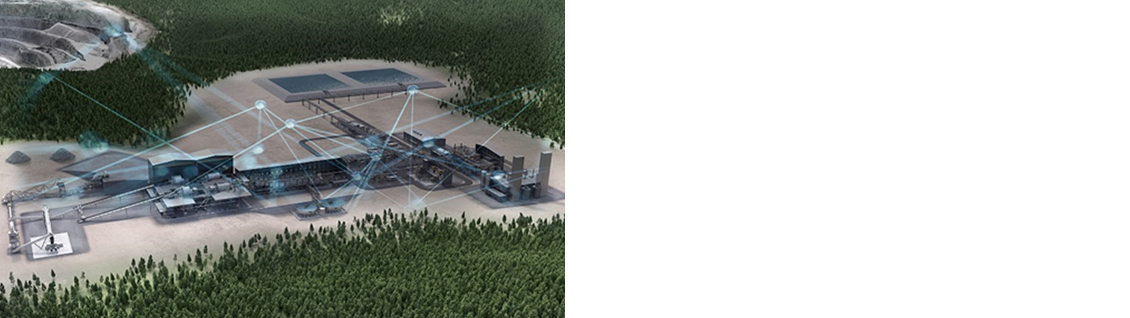
Quick digital wins
Looking at some relatively quick fixes areas where digitalization can have a direct and immediate impact, the following solutions are also worth considering.
Mill lining wear life
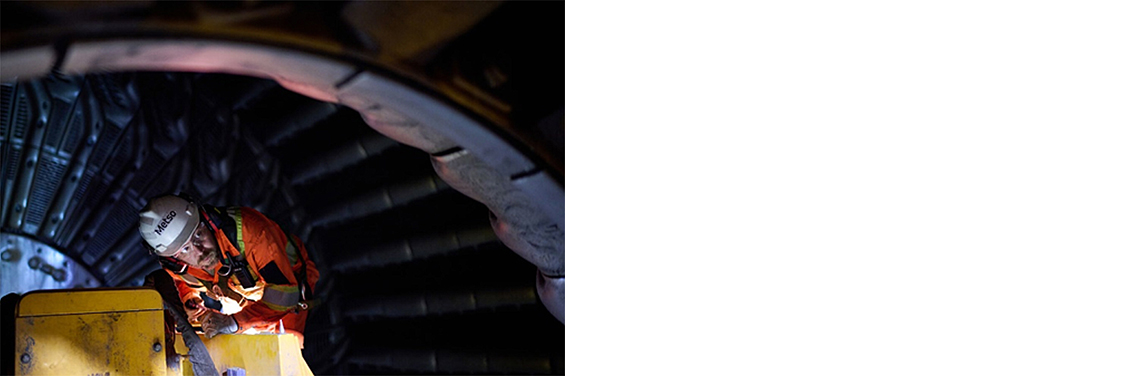
Measuring the wear status of mill liners is important to avoid unplanned stops and to plan more accurately the remaining service life of the liners and predict when they need to be replaced. There are several effective methods to measure the wear status of mill liners. The most critical sections can be inspected very quickly using simple manual tools but in other cases a full 3D laser scan of the entire mill can be done, giving millions of data points, and capturing the entire internal liner surface of the mill. The data are then processed using software such as Metso MillMapper™ and turned into a complete and detailed topographic map allowing for the measurement of liner thickness anywhere in the mill. The data can be processed, cleaned, aligned, and turned into a model that is later studied in detail with all critical cross-sections analyzed, resulting in a comprehensive wear report. Metso has for a long time been developing and using unique mill lining DEM simulation tools that allow to try proposed design changes, compare different designs, find potential high-wear areas and ensure efficient charge motion in the mill throughout the entire life of the lining. Depending on the customer’s needs and targets, information from the inspection can provide suggestions for improvements in material selection, optimized liner designs and identify areas in need of changes to balance the wear life and improve the grinding performance. Solutions that monitor wear liner wear such as VertiSense™ for Vertimill® and WearSense™for chutes can help to predict the ideal moment for liners to be changed-out, thereby reducing the chance of unplanned stoppages.
Girth gear monitoring and maintenance
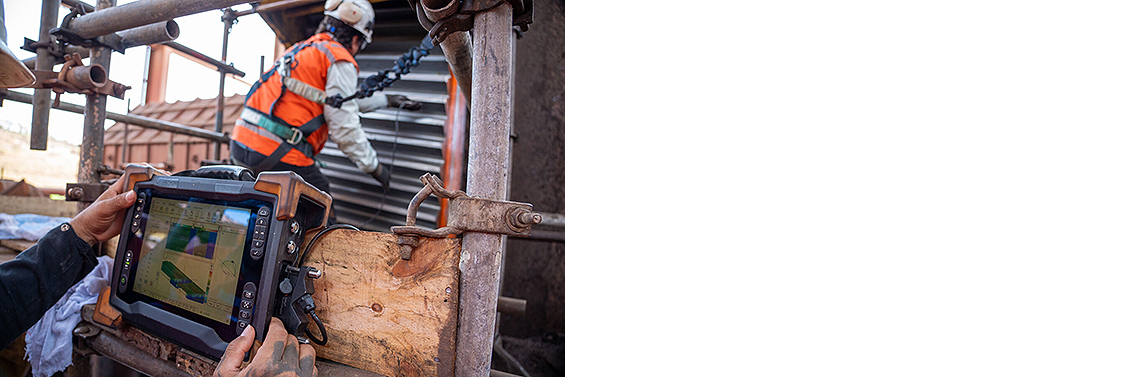
Preventative inspection programs, combined with solutions such as pinion temperature monitoring, are key to keeping your asset in optimal condition. Digital inspections use advanced technologies such as laser scanning and digital imaging, providing highly accurate and precise measurements of the gear condition. This accuracy is crucial for detecting early signs of wear, misalignment, or damage that could lead to failures. Inspection experts can instantly analyze inspection results and identify potential issues. This enables prompt decision-making and proactive maintenance strategies. Metso digital girth gear inspections are a non-destructive method saving up to 60% on mill downtime due to the quick and efficient inspection process, optimizing equipment availability for production. Digital inspection technologies can capture detailed information about the entire surface of girth gears, including hard-to-reach areas. This comprehensive coverage ensures no potential defects or abnormalities are missed during inspections. Girth gear flushing and cleaning before inspections hold significant importance by eliminating the accumulation of contaminated lubricant, to mitigate variations in lift-off for the inspection probe, thereby enhancing sensitivity and consistency throughout the inspection process.
Condition monitoring
Grinding mills are normally equipped with instrumentation to monitor and ensure equipment safety. Flow, pressure and temperature transmitters are normally installed to check mining equipment health. In addition, vibration analysis is a valuable technique used to monitor and maximize the reliability of mining process equipment. When applied correctly, it can detect and identify existing and developing issues based on equipment condition. A vibration monitoring system can identify current and potential mill drive train issues to allow preventative maintenance activities to be scheduled during planned shutdowns. The system can be developed to provide specialists access to raw data and spectrum analysis, or OEM connectivity for remote diagnostics and support to resolve equipment-related issues. Plant owners can also take advantage of cloud-based OEM analytics to gain valuable insights into asset condition and performance that can be used to develop a predictive maintenance plan.
The big question comes down to how these solutions can tie into your overall grinding strategy. Implementing some or all of these solutions can elevate your grinding performance to the next level. If you are eager to explore how data can support your operation, see what Metso has to offer and explore Metso’s full aftermarket offering here: Your #1 service partner from pit to port.

{{ commodity.name }}
{{ post.title }}
{{ post.date }}

2 Comments
Kamrani
We have fls grinding in our factori and girth gear have vibrating in main pinion motor.what solotion do you sujest
Metso
Thank you for your inquiry.
There a few factors that can influence your solution. Is this a ball mill? How much vibration are you experiencing and when did it begin? Do you have pinion temperature readings? Is the gear spray system working properly? Have the gear and pinion been inspected for damage? Please let us know the details of what you are experiencing and we will work to support you.