Seeing the whole system: Why the pump is the heart of grinding circuit performance
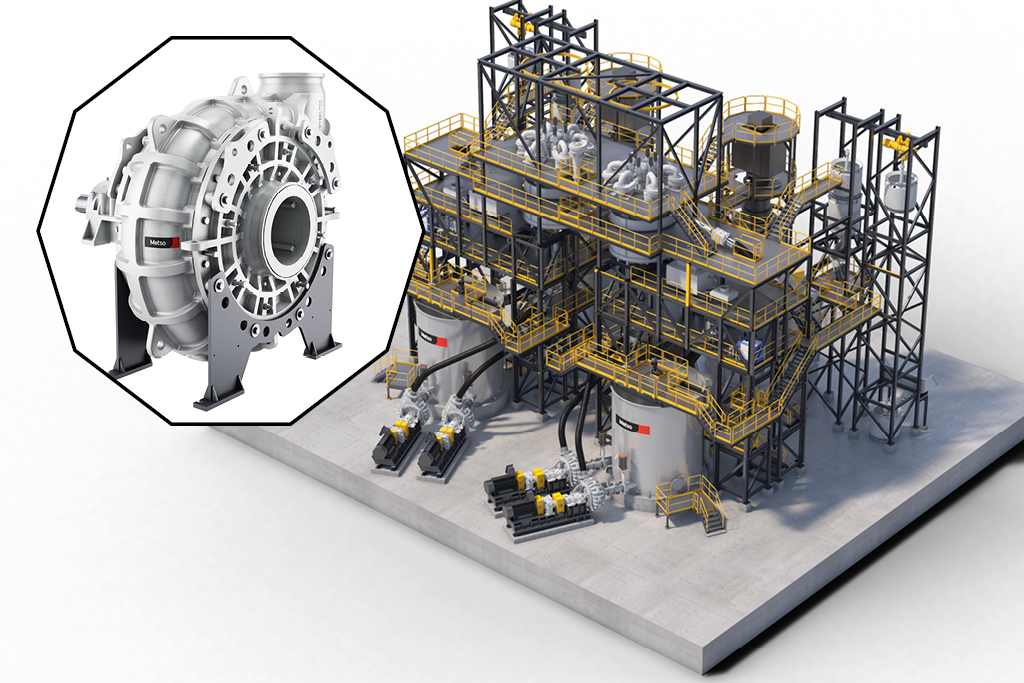
Mining companies continue to look for ways to maximize efficiency, control costs, and maintain stable production, even as ore characteristics and operating conditions fluctuate. While operators naturally focus on grinding mills and hydrocyclones as the visible “performance drivers” of a concentrator, there is another component quietly influencing every part of the circuit: the slurry pump.
During discussions among Metso’s grinding and slurry handling experts, a simple but powerful analogy emerged to describe how the system truly works. In this analogy, the mill is the brawn, breaking down the ore. The hydrocyclones are the brain, making real-time separation decisions. And the pump is the heart, circulating slurry through the system and sustaining the rhythm that keeps everything functioning.
When the heart struggles, the whole body feels it.
And in a grinding circuit, that means reduced stability, more variability, and declining recovery.
Yet pumps remain one of the most undervalued components in the grinding process. By adopting a holistic, system-level perspective and recognizing how pump performance shapes both upstream and downstream behavior, operators can unlock new opportunities to stabilize performance, reduce downtime, and protect long-term equipment life.
The heart of the circuit: why pumps matter more than many realize
In many plants, slurry pumps are viewed simply as the equipment that moves material from point A to point B. They operate in the background while attention focuses on mill power draw, liner wear patterns, or cyclone cut size. But pumps play a process-critical role, not just a logistical one.
The pump determines the flow and pressure delivered to the cyclone cluster. And cyclone performance depends entirely on what it receives. As one Metso expert noted, “There are no moving parts in a cyclone, it can only classify what is sent to it.”
When a pump cannot deliver stable conditions, due to sizing limitations, wear, layout constraints, valve issues, or changes in the feed, the cyclone responds immediately. The impacts cascade through the loop:
- Separation efficiency drops
- Overflow product size particles return to the mill
- Circulating load rises
- Energy consumption increases
- Flotation receives inconsistent feed
- Tailings volumes increase
- Product grade declines
In other words, when the pump is not optimized for the circuit, it can quickly become a constraint on overall performance.
Working in a world of variability: the challenge of static sizing
One of the clearest challenges highlighted by Metso experts is the mismatch between how pumps are traditionally sized and how grinding circuits operate. Pump selection is often based on a static duty point, a single value on a curve.
But grinding circuits don’t behave that way. Ore hardness shifts. Water availability changes. Throughput targets evolve. As one specialist put it: “The flow sheet is never fixed. It’s transient. It moves across the curve.”
Once installed, the pump, piping, and foundations create a fixed configuration. As conditions inevitably change, operators often face:
- Oversized pumps operating far from their most efficient range
- Undersized pumps unable to handle increased flows
- Piping that limits velocity adjustments
- Changing cyclone pressure requirements
- Inability to adapt without major capital changes
A grinding circuit needs a heart that can keep up with change—not lock the process in place.
A flexible approach: Metso’s modular MD pump design
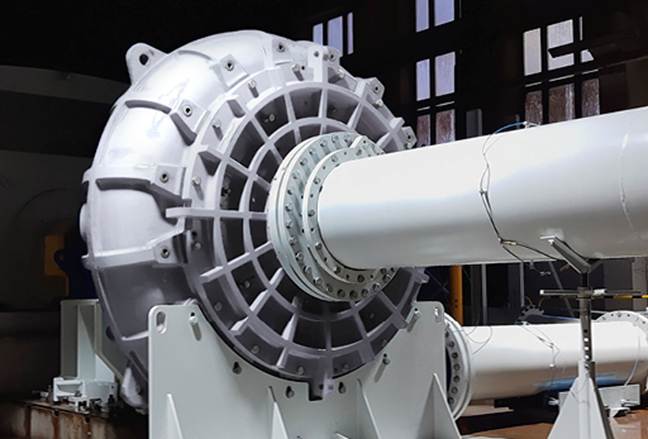
MD Series mill discharge pumps, part of the Metso Plus offering were developed specifically to help operators manage real-world variability. Unlike conventional pump designs, MD pumps allow operators to change impeller and inlet sizes without replacing the entire pump or its frame.
With just two component swaps, the impeller and inlet liner, operators can adjust capacity within the same footprint. For example:
- On the 1600 frame: 600, 650 or 700 mm options can be used
- On the 2100 frame: 800 or 900 mm options are available
This modularity allows sites to adapt to changes in ore hardness, cyclone pressure targets, throughput adjustments, or operational improvements—without major redesigns or shutdowns.
For plants where variability is part of daily life, this flexibility helps maintain stable cyclone performance, protect pump efficiency, and support predictable circuit behavior.
Maintenance realities: why maintainability is often overlooked
As plants expand production, equipment grows larger—but footprints rarely do. Pumps often end up in tight, congested layouts that complicate maintenance. Operators deal with:
- Short pipe runs that restrict safe access
- Tanks positioned close to the pump
- Trapped circular components requiring full pump removal
- Limited lifting clearances and challenging crane angles
- Time-consuming disassembly for routine inspections
In some situations, operators have even switched from metal pumps to rubber-lined designs simply because the split casing of the rubber lined option allowed safer maintenance within the available space.
Maintainability is not a convenience—it is essential for uptime, safety, and long-term reliability.
Designed for real-world maintenance: split components and slide bases
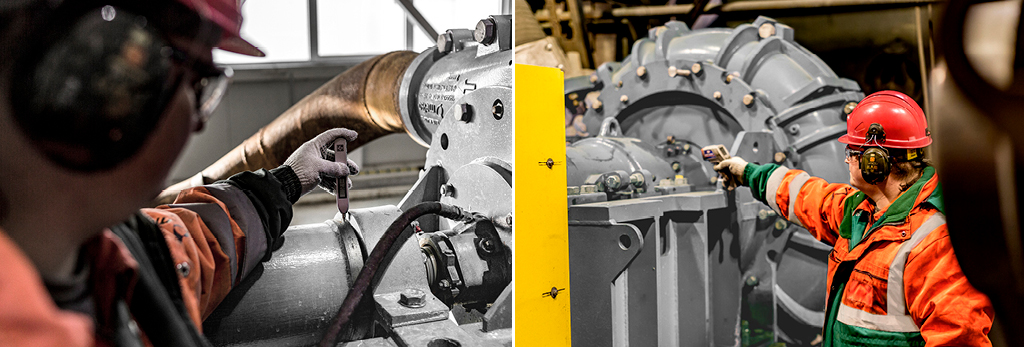
MD pumps are engineered to reduce maintenance complexity, especially in constrained spaces. Components that are typically difficult to access are designed as split parts, including:
- Shaft sleeves
- Stuffing boxes
- Lantern rings
- Impeller release rings
The split impeller release ring, in particular, allows technicians to safely relieve torque between the impeller and shaft—one of the biggest contributors to shorter maintenance windows.
Slide bases provide another practical advantage. They allow the wet end to be pulled back for inspection without disturbing the motor or coupling, a major time-saver in confined pump stations.
Hydrocyclone design follows the same philosophy. A single-piece cone eliminates complex housings and multiple bolt sizes, while the wear profile is designed, so the liner wears more evenly from bottom to top, maximizing useful life.
Together, these design elements help operators reduce:
- Safety risks
- Maintenance time
- Shutdown duration
- Spare part consumption
- Operational variability
System stability depends on a stable heart
Pump behavior and cyclone performance are tightly linked. When pump flow or pressure becomes unstable, cyclone separation quickly deteriorates. That can mean inefficient classification, more overflow‑product‑size material returning to the mill, and greater variability downstream.
During internal discussions, one expert described a case where a clogged screen panel upstream allowed coarse material into the mill. This changed the loading on the mill discharge pump, destabilized the cyclone cluster, and reduced overall circuit efficiency. As the experts emphasized, issues in one part of the grinding circuit quickly influence the others—unstable pump performance immediately affects cyclone behavior, which then impacts mill loading and overall circuit efficiency.
Because grinding circuits are circular, not linear, disturbances anywhere in the loop propagate quickly.
Don’t overlook the “small” components: valves, bends and sump design
Beyond pumps and cyclones, several smaller components and their typical issues play a critical role in day-to-day reliability:
Valves
- Manual valves that are difficult to operate
- Stuck or worn valves that force unplanned shutdowns
- Poor isolation arrangements that complicate maintenance
Sumps
- Poor agitation allowing rock slumping into the pump
- Inconsistent mixing affecting density and stability
Piping bends
- Common wear points with sudden failure risk
- Leaks that immediately halt production
While often viewed as minor details, these components and their challenges significantly influence the stability and maintainability of the circuit.
Application expertise, digital tools and services that support system thinking
A correct pump choice is just one part of achieving stable performance. Operators benefit from a broader ecosystem of support:
Application engineering
It is important to define three duty points—minimum, nominal, and maximum—to ensure the pump matches the full operating envelope. Tools like Metso’s PumpDim™ and the upcoming CycloneDim enhance alignment between pumps, cyclones and mills, and help reduce mismatches in the circuit.
Condition monitoring & Life Cycle Services (LCS)
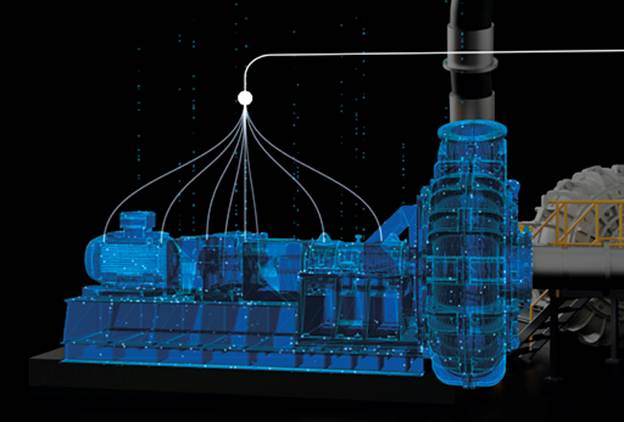
Vibration monitoring and other sensors enable early detection of developing issues. At one large copper operation, data from a mill discharge pump revealed excessive vibration linked to loose foundation bolts—allowing the problem to be corrected before it led to serious damage. Monitoring is often best delivered under a long-term service contract, for example using Metso’s Life Cycle Services programs, where experts provide proactive support through inspections, diagnostic reporting, internal clearance adjustments, and continuous improvement recommendations.
Pulling it all together: a system designed to respond to change
A grinding circuit performs best when the mill, pump, and cyclones are designed and operated as a unified system. Pumps are not auxiliary—they are the heart of the circuit. Their ability to adapt, maintain stable flow and remain serviceable under real conditions directly shapes performance, energy efficiency and recovery.
Pumps that are engineered specifically for grinding duties and supported by the right sizing tools, maintainability features and service programs—belong inside the grinding solution, not beside it. This alignment is what allows operators to maintain predictable performance even as conditions shift.
It is important to consider suppliers whose approach reflects this system perspective. With modular MD pumps, maintainability-focused design, hydrocyclone innovations, digital monitoring, Life Cycle Services as well as a range of valves, slurry hose and piping bends, Metso helps operators build grinding circuits that stay stable, responsive, and efficient over time.
A strong heart keeps the system alive.
And when that heart is part of a fully aligned grinding solution, the entire circuit performs better—today and in the long term.
Learn more about Metso’s MD Series mill discharge pumps, or explore our sustainability approach and the Metso Plus offering.
Authors
Diwakar Aduri, Product Manager, Metso Pumps
Ben Klein, Director Product Management, Metso Pumps
Disclaimer: The content posted here is provided by a third party and does not represent the views, opinions, or official stance of MINING.COM. This content is not endorsed, verified, or approved by MINING.COM in any way. MINING.COM is not responsible for the accuracy, completeness, or reliability of the information provided.
{{ commodity.name }}
{{ post.title }}
{{ post.date }}
Comments