The world is running out of silver — and AI is accelerating the squeeze
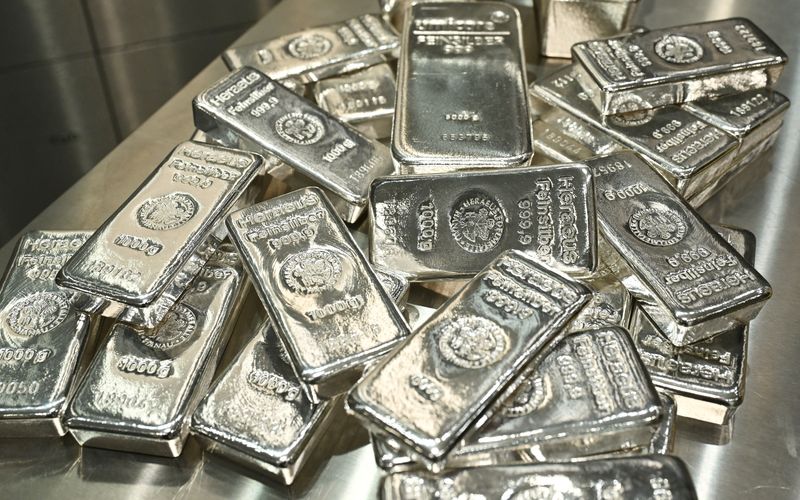
Silver just reached $64 per ounce, a new all-time high. For some market participants, that may look like another cyclical spike in a volatile precious metal. But beneath the price action lies something more structural and far more consequential: silver is no longer just a monetary metal or an industrial input of convenience. It is becoming a strategic material, and the global economy is discovering just how constrained its supply really is.
According to the World Silver Survey 2025, the market is now in its fifth consecutive year of structural supply deficits, with inventories at multi-decade lows and refined availability under increasing pressure. Mine supply has struggled to grow meaningfully, recycling remains constrained, and much of global silver production continues to come as a by-product of base-metal mining — limiting responsiveness to higher prices.
At the same time, demand is accelerating across multiple sectors that cannot simply substitute away from silver.
This is not a speculative imbalance. It is an arithmetic one.
Silver is the critical conductor in photovoltaic cells, high-efficiency power electronics, and advanced interconnects. As solar deployment accelerates globally, silver consumption per unit remains small but unavoidable, and the scale of installations is now large enough to overwhelm incremental supply growth. Clean energy is no longer a future demand driver — it is a present one.
Artificial intelligence adds a second, compounding force. AI data centers are not just software hubs; they are materials-dense infrastructure. Goldman Sachs estimates that power demand from data centers will rise by roughly 165% by 2030 as hyperscalers deploy AI clusters at unprecedented density, pushing ever more high-reliability components into servers, switches, and accelerators.
Silver is deeply embedded in that hardware stack, and gold plays an equally important role. Gold remains the corrosion-proof standard for connectors, bonding wire, and high-reliability electronics — the kind that must perform flawlessly inside AI servers operating at extreme loads.
In 2024, technology demand for gold rose to approximately 326 tonnes, up 7% year-over-year, according to the World Gold Council — a trend driven largely by electronics and one that is accelerating as AI hardware scales globally.
Even consumer devices quietly add up. A typical smartphone contains roughly 7 to 34 milligrams of gold, and at around 1.4 billion units produced annually, phones alone imply 10 to 48 tonnes of gold demand each year, before accounting for PCs, servers, networking equipment, and industrial electronics.
What makes the current moment different is that all of these demand streams are expanding at once. AI server deployments, electric-vehicle rollouts, solar installations, and grid upgrades are scaling concurrently. The bottleneck is no longer chip design or software optimization — it is the materials stack.
Industrial users cannot simply delay production when silver-rich solders or gold-plated contacts are unavailable. In many cases, the cost of not obtaining these metals is non-production. When supply tightens, manufacturers must either pay up, redesign hardware at great expense, or slow deployment — none of which are attractive options in a competitive, AI-driven global economy.
At the same time, silver and gold are being pulled out of circulation by investment demand and central-bank accumulation, further constraining availability for manufacturing. The result is a collision between industrial necessity and financial hoarding, with both drawing from the same finite resource pool.
This dynamic is not temporary. New silver and gold mines take years to permit and build, and many jurisdictions face rising regulatory and capital hurdles. The supply response is slow, while demand growth is exponential.
Against this backdrop, near-term precious-metal producers with low capital intensity and predictable feedstock are becoming strategically important, not just to investors, but potentially to downstream industrial users seeking secure supply.
That context helps explain growing interest in projects that combine near-term production with exploration upside.
One example is ESGold Corp.’s Montauban Project in Québec, a historically silver-rich district now being advanced toward production. The company recently closed a C$4.5 million flow-through financing, with proceeds earmarked specifically for expanding exploration activity and unlocking additional geological potential.
At the same time, ESGold has released an AI-enhanced 3D geological model that reframes Montauban as more than a reclamation or redevelopment story. The modeling suggests the project may represent the nucleus of a much larger gold-silver and base metal system, with stacked horizons and structural features extending well beyond historically mined zones.
Recent work, including a passive seismic Ambient Noise Tomography (ANT) survey, has identified a significantly larger anomaly than previously recognized, opening new exploration corridors as the company advances toward production. The planned expansion of ANT coverage, followed by systematic drill planning and step-out drilling, is designed to add in-situ resources while the project moves toward first production in 2026.
In a market defined by structural deficits, this combination matters. Projects that can generate cash flow in the near term while simultaneously expanding their resource footprint offer a form of leverage that pure exploration stories cannot.
In this environment, ounces that can be added while a mine is already operating carry a very different weight. Each additional ounce defined through exploration becomes a future production ounce, supported by existing infrastructure and cash flow, and is therefore far more valuable than ounces added at the exploration stage alone.
More broadly, the silver market’s current trajectory suggests that materials supply will increasingly shape the future of technology, not just pricing models. For AI, EVs, solar, and advanced electronics, silver and gold are no longer marginal inputs — they are critical infrastructure.
As the world pushes deeper into an AI-driven, electrified economy, metals once taken for granted are emerging as strategic bottlenecks. Silver’s new highs may be less about speculation and more about a long-overdue repricing of scarcity.
And for mining companies advancing toward near term production while industrial demand accelerates, this phase of the cycle is not approaching, it has already begun.
{{ commodity.name }}
{{ post.title }}
{{ post.date }}
Comments