Torngat eyes Strange Lake feasibility study as timing slips for Quebec rare earths project
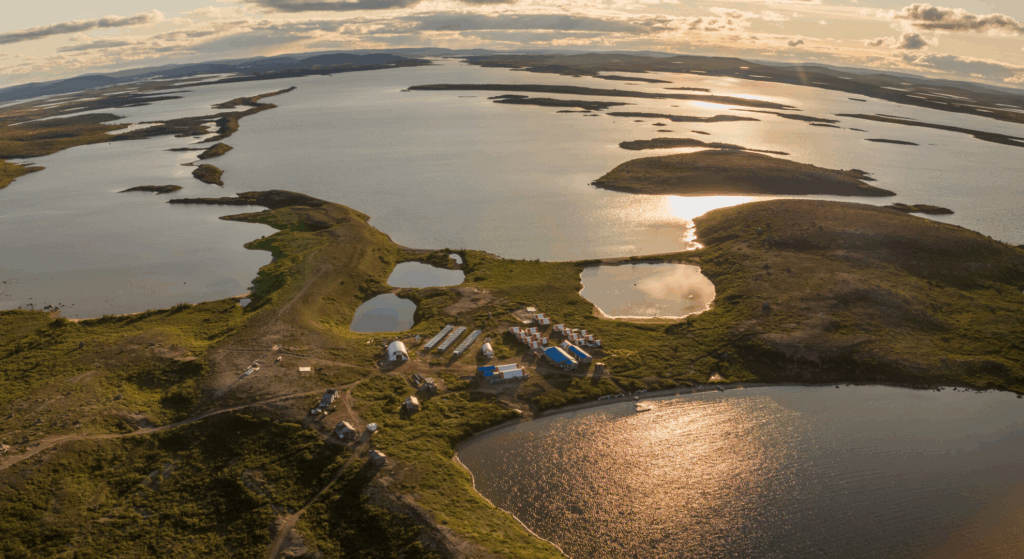
Privately held developer Torngat Metals has pushed back its target for starting rare earths production at the C$2-billion ($1.46-billion) Strange Lake project in northern Quebec by about a year due to permitting and other delays.
Until recently, the Montreal-based company had been saying it was aiming to start production by 2028. That timeline has now slipped, CEO Yves Leduc says.
“It’s likely we will get permits in the earlier part of 2027, and construction would start around then. So 2028 is very, very tight. It’s more like 2029-30,” CEO Yves Leduc told The Northern Miner in a January telephone interview.
Torngat is working to publish a bankable feasibility study for Strange Lake in the first half of 2026 and complete environmental impact assessments by the end of the year, Leduc says. The project includes three key components – a mine and concentration plant in Nunavik; a 180-km road to Voisey’s Bay, Labrador and an $800 million, 15,000 tonne-a-year rare earth separation plant in Sept-Îles, Quebec.
Strange Lake stands out among North American rare earth projects for its heavy rare earth content, particularly dysprosium and terbium – elements critical to permanent magnets used in electric vehicles, wind turbines and defence technologies. It’s also notable for the company’s strategy of building a rare earth separation plant in Quebec and producing finished oxides domestically rather than exporting concentrates.
Global demand for rare earths is set to climb by as much as 700% by 2040 to meet the needs of green technologies, according to International Energy Association forecasts.
Chinese leverage
China’s dominance in the mining, processing and separation of rare earths has spurred Western countries such as Canada and the U.S. to accelerate mining projects – especially after the Asian country introduced export curbs last year. China controls 80 to 90% of the rare earths market, along with the entire supply chain for electric motors and permanent magnets.
“You can say it was foresight on the part of China. Everybody was happy to have the processing of rare earths done in China,” Leduc said. “Today this small industry, heavy rare earths, which has a $10-billion size globally, controls directly over $50 trillion of economies. You can’t imagine more leverage.”
Compared with China’s state-backed operations, Strange Lake would be modest in scale but significant strategically. Its planned annual output could meet a meaningful portion of North American demand for dysprosium and terbium, helping to cut reliance on Chinese imports.
“We’re looking at an opportunity, probably never seen in Canada, to build an industry that will be the only alternative to a Chinese monopoly,” Leduc said. “If you add to that permanent magnet production, which could be in Canada’s control, you can see a mine-to-magnet vision. No other country, other than China, would have that. So the stars are aligned for this project to succeed.”
Top producer
Strange Lake would make Torngat the largest producer of heavy rare earths in North America and one of the biggest outside China. Production costs per kilogram of rare earth oxide would be competitive with global producers, though final figures will depend on engineering studies now in progress, Torngat says.
The company envisions a mine life of more than 30 years, with between 5 million and 13 million tonnes of material extracted annually. Strange Lake is projected to produce 540 tonnes of dysprosium, 80 tonnes of terbium and 2,400 tonnes of neodymium and praseodymium a year, the company says on its website.
In the meantime, talks are under way with six First Nations – including the Innu and the Inuit – to secure community approval for the project’s key components and negotiate equity stakes.
“We want the Indigenous to become shareholders in the company, which would be a first in Eastern Canada,” Leduc said. “We are mobilizing to earn their trust. We set the bar very high on the environmental side. We want to be a role model in how we exploit rare earths and how we refine them.”
Fundraising mode
After securing $165 million in loans last year from Export Development Canada and the Canada Infrastructure Bank (CIB) for pre-construction work at Strange Lake, Torngat is again in fundraising mode. The current focus is on raising equity, Leduc said.
CIB could lend Torngat as much as $500 million to help build access to the project, Divya Shah, the bank’s managing director of trade and transportation investments, told The Northern Miner in a separate interview.
With Prime Minister Mark Carney having made critical minerals a priority for Canada, “we’re at the heart of many, many discussions that are critical to Canada’s future,” Leduc said. “This project is extremely well financed, and it will continue to be.”
Canadian interests
Although Torngat’s largest shareholder is New York-based private equity firm Cerberus Capital Management, following a US$50 million ($70 million) investment in 2022, Leduc insists Strange Lake will serve Canada’s interests first and foremost.
Cerberus executives “understand this has a to be a Quebec project,” Leduc said. “That’s why they nominated a Quebec CEO and a Quebec chair. We are putting a lot of focus on building a shareholder base that’s Canadian. That’s how we make this a Canadian project serving Canadian interests.”
“It’s all about making sure the project remains Canadian. Our focus is on building an industry here. That will create leverage for the country that other industries wouldn’t have.”
Provincial commitment
Political developments in Quebec haven’t dented the province’s commitment to Strange Lake, Leduc adds – even after Premier Francois Legault said Jan. 14 he planned to step down this year. Quebecers are scheduled to go to the polls in October.
“There is a great deal of enthusiasm already expressed by the current government” about Strange Lake, Leduc said. “This is not something that’s tied to a government. I’m very confident that whoever leads [the province] after the next election will have the same level of enthusiasm that I have.”
Leduc, a veteran executive with about 25 years of manufacturing experience who was named Torngat CEO last March, says his current challenge is unlike anything he’s ever experienced.
“This is the most exciting thing I’ve ever done in my career,” he said. “The energy transition fully depends on heavy rare earths. Once Quebec has that strategy in place and we are in operation, we will be a critical component of the energy transition. That moves a lot of people.”
More News
EU to offer US critical minerals partnership to check China
February 03, 2026 | 10:18 am
China’s metals association calls for expanded copper stockpile
February 03, 2026 | 09:23 am
{{ commodity.name }}
{{ post.title }}
{{ post.date }}

Comments