A $40 billion copper boom in Argentina hinges on revamped glacier law
The way Argentina’s president and some of the world’s biggest miners see it, all that stands between them and billions in copper riches are hunks of icy rock and overzealous legislation.
That’s why, over the last year, executives from Glencore Plc, Lundin Mining Corp. and partner BHP Group have filed into Javier Milei’s presidential palace in Buenos Aires. These companies and others are keen to invest about $40 billion in Argentina’s untapped copper belt when miners worldwide struggle to keep pace with accelerating demand for the wiring metal.
Milei has plenty of reason to make this happen. His government is yearning to show its austerity and pro-market approach are translating into sizable foreign investment and well-paying jobs before the 2027 presidential election. Longer term, the investments have the potential to vault Argentina into the world’s top 10 copper producers and, at today’s prices, equate to more than $10 billion in annual revenue.
But glacial formations — some ice, some frozen rock — that sit atop sections of those vast deposits are in the way. Last year, Milei promised to quickly amend strict protections for the features that pose too much of a liability for miners to advance their projects.
Late Thursday, Argentina’s Senate approved Milei’s bill that would allow governors — many pro-mining — to overrule those federal protections on glaciers and their surrounds, known as periglacial areas. It now advances to the Lower House for a final vote in the coming days.
That would “once and for all” allow Argentines to “start taking advantage of our natural wealth,” Milei said in a November speech announcing the move.
Modern mining can operate in mountainous regions without affecting water reserves, industry group Caem said in a statement. What miners want is clearer definitions, particularly regarding periglacial zones, to ensure that formations without meaningful hydrological function are not misclassified as strategic water reserves, the industry group wrote.
The current law is meant to preserve ice features supplying water to farms and cities downstream by placing them on a federal registry that provides comprehensive protection — they simply can’t be damaged. Unlisted features have fewer safeguards.
Anticipating opposition from environmentalists, Milei accused them of “preferring to let people die of hunger rather than touch anything.”
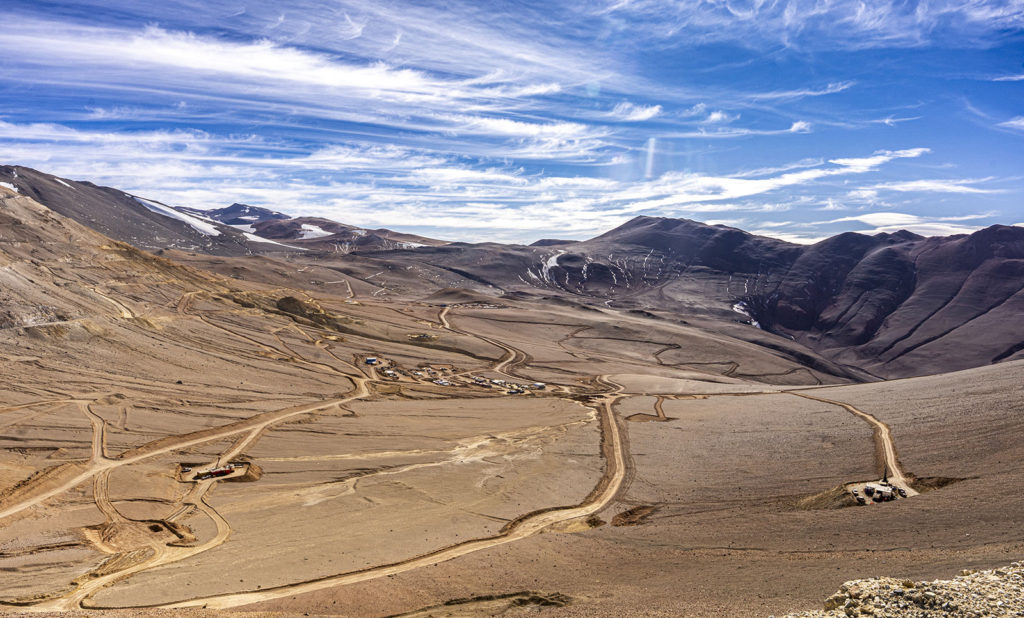
BHP and Lundin want to spend $18 billion together to develop the vast copper deposits known as Vicuña. Wedged between vast mountainsides at up to 18,000 feet, it would become one of the world’s biggest copper mines. All told, it would be the largest single investment in Argentine history.
The numbers are all but squared away. Lundin and BHP are already seeking inclusion for Vicuña in Milei’s marquee investment promotion program, known by its Spanish acronym RIGI, which offers tax and trade incentives to improve the economics of mining in Argentina and mitigates political risk.
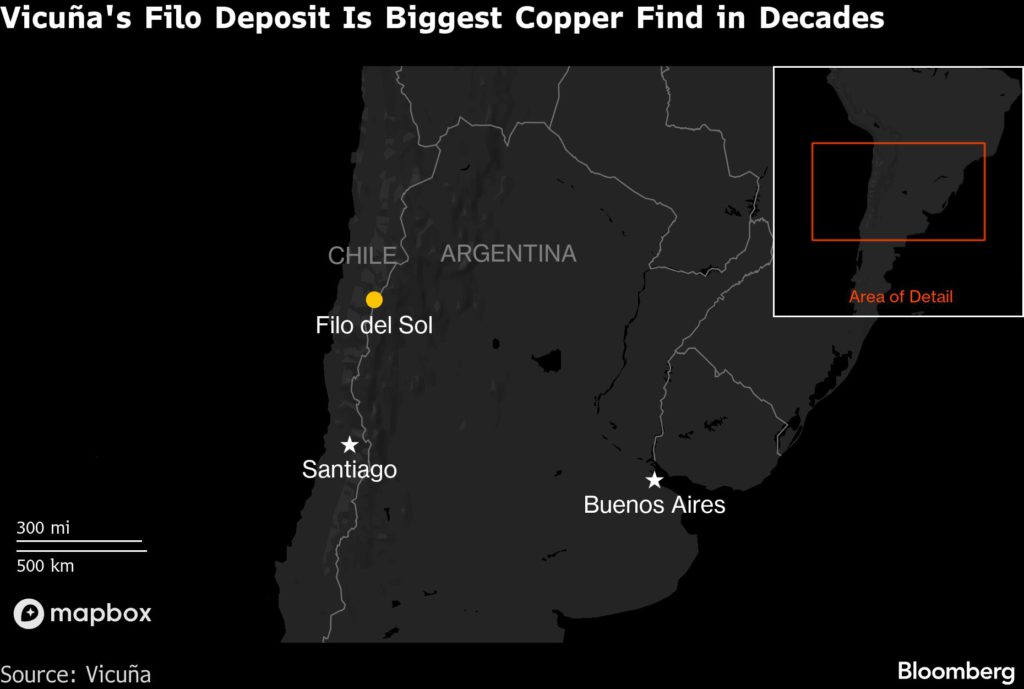
But in the vicinity of Filo del Sol, which holds about two-thirds of Vicuña’s copper resources and is still being explored, a federally protected ice glacier may pose a snag.
Yanina Ripoll, Vicuña’s head of environmental issues, said during a visit this month to the remote site that a study with a San Juan province university shows the glacier is shrinking rapidly and in six years may measure less than 1 hectare (2.5 acres), a minimum requirement for inclusion on the inventory.
Glaciers smaller than 1 hectare deemed to contribute to water supplies are in theory shielded by the current law, but in practice don’t get included on the federal inventory that furnishes them blanket protection, according to the Observatory for Mining Conflicts in Latin America. The mining industry says that’s one of the legal gray areas it needs cleared up to be able to start projects.
“We need a law that provides clarity,” Ripoll said at base camp, a Lego-style assembly of white containers perched in a valley where camelids and foxes roam. “When this measures less than 1 hectare, is it covered by the law or not? Is it still a protected feature even if it’s not on the inventory?”
Glencore, meanwhile, has a federally listed rock glacier near where it wants to build the $9.5 billion El Pachon mine, although authorities removed the formation from a provincial inventory after a university study showed it wasn’t a water source. Glencore declined to comment.
Juan Pablo Milana, a glaciologist in San Juan, said the proposed jurisdictional changes to the 2010 legislation equate to a hoax. “What they really want with this modification is to gut the national law” and to devise “a mechanism for provinces to automatically declassify glaciers.”
Milei’s move to diminish protections could revive fears that came to the fore about a decade ago during chemical leaks at a San Juan gold mine. In Buenos Aires, billboards are cropping up declaring “Don’t Touch the Glacier Law,” and at least one ecological group, Rebellion or Extinction, has been organizing rallies.
Unlike neighboring Chile and Peru that have long enjoyed strong backing for mining, Argentina is still grappling with a history of environmental resistance. Such concerns may be fading, however, as policymakers and voters seem to have shifted toward prioritizing economic development.
Guillermo Toranzo, a lawyer in San Juan and environmental activist, is anxiously watching the situation play out.
He said policymakers should consider Argentines’ constitutional right to a “healthy and balanced environment” where development “meets present needs without compromising those of future generations.” That right is cited in Milei’s legislative changes that senators will vote on.
“We can’t be foolish about this,” Toranzo, 71, said. “We must defend the water, and the glaciers, because it’s our sustenance.”
The mining industry points out copper’s crucial role in transitioning from fossil fuels and efforts over the years to co-exist with Andean wetlands and wildlife.
“Why would we leave the resource there?” said Juan Arrieta, Vicuña’s lead geologist, gesturing toward the mountains. “The original environmentalists are us.”
(By Jonathan Gilbert and James Attwood)
More News
{{ commodity.name }}
{{ post.title }}
{{ post.date }}

Comments