Acid, not copper, is paying China’s smelters but will it last?
When Ukrainian drone strikes hit Russia’s Astrakhan gas processing plant last September, copper smelters in China were handed a windfall.
Astrakhan was a major producer of sulphur, which is processed into sulphuric acid used in mining and fertilizer and increasingly in battery supply chains.
Acid prices were already up 41% in the nine months before the attack but when Russia halted sulphur exports, they nearly doubled again by year-end.
The surge is rewriting the economics of copper smelting in China. As earnings from their core business decline, smelters are leaning heavily on sulphuric acid as a major profit driver.
Analysts warn that leaves them exposed to a volatile market unrelated to their main business where prices are forecast to retreat even as traditional processing fees continue to decline.
Up about 500% over roughly two and a half years, the jump in sulphuric acid prices delivered an estimated $1.5 billion boost to China’s copper smelters last year as traditional smelting fees collapsed.
At Yunnan Copper, one of the country’s largest smelters, sulphuric acid sales generated 790 million yuan ($114 million), about a quarter of gross profit, even though acid contributed roughly 1% of revenue, according to its half-year results published in August.
“Acid is supposed to be a byproduct, not the main profit centre. That creates risk,” said Peter Harrison, an analyst at CRU.

New money, old money
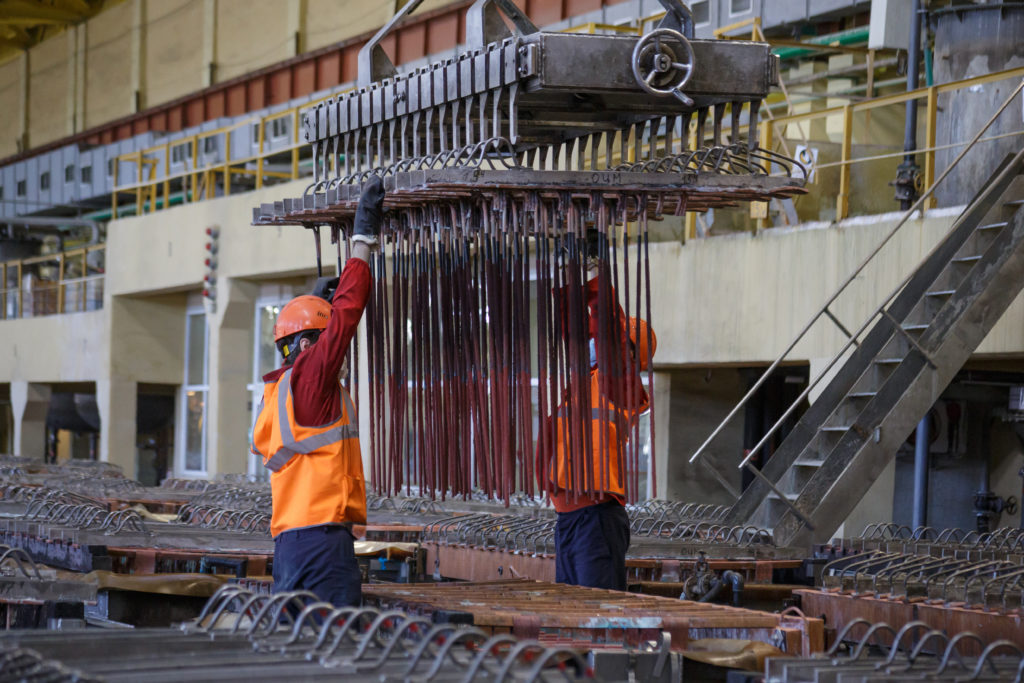
Smelters typically make money by turning copper concentrate into metal for fees known as treatment and refining charges (TC/RCs). A wave of new smelters — particularly in top producer China — has intensified bidding for concentrate made scarce by mine closures and disruptions.
Benchmark TC/RCs fell below zero in December 2024 and hit a record low of minus $49 in January.
Sulphuric acid prices, by contrast, have moved in the opposite direction. They hit about 1,045 yuan ($145) per metric ton in early January versus 464 yuan a year earlier, according to National Bureau of Statistics data.
Tight global sulphur supply from disruptions, including the Ukrainian strikes and uneven smelter output, has constrained availability of a feedstock used to make sulphuric acid, analysts say.
In September, Zambia banned acid exports to preserve supplies for its mining industry.
With around 40% of China’s sulphur reliant on imports, higher global prices quickly fed through into the domestic acid market.
Demand is also broadening beyond fertilizer. Consumption linked to Indonesia’s nickel mining sector has grown to just under a tenth of total sulphur demand, and China’s lithium iron phosphate battery segment has posted similar growth in sulphuric acid demand, according to CRU.
While still small compared with fertilizer and other industrial uses, those fast-growing segments have tightened a market that for years saw limited new demand, Harrison said.
As a result, sulphuric acid now accounts for more than 64% of smelters’ revenue from byproducts and other non-TC/RC sources, up from a historical 27%, according to CRU’s Craig Lang.
Growing reliance
Even as it announced bumper profits from sulphuric acid, Yunnan Copper warned investors about volatility. Its peer Daye Nonferrous said around the same time that the outlook for prices was uncertain.
Concern that the market could quickly reverse partly explains why smelters resisted negative TC/RCs during last year’s contract negotiations, said Anna Xu, an analyst at Wood Mackenzie.
“In theory, with sulphuric acid prices above 1,000 yuan per tonne, smelters should be able to accept negative TC on long-term contracts,” she said.
“But smelters still insist on zero or above because sulphuric acid prices are uncertain and precious metals prices are also uncertain.”
Chilean miner Antofagasta agreed TC/RCs of $0 in negotiations with some Chinese smelters in December.
Analysts expect prices to fall in the coming months, with Harrison forecasting a 10–30% decline.
They point to demand destruction from higher prices, new projects starting as well as Beijing’s decision in November to cap exports and keep more acid at home for the fertilizer industry.
Any material drop in prices, coupled with negative TC/RCs creates a logic that points to capacity cuts, Lang said.
“If acid prices decline significantly it could increase the likelihood of smelters cutting production through measures like extended maintenance or lower utilization.”
($1 = 6.9113 Chinese yuan renminbi)
(By Lewis Jackson and Dylan Duan; Editing by Saad Sayeed)
More News
Contract worker dies at Rio Tinto mine in Guinea
Last August, a contract worker died in an incident at the same mine.
February 15, 2026 | 09:20 am
{{ commodity.name }}
{{ post.title }}
{{ post.date }}



Comments