After rebel invasion, Congo gold trader eyes $3 billion rebound
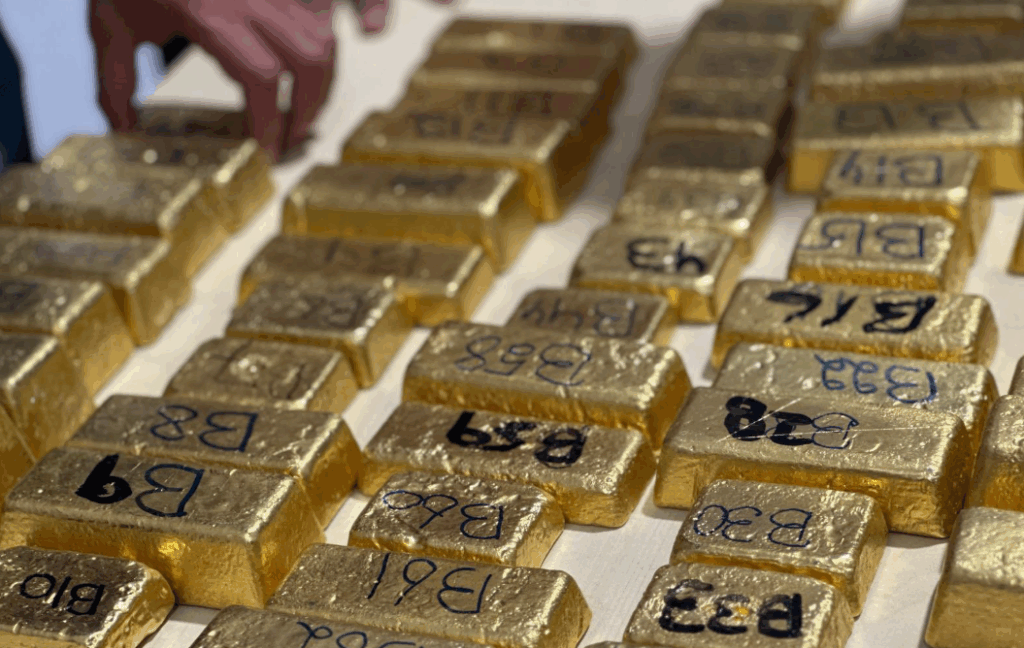
As gold’s price surge intensified in early 2025, the year was shaping up to be a momentous one for the Democratic Republic of Congo’s state-owned trader of hand-dug precious metal.
DRC Gold Trading SA had just bought out its Emirati partner and was planning to ship enough of the metal to potentially inject roughly $1 billion that used to go to smugglers into the country’s formal economy.
But in February, rebels backed by neighboring Rwanda invaded the city of Bukavu, site of the firm’s headquarters. The staff fled and the brother of chief executive officer Joseph Kazibaziba was killed in front of his family.
“It was a very, very complicated year,” Kazibaziba told Bloomberg in his new office overlooking the Congo River in the capital, Kinshasa, nearly 1,000 miles to the west of Bukavu. “You can’t imagine how much I want to leave it behind me.”
Prospects are now better, despite the continued rebel occupation of Bukavu and a large swathe of Congo’s mineral-rich east. Kazibaziba has expanded the trader’s footprint to eight other provinces, hoping to ship as much as 18 tons of bullion this year. With gold still breaking successive records in a rally that has more than doubled prices in two years, that could be worth almost $3 billion.
The company’s ups and down are a sobering reminder of the rough conditions often faced by mining operations far from the financial hubs of London and New York. Congo is one of Africa’s major producers of copper, cobalt and gold but remains one of the continent’s poorest nations.
DRC Gold Trading was launched three years ago under the name Primera, to try to capture more revenue from an informal gold sector that provides a livelihood for hundreds of thousands of Congolese but exists almost entirely outside official commercial networks. Artisanal mining directly and indirectly supports armed groups in Congo’s east, leading to widespread human rights abuses including sexual violence, forced labor and summary executions, according to the United Nations.
Much of that gold ends up trafficked to neighboring countries. Last year the European Union sanctioned a gold refiner in Rwanda for illegally importing gold from regions in Congo controlled by the M23 rebels, the group that controls Bukavu.
M23 continues to take territory despite a peace deal overseen by President Donald Trump that was signed between Rwanda and Congo in December.
The M23 says it’s protecting the rights of Congolese Tutsis and fighting a rebel group allied with Congo’s government that has links to the perpetrators of the 1994 genocide against Tutsis in Rwanda. Congo says the M23 and Rwanda want to steal its minerals, including tin, tantalum and gold.
DRC Gold Trading is setting up supply-chain monitoring systems throughout the country to cut the links to armed groups after previously facing criticism from UN experts on shortcomings in its due diligence process. It’s also slowly implementing the model it used in Bukavu, where almost all transactions were required to be done through bank accounts instead of in cash, Kazibaziba said.
“You’re talking to people who’ve been in the informal sector for over 25 years, who are used to laundering money through the hawala system,” Kazibaziba said. “It’s not on the first date that you’re going to tell them to open a bank account.”
Hawala is a traditional money transfer network used to send cash efficiently around the world without using banks, but it’s faced criticism by law enforcement agencies as a way to send money anonymously.
Most of DRC Gold Trading’s output will end up in Dubai, Kazibaziba said, but companies from more than 40 countries have shown interest in purchasing gold from the firm.
Refineries from neighboring Rwanda and Uganda, which have both been accused of stealing Congo’s gold by the UN, US and EU, have not been among those making offers, he said. The company was targeting production of 800 kilograms of gold a month at its Bukavu operations before the M23 rebels arrived.
“If you ask who’s buying it today I’d tell you I don’t know,” Kazibaziba said. “When you talk about 800 kilos today, you’re talking about hundreds of millions of dollars injected fraudulently in these networks.”
Congo bought out its original joint-venture partner, Abu Dhabi-registered Primera Group Ltd., in 2024 for the cost of its investment, Kazibaziba said, declining to name the exact price.
DRC Gold Trading is now 55% owned by the government, 30% owned by a mining fund for future generations known as FOMIN, and 15% owned by state copper miner Gecamines.
(By Michael J. Kavanagh)
{{ commodity.name }}
{{ post.title }}
{{ post.date }}
Comments