Aluminum price jumps as Iran conflict puts Middle East supply at risk
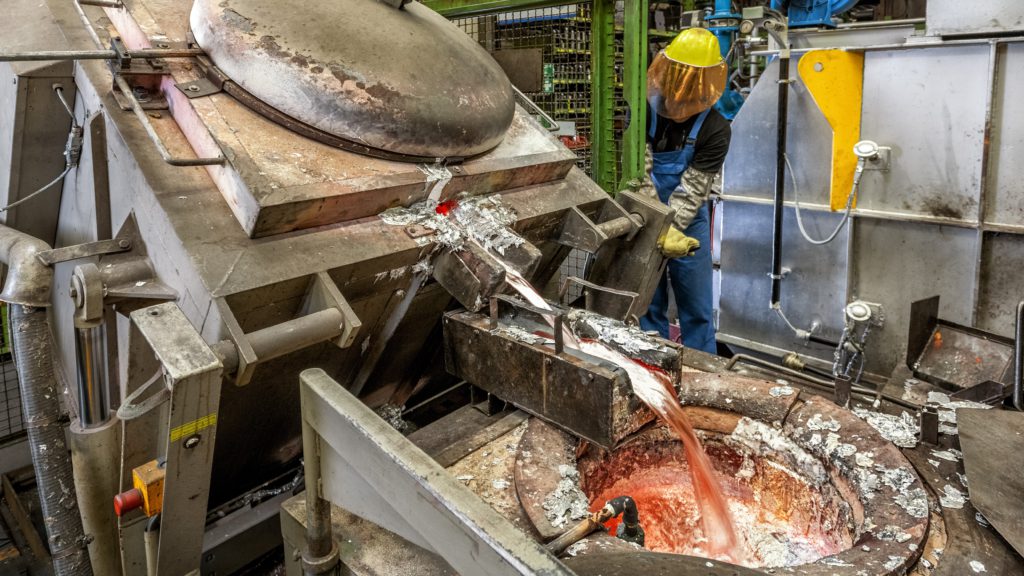
Aluminum rallied on concerns that a critical supply route for Middle Eastern producers will be disrupted by conflict in a region responsible for a significant chunk of global output.
The metal advanced 1.7% to the highest since January on the London Metal Exchange. The Strait of Hormuz — a trade chokepoint off the coast of Iran — is used by many of the area’s major aluminum producers to ship out metal and bring in raw materials.
Conflict in the Middle East spread over the weekend after the US and Israel attacked Iran, and Tehran retaliated with strikes on multiple countries. The region accounts for about 9% of the world’s aluminum production capacity, according to consultancy AZ China Ltd., and prices typically have been sensitive to spikes in regional tensions.
Emirates Global Aluminum, the UAE’s top producer, operates smelters in Dubai and Abu Dhabi, while Aluminium Bahrain runs one of the world’s largest single-site smelters. The UAE confirmed over the weekend that debris from an aerial interception caused a fire at one of the berths at Jebel Ali port in Dubai, several kilometers from EGA’s facility.

Potential disruptions to bauxite or alumina flows that feed smelters in the Middle East present a very significant risk, said Li Xuezhi, head of research at Chaos Ternary Futures.
Aluminum price spreads also tightened Monday, with spot contracts rising to trade at a premium to later-dated futures on the LME, a condition known as backwardation that signals spot demand is exceeding supply. Rio Tinto Group also suspended negotiations with Japanese clients over second-quarter aluminum supply, citing US and Israeli strikes against Iran.
The miner — a top aluminum supplier thanks to smelters in Canada and Australia — initially had offered to supply customers in Japan at a premium of $250 a ton over LME prices, but subsequently withdrew the offer, according to people familiar with the negotiations. That initial offer was already the highest since at least 2015, according to two of the people.
Last week, the aluminum market was gripped by options trades with a notional value of several billion dollars that appeared to be wagers on a major shortage of the metal. The call options — which give holders the right to purchase at a predetermined price and time — focused on April contracts targeting a price of $3,300 to $3,500 a ton.
The Middle East war poses uncertainty for metals after a tumultuous start to the year, fueled by US President Donald Trump’s aggressive foreign policy, fears for the US dollar and a frenzy of speculative trading in China. Aluminum in London spiked to its highest since 2022 in late January, while the US Midwest premium — a key benchmark — hit a record high above $1 a pound last month.
Trump said US forces will continue bombing Iran until his objectives have been achieved, and called on the Islamic Republic’s military and police to surrender or “face certain death.” Tehran has responded to the attacks with waves of missiles fired at neighboring countries, including Saudi Arabia, the United Arab Emirates and Bahrain — all key producers of aluminum.
Aluminum rose 1.7% to settle at $3,194.50 a metric ton on the LME.
Base metals markets are also contending with broader fears over the impact of the escalating Iran war on energy prices and the global economy. The dollar rose sharply, a headwind for commodities priced in the US currency. That saw copper erasing early gains to settle 1.8% lower.
The aluminum market now faces a “two-way macro pull” as events in the Gulf threaten to push up regional premiums in Europe and the US, while risk-off positioning and dollar strength “exert a countervailing drag,” Citigroup Inc. analysts, including Wenyu Yao, said in a note.
Aluminum smelters typically maintain around one to two weeks of alumina inventory — or more in regions with vulnerable logistics — limiting the immediate risks to production, Citi said. Higher war-risk premiums, elevated freight rates and incremental shipping delays from the Gulf are the most plausible near-term effects, it said.
Iran has about 790,000 tons of annual aluminum smelting capacity, AZ China said in a note. Of that, 50,000 tons to 80,000 tons already has halted as industries take precautions during the conflict. More stoppages may be in store if port activity is halted, the researcher said.
Meanwhile, iron ore closed 0.8% higher at $99.10 a ton in Singapore. The Middle East is a major producer of iron ore pellets, with a 13% of global share, according to BMO Global Commodities Research. Chinese steel exports to the region also have been rising.
More News
Aluminum price jumps as Iran conflict puts Middle East supply at risk
March 02, 2026 | 12:39 pm

Investor interest in Greenland’s mining has increased since Trump’s threats, minister says
March 02, 2026 | 12:29 pm
{{ commodity.name }}
{{ post.title }}
{{ post.date }}

Comments