Bolivia cancels Chinese zinc project, demands steel plant fixes
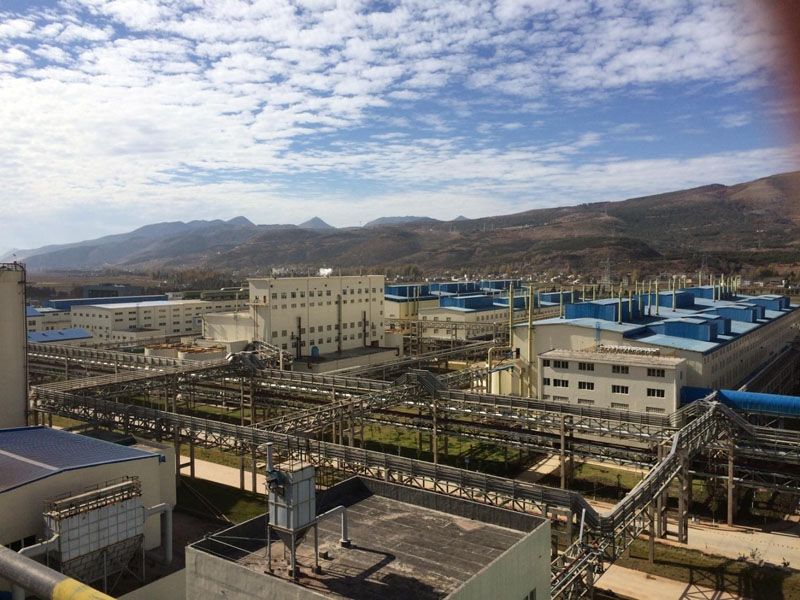
Bolivia’s new government is canceling a planned zinc project awarded to a Chinese consortium and will demand that another Chinese firm fix shortcomings in a steel-making complex.
Authorities are pulling the plug on a $350 million zinc refinery, Mining Minister Marco Calderón said in an interview, citing “terrible overpricing.” His ministry also detected “deficiencies in contract compliance” at the Mutún steel facility, which were overlooked by local authorities when the plant was handed over, he said.
The government of President Rodrigo Paz, a center-right leader who took office Nov. 8 after two decades of socialist rule, is scrutinizing initiatives undertaken by previous administrations that had included a push for Chinese investment in mining and energy. The crackdown comes as the US and other Western countries look to loosen China’s grip on the supply chains of minerals used in strategic industries.
Calderón also referred to a tin processing plant in Huanuni, in the Oruro region, built by a Chinese consortium that is running at about 13% of its designed capacity.
“All of that has to be recovered and fixed,” Calderón said. “There has to be oversight, and the Chinese have to comply with what they committed to do. China’s prestige is at stake.”
The planned zinc plant, also in Oruro, was designed to process 150,000 metric tons of concentrate. It was awarded in 2023 to the ENFI-CRIG consortium. Financing from Export-Import Bank of China was signed with the previous government but not approved by Congress.
Calderón said the government could consider a different project with other characteristics, including modular technology, “but not looting.”
China ENFI Engineering Co., or ENFI, and China Railway International Group, or CRIG, both didn’t answer calls seeking comments.
At Mutún, the government is preparing technical and legal audits of a $546 million facility built by Sinosteel Equipment & Engineering Co., for which China Eximbank put up 70% of financing. The state-owned milling complex, sitting atop a iron ore deposit dubbed the sleeping giant, was opened in February 2025 after almost two decades of trying.
Production hasn’t been made public, but local media reported that five months after opening, the plant had yet to reach annual capacity of 200,000 metric tons of corrugated steel and wire rods.
The minister said shortcomings at Mutún — which he didn’t provide further details on — must be corrected by the Chinese company, a unit of China Baowu Steel Group Corp., the world’s largest steel producer. A representative at Sinosteel Equipment & Engineering declined to comment.
Calderón said the administration is looking to boost accountability to the sector in a bid to attract interest from countries such as Canada and Australia. “We need to bring in big players,” he said.
To be sure, the new government will have its work cut out. Decades of interventionist policies under previous governments combined with community opposition to large-scale mining have left the nation’s reputation among investors in tatters despite its mineral wealth.
(By Sergio Mendoza and James Attwood)
{{ commodity.name }}
{{ post.title }}
{{ post.date }}

Comments