China’s record copper ore imports offer relief amid shortage
Chinese copper concentrate imports climbed to nearly 3 million tons last month, a record that’s likely to ease price pressures in the domestic market and offer relief to smelters fighting over the availability of feedstock.
Spot treatment charges at global smelters are deeply in the red, an unprecedented collapse caused by a rapid expansion in capacity colliding with a global shortage of ore. The heaviest concentration of plants is in China, where output of refined copper has hit all-time highs despite pledges to rein in production to rescue margins.
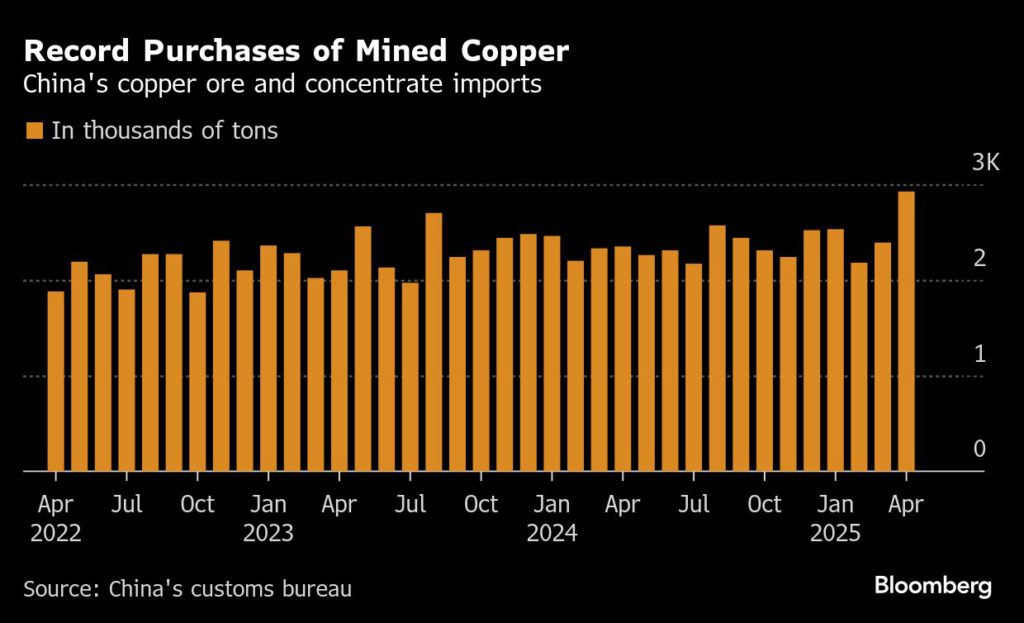
In that context, China’s ability to secure such a large amount of concentrate will be a welcome boost to the industry. Domestic demand for copper has proven remarkably resilient in a slowing economy, while competition for supply has heated up as the US draws more metal ahead of tariffs threatened by the Trump administration.
“Chinese smelters are better prepared this year,” said Li Chengbin, an analyst with Mysteel Global, and have fixed more volumes on long-term contracts.
He said they’ve been helped by the availability of additional ore from the mega-mine run by PT Freeport Indonesia, which got export approvals in March after a two-month moratorium. The production halt at a Glencore Plc smelter in the Philippines — a casualty of the collapse in processing fees — would also have freed up concentrate for China.
Treatment charges, meanwhile, continue to plummet, as demand from smelters around the world outpaces supply. Spot fees have been negative since December — meaning plants are paying to process ore — and on Friday hit -$57.50 a ton, down from -$52.80 at the end of April.
Read More: Copper price supported by Chinese demand, tariff hiatus, easing of geopolitical tensions
{{ commodity.name }}
{{ post.title }}
{{ post.date }}
Comments