Coal will need more than the army to pull off a US revival
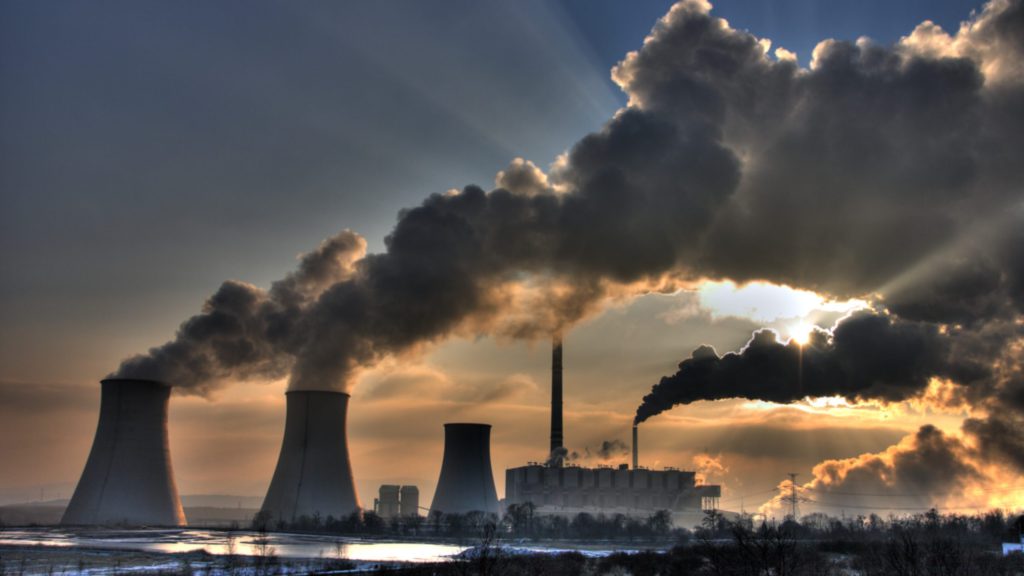
President Donald Trump is making another major bid to bolster the shrinking US coal-power industry. He’ll use $175 million in government funds to upgrade six plants and have the Defense Department buy power from others.
While the moves announced Wednesday will likely extend the lifespan of several generators, they fall short of the main thing needed to develop new coal capacity: convincing private investors to take the financial — and political — risks.
“When the political pendulum can eradicate new investment in new plants and mines, you don’t get a lot of it,” said Kevin Book, managing director at Washington-based ClearView Energy Partners. “This is likely to be incremental but not transformational.”
The push is part of Trump’s expansive plan to reshape the US energy landscape. He’s promoting fossil fuels while attacking renewables, and using the levers of government to weaken environmental policies and boost coal consumption. However, even his aggressive moves to roll back emissions regulations and pour funding into the industry seem unlikely to boost the sector’s long-term prospects.
“I don’t think there is anything the Trump administration can do to help the coal industry recover,” said James Lucier, managing director at research group Capital Alpha Partners.
Shares for coal miners slipped Thursday along with the broader market. Peabody Energy Corp., the largest US coal producer, fell 4.4% at the close in New York, and Core Natural Resources Inc. dropped 2.8%. Still, the favorable policy environment and increased demand for power have helped boost miners’ shares, with Peabody more than doubling in the past year.
Trump announced the initiative at a White House event that featured coal executives, miners and energy industry leaders. He’s been a vocal supporter of the industry since his first term as president, but his earlier efforts did little to revive a fuel vilified by much of the world as a key driver of climate change.
Now, Trump is increasingly touting coal as a crucial source of power amid soaring electricity demand. The voracious energy appetite of data centers, along with rising consumption from electrified homes and industrial users, has prompted some utilities to extend the life of plants that had been scheduled to close. Others have been ordered by the administration to remain in service. The next step would be to attract private investors and develop new coal capacity.
Administration officials have already signaled they’re looking at opportunities to marry federal funding and private capital to get new plants built.
“There are a couple areas in the US, I won’t call them out, that are looking at building new coal plants,” Energy Secretary Chris Wright said during a Feb. 6 media briefing. While he conceded the funding from his agency is “relatively modest, nowhere near the amount to build a single coal plant,” Wright said the administration is now expecting “co-funding” from private backers to help with the effort.
Trump’s efforts have been welcomed by coal executives.
“Given the upsurge in power demand precipitated by the AI data center buildout, we view the administration’s efforts on this front as farsighted and prudent,” Jimmy Brock, chief executive officer of Core Natural Resources, said Thursday during an earnings conference call. “We’re hopeful that the current tranche of funding is the first of many.”
While Trump’s moves are keeping some plants in service longer than expected, experts are skeptical about the long-term benefits. Utilities are increasingly turning to renewables and natural gas, and demand for coal is expected to continue its steady decline. The fuel that once supplied more than half of US electricity is expected to account for about 16% this year, according to government data.
Though generation from coal climbed 13% last year — in part because of higher prices for natural gas — the US Energy Information Administration expects consumption by power plants to fall almost 7% in 2026, even after revising its forecast higher.
The prospect of federal support may be enough to entice some investment in coal. However, the most likely scenarios involve upgrading existing facilities or even restarting some that have been shuttered, according to Andrew Blumenfeld, director of data analytics at McCloskey by OPIS.
Interior Secretary Doug Burgum envisions an opportunity for “triple co-location,” or building power plants and data centers near mines, eliminating the need for expensive infrastructure to ship coal and electricity across vast distances.
“There will be people that I think will come forward — adjacent to a mine — and say, ‘Here’s a mine, here’s a coal plant, here’s a data center, I don’t need to build transmission,’ and all of a sudden, I’ve got all kinds of power,” Burgum, who also leads Trump’s National Energy Dominance Council, said during an interview.
But even with the full support of the federal government, there’s no guarantee that decisions made now would continue to receive support under future administrations.
“I do not think there will be a lot of utilities looking to build new” power plants, Blumenfeld said by email. “The risk remains high — and I mean political risk.”
(By Will Wade, Ari Natter and Jennifer A. Dlouhy)
{{ commodity.name }}
{{ post.title }}
{{ post.date }}
2 Comments
Nicholas Backman
That is a misleading picture taken at an angle to the sun to make the emissions look worse than they are
DC
So there’s a “good picture” of coal emissions that you would like to see? Such a picture or situation doesn’t exist. This initiative is a fools errand and a waste of time. Just another example of Trump appealing to the most ignorant amongst us!