Cobalt shortages driven by Congo curbs seen lasting through 2030
A global cobalt shortage is expected to persist through the end of this decade as export restrictions from top producer Democratic Republic of Congo impact the supply chain, according to trading house Darton Commodities.
Shipments of the battery metal from Congo slid last year after the government first banned exports in February and then introduced strict quotas from October. The nation, which typically accounts for more than 70% of global supply of the battery metal, introduced the measures to curb a glut and boost prices.
Benchmark prices of the material, which is also used in the aerospace and defense industries, have rallied more than 160% since the restrictions were imposed, according to Fastmarkets Ltd. Cobalt hydroxide – the main product shipped from Congo – has more than quadrupled. That led to a deficit emerging of over 82,000 tons last year, Darton said in a report.
The export curbs “pushed the cobalt market into a sharp technical deficit,” it said. “While this deficit has been temporarily cushioned by surplus inventories accumulated in the pre-ban years, these stockpiles are now being structurally depleted.”
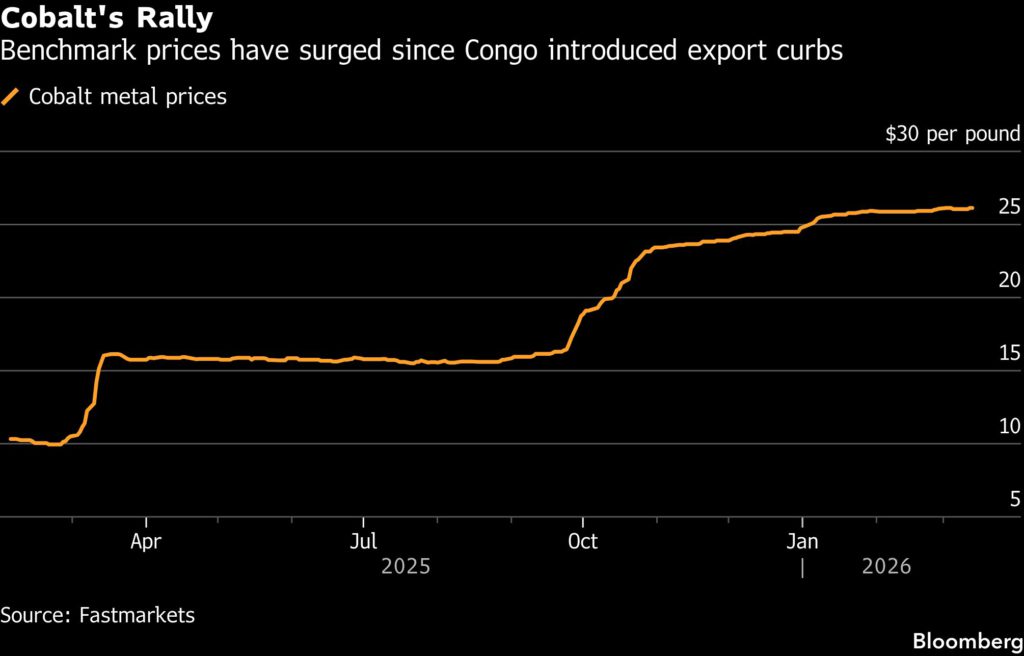
Global refined cobalt output declined by about a fifth in 2025, marking the first drop in five years. While the specialist trading house sees a smaller deficit this year, it predicts shortages to persist each year through 2030.
“Downstream markets are starting to see growing price pressures as the impact of raw material shortages deepens across the cobalt supply chain,” Darton said. It added that the revised market outlook suggests that Congo may this year “opt to ease export quotas to mitigate the risk of demand destruction while maximizing revenue in a higher-priced, tightly supplied market environment.”
Despite the export ban being replaced by quotas, exports didn’t resume until recently due to delays in implementing new procedures. Darton said the first arrivals of raw material in China are expected around May or June, with imports of mixed hydroxide precipitate — a form of nickel that contains cobalt — from Indonesia seen growing.
Still, Darton flagged increasing risks from such so-called MHP production in Indonesia despite its growth potential, including sulfur disruptions, ore availability and environmental concerns in the Southeast Asian country.
“The fallout of DRC’s export restrictions have highlighted the vulnerability of the cobalt supply chain, prompting increased investment in product diversification and material substitution,” it wrote. “These are developments that can ultimately dampen demand growth in certain end-use markets.”
(By Annie Lee)
{{ commodity.name }}
{{ post.title }}
{{ post.date }}



Comments