Codelco collapse was likely caused by mining rather than nature
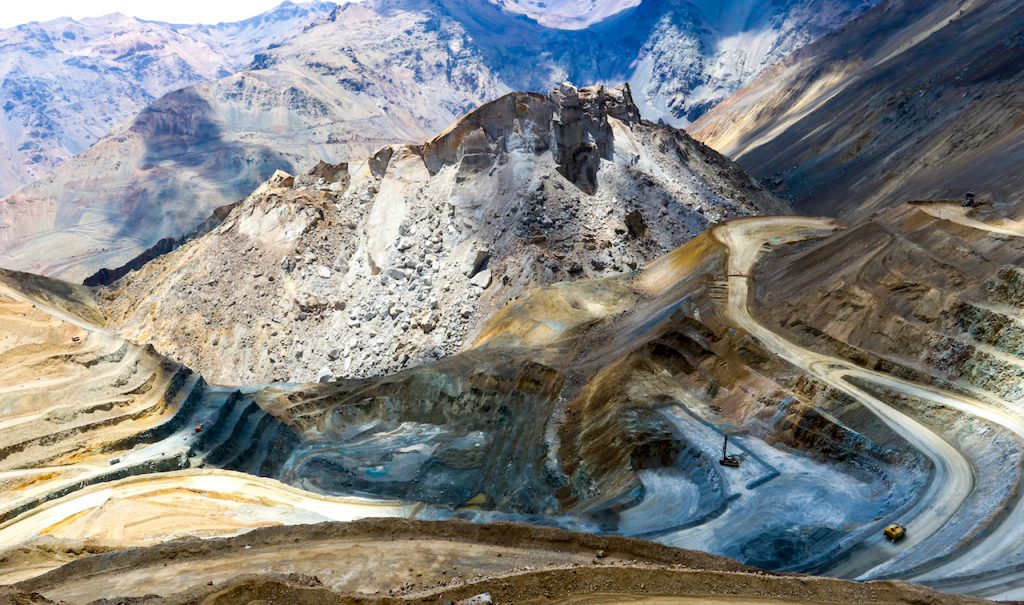
The seismic event that caused a fatal collapse at Codelco’s biggest mine in Chile is likely to have been caused by mining activity rather than nature, according to a person with direct knowledge of the matter.
The probable scenario being used inside Codelco is that the incident was caused by geological stresses resulting from the project’s own extraction processes rather than any naturally occurring shifting of tectonic plates, the person said, asking not to be identified given an investigation is ongoing.
El Teniente, one of the world’s biggest underground copper mines, has been halted since July 31, when six workers died and nine others were injured following a 4.2-magnitude event that caused part of the operation to collapse. The tremor affected a newly developed area known as Andesita.
The accident has rocked the mining industry in Chile, where projects need to be built to withstand frequent and sometimes massive seismic activity. State-owned Codelco has filed a request to restart parts of the mine while it carries out an investigation into the cause of the incident.
The scenario that Codelco is leaning toward is one shared by many industry experts. Nicolas Munoz, a copper supply analyst from consultancy CRU, also thinks the seismic activity was likely self-induced.
As the so-called panel-caving method used at El Teniente routinely involves the controlled collapse of depleted areas of the mine, this, combined with simultaneous mining activities in other areas, could have increased stress within the ore-body, said Munoz, who previously worked as an engineering contractor on projects including El Teniente.
“In some cases, parts of the rock cannot accommodate the new stress regime and fail suddenly, releasing stored energy as seismic events,” Munoz said. These so-called rock-bursts are very hard to predict in deep and highly active mines, he said.
Other than the nature of the seismic event, a major question is whether it is safe to restart underground mining at El Teniente, which accounts for a quarter of Codelco’s copper output. A one-day suspension could bring a loss of about 750 tons copper, or roughly $7.5 million of revenues, according to CRU.
As Codelco seeks to restart in unaffected areas, the damage from last week’s collapse appears to be much greater than first thought. The Public Prosecutor’s Office said Thursday that 3,700 meters (12,000 feet) of tunnel were affected in Andesita as well as in the Recursos Norte section of the mine. That would be more than five times initial calculations provided by Codelco of 300 meters of severe damage and another 400 meters of moderate damage.
If Chilean authorities order the mine to remain closed until investigations are complete, the lost production would heap financial pressure on indebted Codelco, which has major spending commitments and faltering output.
To restart the mine, Codelco has to satisfy regulators and unions that the whole of the underground operation is stable, not only the affected areas. A comprehensive review of the mine’s current plans, particularly the design assumptions and safety criteria applied in all key zones will be needed, Munoz said.
In May, seismic activity leading to flooding at Kamoa Kakula — the biggest copper mine in Africa — was also found to be self-induced, according to its operator Ivanhoe Mines Ltd. Ivanhoe plans to stabilize the flooded section of the mine by installing larger structural pillars, while speeding up construction in another section to keep producing copper.
But Munoz said this solution is not applicable at El Teniente, which reaches depths of 1,200 meters (3,936 feet) and had seen significant rockfalls in areas like Andesita.
The collapse at Andesita — a relatively small section of El Teniente that was originally scheduled to produce 10,000 tons of copper this year — raises the possibility of Codelco changing its mining plan. But there would be many limitations.
If the company prioritizes extracting copper from Andes Norte — a section 300 meters below Andesita that’s significantly larger and seen as the future of El Teniente — it has the potential to generate 130,000 tons a year when fully ramped up.
Blasting began in late May this year and construction is complete, but the panel caving mining method is a limiting factor, according to Munoz.
“While there may be interest in increasing activity at Andes Norte, doing so could be technically challenging,” he said. “Additionally, Andes Norte is part of the deeper mining levels that have experienced rock bursts in the past, meaning that any effort to accelerate production may be constrained and could introduce additional operational risks.”
Munoz concludes that while there may be opportunities to reorganize the mine plan, they seem unlikely to result in substantial production gains in the short term.
In the meantime, ore stockpiles feeding El Teniente’s converter facility have already run out, with the plant currently on maintenance.
El Teniente’s output is typically feedstock to make so-called ENM copper, a brand of cathodes eligible for delivery against London Metal Exchange and Chicago Mercantile Exchange contracts.
(By Julian Luk and James Attwood)
Read More: As rescue ends in tragedy, Codelco asks experts what went wrong
{{ commodity.name }}
{{ post.title }}
{{ post.date }}

Comments