Column: Aluminum’s years of plenty are drawing to a close
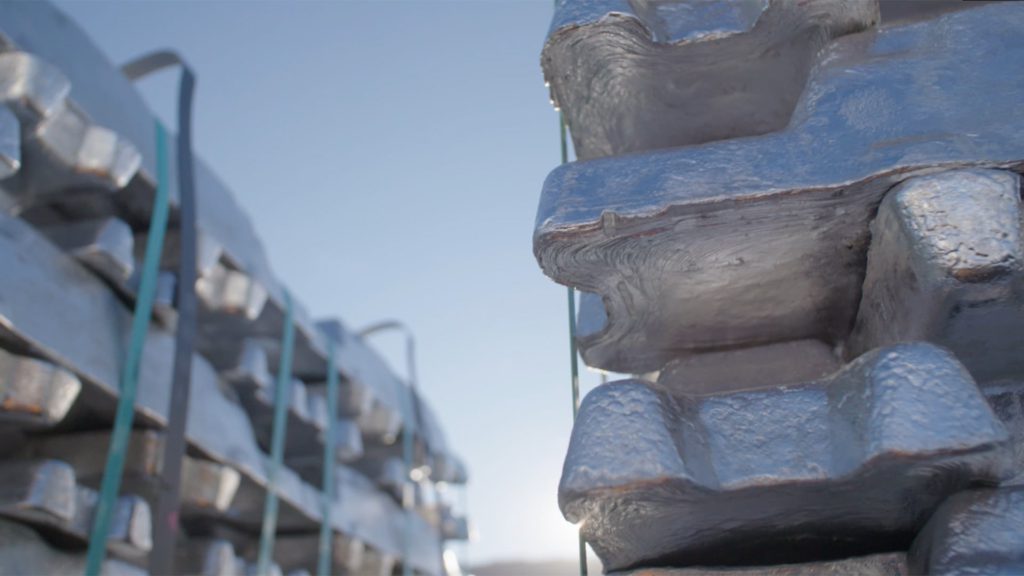
The global aluminum market has been in structural supply surplus for so long that it’s hard to imagine a genuine shortage of the light metal.
Sure, there have been periodic squeezes on the London Metal Exchange (LME) contract over the years and another one is roiling the market right now.
But these have been clashes between traders and banks tussling over control of LME inventory. The stocks financing trade, and its multiple warehousing spin-offs, is predicated on there being lots of surplus metal to play with.
That, however, may be changing.
Indeed, if you believe Citi, this is a market that is “sleepwalking into the biggest deficits in 20 years”.
It’s a punchy call, as is the bank’s expectation that the price will have to rise from its current level around $2,700 per metric ton to over $3,000 and stay there to stop the world running out of metal.
So how come a market defined by historical excess is now facing imminent shortfall?

China hits the ceiling
The answer lies in China.
China’s production of primary aluminum has grown from four million tons in 2002 to 43 million tons in 2024. The country now accounts for 60% of global output.
China has also become the world’s largest aluminum consumer over the same time-frame but persistent over-production has spilled out in the form of semi-manufactured products. Exports last year hit a new record of 6.7 million tons.
China, however, is fast approaching peak aluminum thanks to the government’s mandated capacity cap of 45 million tons per year. August output was equivalent to 44.5 million tons, according to consultancy AZ Global.
Some further output flex is possible if operators increase smelter amperage. But with Beijing showing no sign of adjusting the cap, the country’s seemingly relentless production growth is shuddering to a halt.

China’s aluminum trade patterns are adjusting to the new reality.
Exports of products such as rod, tube and foil fell by 9% year-on-year in the first seven months of the year. Imports of primary metal, on the other hand, rose by 11% to 1.5 million tons on the back of a near doubling in shipments from Russia.
Stocks depletion
Sanctions on Russian aluminum mean the metal can’t be delivered to the LME if it was produced after April 2024, which is why so much is now going to meet China’s import demand.
The diversion of what was once one of the exchange’s main sources of physical liquidity has contributed to falling exchange stocks.
What’s noticeable, though, is the absence of any significant new inflow from other sources even though the market has been in the grip of a dominant long position since May.

The warranting of 156,000 tons of aluminum between the end of June and the middle of August flattered to deceive.
Just about all the metal that “arrived” was drawn down from off-warrant stocks in the LME system.
Total LME aluminum stocks, registered and off-warrant, have held steady just above the 700,000-ton mark since May. There were over a million tons this time last year. Four years ago there were over three million tons.
The stocks games are continuing, judging by the cancellation of almost 100,000 tons earlier this month, but the exchange liquidity pool is much smaller than it once was.
All eyes on Indonesia
It is the combination of stalled production growth in the world’s largest supplier and low exchange inventory that has got analysts such as Citi reassessing aluminum’s outlook over the coming years.
Outside of China, primary aluminum production has been in long-term decline, not least due to China’s massive exports, long a bone of contention with Western governments.
True, US President Donald Trump’s decision to hike US import tariffs to 50% may encourage some limited restarts of smelter capacity in the United States.
But elsewhere others are struggling to stay afloat in the face of high energy costs. South32 warned last month that it may close its smelter in Mozambique if it can’t secure a viable power contract by the end of next year.
New primary supply hopes rest almost exclusively on Indonesia, where Chinese companies are investing in new smelters in a collective off-shoring from capacity-capped China.
On paper the project pipeline could deliver seven million tons of new capacity over the second half of this decade. In reality, that’s highly unlikely.
New aluminum smelters will either have to compete with other sectors for energy supplies or build their own captive power plants.
Current pricing makes the latter challenging, according to Citi, which expects Indonesian capacity to reach only 2.3 million tons per year by 2030.
Crisis of a different kind
That may not be enough to keep up with global demand growth, which is getting a booster from aluminum’s usage in energy transition sectors such as solar and electric vehicles. Hence Citi’s call for a structural shift to higher pricing over a five-year horizon.
The concept of a deficit market is a novelty for the aluminum market.
Past crises have been caused by too much rather than too little metal.
Back in the 1990s it was the flood of aluminum that poured through the broken Iron Curtain after the collapse of the Soviet Union. This century it’s been China’s massive over-production that has led to low prices and a string of smelter casualties in the rest of the world.
The next aluminum crisis, though, is shaping up to be altogether different.
(The opinions expressed here are those of the author, Andy Home, a columnist for Reuters.)
(Editing by Louise Heavens)
{{ commodity.name }}
{{ post.title }}
{{ post.date }}



2 Comments
Armando Herrera
I agree that the aluminum market is nearing a structural deficit, and we’re already seeing cost pressures mount due to tightening supply chains and growing volatility. With China reaching its production cap, long-term sourcing strategies must adapt to constrained availability and sustained price increases. For project managers, this reinforces the need for proactive risk mitigation and supplier diversification to protect timelines and budgets. In my view, this shift also presents a strategic opportunity to invest in expanding local production capacity across North America, strengthening regional resilience in the face of global uncertainty.
Armando Herrera
I agree that the aluminum market is getting close to have a structural deficit, and we’re already seeing costs increasing due to the stress on supply chains to keep up with the demand. With China reaching its production cap, long-term sourcing strategies must adapt to constrained availability and sustained price increases. Front my point of view, this shift also presents a strategic opportunity to invest in expanding local production capacity across North America, strengthening regional resilience in the face of global uncertainty.