Column: Can the Congo tame the wild cobalt market?
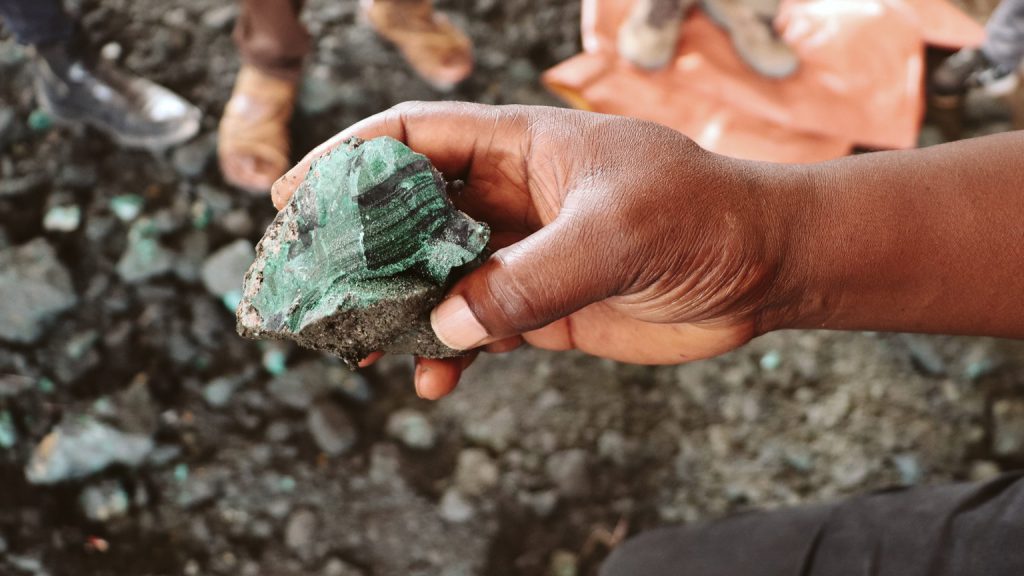
The Democratic Republic of Congo’s (DRC) February ban on exports of cobalt has put a hard floor beneath the price of the battery metal.
Now the world’s largest producer is looking to go further, leveraging its unique geology to tame a notoriously volatile market.
Export quotas have been set for the remainder of this year and both 2026 and 2027. The volumes are less than half of last year’s production and the stated intention is to force a reduction in global stocks that have accumulated from consecutive years of surplus.
Congo’s state minerals regulator ARECOMS has the right to adjust those quotas on a quarterly basis and also to buy any production surplus to export allowances, setting the stage for a government-backed cobalt buffer stock.
This is shaping up to be a long-term market control project but the history of similar enterprises has not always been a happy one.

Stemming the flood
Congo produced some 220,000 metric tons of cobalt last year in the form of cobalt hydroxide shipped to China for refining.
Output has more than doubled over the last five years, outpacing global demand growth. The resulting surplus caused cobalt prices to sink to ten-year lows at the start of 2025, the latest slump in a history of boom-bust pricing.
The February export ban boosted the price of cobalt metal by almost 50% with the price of hydroxide more than doubling, according to consultancy Benchmark Mineral Intelligence (BMI).
The imposition of export quotas effective next week has given it another lift. London Metal Exchange cobalt is now trading at $38,960 per ton, the highest level since February 2023.
The quotas, capped at 96,600 tons per year in both 2026 and 2027 change the market landscape.
Left unchanged, the restrictions on Congo exports would transform the 2025-2027 market balance from a period of yet more supply surplus to one of deficit, resulting in a steady reduction in supply-chain inventory, according to BMI.
The DRC government has exempted small operators and processing plants without captive mines, which may provide some supply flex.
But not much. The country’s informal cobalt mining sector is much reduced after three years of sliding prices.
Buffer stocks
The export quota is split between a base level of 87,000 tons, allocated to producers based on historical exports, and a strategic quota of 9,600 tons reserved for Congo’s state minerals regulator ARECOMS.
ARECOMS is empowered to buy back any cobalt produced over and above each operator’s export allowance.
In-country stocks have already built up since exports were halted in February. China’s CMOC, the world’s largest producer thanks to its huge Congolese copper-cobalt operations, reported cobalt inventory of 57,000 tons at the end of the second quarter.
It and other operators will have to decide whether to trim cobalt output to match individual export allowances, so far unannounced, or continue producing.
No-one’s going to stop mining the copper given the red metal’s current elevated pricing, but is it worth running the cobalt by-product through a hydroxide line if it can’t be exported?
Each company will have its own unique set of economic calculations, meaning it’s difficult to say how much material may be available for government purchase.
But the underlying intention is clearly to establish ARECOMS as a market balance mechanism, buying up surplus material when prices are low and releasing it when prices get too high.
Total control?
There is a long history of commodity producer attempts to control market pricing. OPEC is still a powerful influence on the oil price but state-backed structures to manage the coffee and tin markets collapsed in the 1980s.
The bankruptcy of the tin buffer stock manager still looms large in the history of market control failures. The 1985 tin crisis almost broke the London Metal Exchange and resulted in years of legal wrangling.
The scheme, backed by multiple producer and consumer countries, was too inflexible to bend to changing market dynamics and ended up collapsing under the weight of surplus stock.
The DRC has a big advantage in the scale of its control of the global supply chain. The country accounts for more than 70% of output and has by far the biggest reserves.
It also has market dynamics on its side. Cobalt consumption is still growing at a healthy clip despite the metal’s challenge from alternative battery chemistries. One of the tin buffer stock manager’s headaches was a weakening demand profile as aluminum and plastics eroded tin usage in the all-important packaging sector.
Moreover, governments are rushing to build strategic stocks of a metal most classify as critical for both military and civilian reasons.
China has been a significant strategic cobalt buyer over the last couple of years and the United States’ Defense Logistics Agency is tendering for up to 7,500 tons of alloy-grade metal over the next five years.
Against such a market backdrop, the Congo has enough muscle not just to engineer a floor price but to force a much-needed de-stock along the length of the process chain.
The real challenge, though, will be managing the resulting price upside.
If cobalt prices rise too far and too fast, as they have done twice in the last ten years, any Congolese buffer stock manager will face the problematic combination of simultaneous demand destruction and price-induced supply growth in the rest of the world.
As management of the tin buffer stock in the 1980s showed, even with state backing, controlling a market is a tricky balancing act, particularly if it is a market with a history of wildness.
(The opinions expressed here are those of the author, Andy Home, a columnist for Reuters.)
(Editing by Jane Merriman)

{{ commodity.name }}
{{ post.title }}
{{ post.date }}



Comments