Column: Congo’s cobalt curbs expose China’s critical metals weak spot
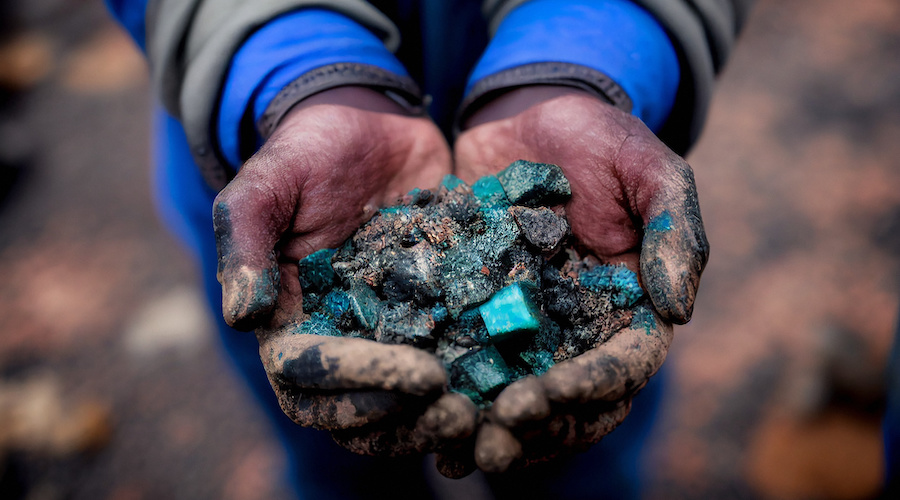
China’s dominance of critical mineral supply chains is not as absolute as it may appear.
Cobalt is a case in point.
China accounted for 78% of global refined output of the battery metal in 2024, according to the International Energy Agency. But it lacks significant domestic mining capacity, leaving it highly dependent on imports of raw materials.
That vulnerability has been exposed by the export controls imposed by the Democratic Republic of Congo, the largest source of cobalt intermediate products for Chinese processors.
Congo suspended cobalt exports in February last year and introduced a quota system in October.
Shipments to China then ground to a near standstill over the fourth quarter of last year, with local prices now surging amid a scramble for units.
Competition for Congolese cobalt is only going to heat up as the US tries to loosen China’s grip on the country’s mineral riches.

Export controls
Congo set export quotas at 18,125 metric tons for the fourth quarter of 2025 and 96,600 tons, including a 10% strategic allocation, for this year.
Delays in implementing the new scheme caused export shipments to grind to a complete halt in the final three months of last year.
The first truck carrying cobalt only left the country in January, according to consultancy Benchmark Mineral Intelligence (BMI), writing for The Cobalt Institute.
Operators will be allowed to roll their Q4 2025 quotas into this year but with export shipments typically taking three months to make it to China, the country is facing a period of acute supply tightness.

Pinch point
The price of refined cobalt traded on the CME has surged from $10 per lb. in early 2025 to $25 thanks to Congo’s export controls.
But that is only part of the story.
Intermediate products such as Congolese hydroxide are priced on the basis of the cobalt content. This “payable” was trading at around 55% of the metal price in February. It is now regularly quoted at an unprecedented 100%.
The squeeze on intermediate products has forced buyers to turn to cobalt metal stocks held by China’s Wuxi Stainless Steel Exchange, the country’s foremost cobalt trading venue.
More than 3,250 tons of cobalt metal, or 37% of exchange stocks, were taken out of Wuxi registered warehouses at the end of January.
China’s problem is that there are few alternative suppliers to the Congo.
The main one is Indonesia, where cobalt is mined as a by-product of nickel. But even allowing for increased Indonesian production this year, it won’t be enough to fill the gap left by Congo’s restricted export flows, according to BMI.
Competition
China has until now been the dominant operator in Congo, sourcing both copper and cobalt raw materials for its domestic smelters and refineries.
That’s changing.
Congo’s cobalt export controls are part of a bigger restructuring of its mineral sector as the country seeks to earn more from its natural resources wealth.
The US has helped mediate a peace deal between Kinshasa and Rwanda to stop the fighting that has engulfed Congo’s eastern regions.
The deal has opened the country up to US investment. The US International Development Finance Corporation announced in December plans to take a stake in a new joint venture to market the government’s share of copper and cobalt. US buyers will have the right of first refusal.
Central to US policy in central Africa is the new rail link between Congo and the Angolan port of Lobito, a strategic corridor rivaling the alternative Chinese-backed railway to Dar es Salaam in Tanzania.
Chinese cobalt buyers are facing not just lower imports from the Congo but increased competition for what is being mined.
Achilles’ heel
Mining is China’s Achilles’ heel when it comes to controlling the global cobalt chain.
The same is true of many other critical minerals, including even rare earths.
While China is the world’s largest miner of rare earths it is by no means completely self-sufficient, relying on imports of raw materials from its neighbour Myanmar for heavy rare earths such as dysprosium and terbium.
As China’s own demand for raw materials grows, it will become even more dependent on third parties to supply the mining inputs.
That dependence is going to be increasingly problematic as China’s cobalt buyers are finding out.
(The opinions expressed here are those of the author, Andy Home, a columnist for Reuters.)
(Editing by Marguerita Choy)
{{ commodity.name }}
{{ post.title }}
{{ post.date }}
Comments