Column: EV revolution rolls on but battery metals lose their charge
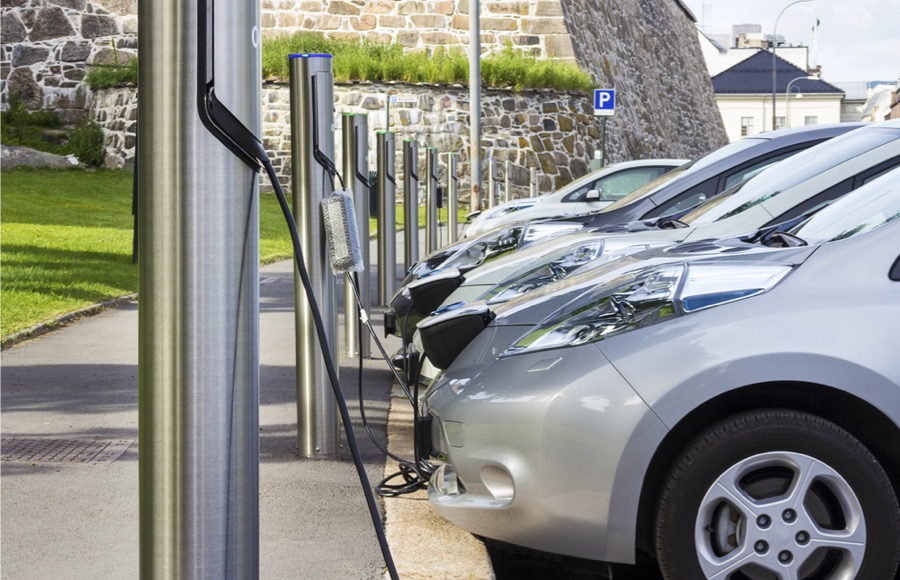

It’s been a third tough year for battery metals such as lithium, nickel and cobalt as all three markets struggle to absorb the wave of supply that followed the 2022 price boom.
Yet the electric vehicle (EV) revolution rolls on. Demand for batteries and the metals that make them work is still growing at a super-charged pace.
It should only be a matter of time before demand momentum absorbs the current supply glut.
At least that was the hope.
Chinese companies, however, are embarked on a simultaneous technological revolution as they strive to develop ever more powerful batteries at ever lower cost.
Battery chemistry is evolving fast and it’s already clear that not every battery metal is going to be a winner in the intense competition between materials.

China powers on
The road to electrification may be currently bumpy. US President Donald Trump has rolled back the Biden administration’s EV subsidy schemes, and the European Union has deferred its phase-out of combustion-engine vehicles beyond 2035.
But the underlying momentum is undiminished. Global EV sales increased by 21% year-on-year to 18.5 million vehicles in the first 11 months of 2025, according to consultancy Rho Motion.
China remains the driver of the global technology shift. The world’s largest EV market has grown by another 19% this year, accounting for 62% of global sales.
It should therefore be no great surprise that it is Chinese companies that are at the forefront of the revolution in battery chemistry.
The Chinese EV market is now dominated by batteries using lithium-iron-phosphate (LFP) chemistry. They are safer and cheaper than those using a combination of nickel, cobalt and manganese (NCM) and the performance gap is steadily narrowing.
LFP accounted for 48% of global EV batteries last year. Macquarie Bank expects that share to rise to 65% by 2029, a sharp upwards revision from its previous 49% forecast.
Nickel and cobalt in the slow lane
This is clearly not good news for either Indonesia or the Democratic Republic of the Congo, the world’s largest producers of nickel and cobalt respectively.
Indonesia has failed to temper its production growth to reflect the new battery reality, generating a tsunami of surplus metal.
Ever more of the country’s nickel has been heading for a London Metal Exchange (LME) warehouse rather than a battery precursor plant.

LME warehouse stocks – registered and off-warrant – have mushroomed to 338,900 tons.
The LME nickel price has this month broken below long-term support at $15,000 per ton for only the second time since 2021, piling more pressure on Indonesian policy-makers to restrain the country’s nickel boom.
The cobalt market is in a similar state of chronic oversupply and prices were equally bombed out before Congo suspended exports in February and introduced a quota system in October.
Slow implementation of the new rules has brought shipments of cobalt intermediates to Chinese refineries to a complete halt.

Congo’s supply discipline risks becoming a supply shock. That could prove costly for a metal that is already struggling to hold its share even within nickel‑based battery chemistries.
Automakers are understandably wary of cobalt’s history of price volatility and the ethical problems associated with Congo’s artisanal mining sector.
This year’s events will only reinforce those concerns and risk accelerating attempts to engineer cobalt out of the battery equation.

Lithium dominant … for now
Lithium remains the dominant metal in batteries and China’s pivot to LFP chemistry reinforces its centrality.
Consultancy Adamas Intelligence estimates 60,900 tons of lithium were deployed onto roads globally in September, a 25% year‑on‑year increase that matches the growth rate of total battery deployment. Cobalt and nickel lagged with deployment growth of 15% and 10% respectively.
But lithium itself is facing a new battery challenge.
Chinese battery giant CATL has been pioneering the development of sodium-ion batteries. The latest iteration, Naxtra, will almost match the efficiency of LFP batteries that are displacing NCM chemistries and does so at a lower cost.
CATL’s billionaire founder Robin Zeng sees sodium-ion batteries potentially replacing up to half the market for LFP batteries.
Fortunately for lithium producers, the metal is the material of choice for power-grid storage batteries, a rapidly growing source of demand.
Global installations of battery energy storage systems jumped by 38% year-on-year in the first 10 months of 2025, according to analysts at Benchmark Mineral Intelligence.
Reflecting this shift from road to grid, Ford Motor has just announced a $19.5 billion charge on EV investments, while simultaneously committing $2 billion to batteries for energy storage systems.
Hard wired
The EV battery materials landscape has changed markedly since 2022, when lithium, nickel and cobalt prices were all surging on the assumption that this trio would be core to electric mobility.
That is no longer a certainty. Battery chemistry is still evolving at breakneck speed on the back of unprecedented research and development.
It is almost impossible to predict what will be powering electric vehicles in 10 years’ time.
One thing is for sure though: Copper will still be essential to wiring both vehicle and charging infrastructure. It is also highly likely that aluminum will remain the material of choice for body frames, thanks to its light weight.
While the fortunes of battery metals are dependent on the continuously evolving cathode mix, the ultimate metallic winners in the EV revolution might be those that enable, rather than directly power the vehicle.
(The opinions expressed here are those of the author, Andy Home, a columnist for Reuters.)
(Editing by Marguerita Choy)
{{ commodity.name }}
{{ post.title }}
{{ post.date }}

Comments
Mediacritic
From what I am reading newer chemistries are filling niche markets. Stationary storage is likely to be dominated for grid battery storage using Na chemistry.. NMC chemistries for high performance EVs. LFP for cheap budget EVs. Silver chemistries for very long life and regular deep discharge applications and so on.
In a practical sense you can see this with Teslas already. The base model 3 uses a 62kWh LFP for 500km range at only 175kW/hr charging speed but its cheap. The base model long range uses a 72kWh LMC gets 750km but charges at 250kW/hr. Horses for courses helping supply chains to not get over burdened with electrification of everything.