Column: India’s sponge iron boom rides to rescue South African coal
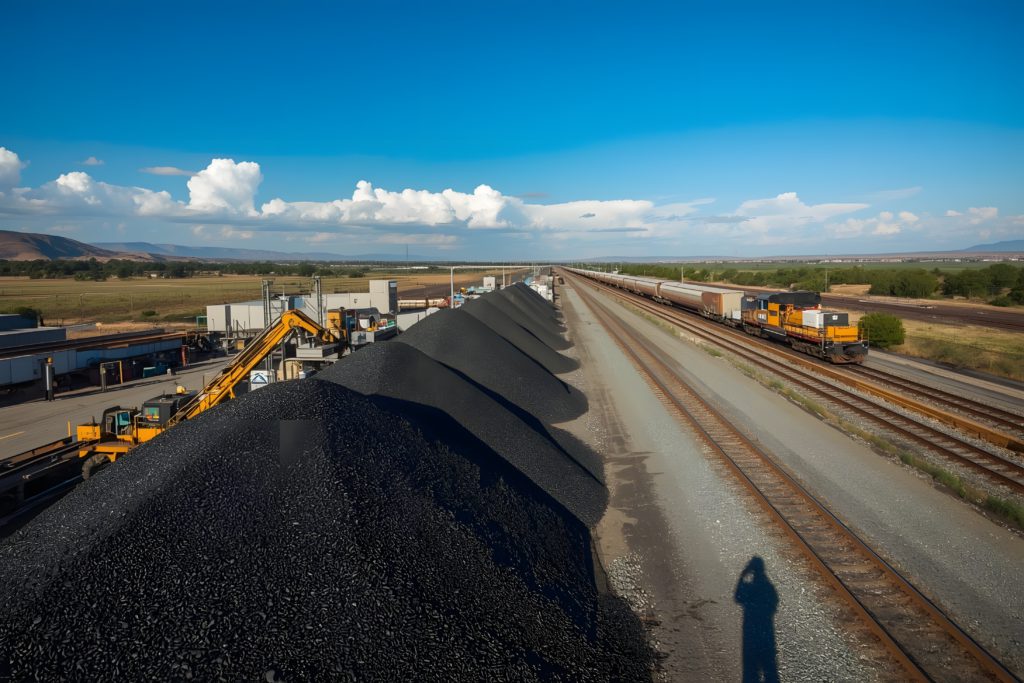
Finding bullish exporters of thermal coal has been tricky of late given soft prices, lower demand from heavyweight buyers China and India, and for Indonesian miners an additional headache of uncertainty over government policy.
But there is one group of coal exporters that seem quite ebullient. South Africa’s miners are looking forward to increased demand from their top buyer India as well as improving rail infrastructure that will allow for higher volumes.
However, the coal that South African producers see strong demand for is not for the traditional use of generating electricity; rather, it is for industrial processes such as making sponge iron and cement.
The upbeat mood was very much in evidence at the South African Coal Conference, organized by McCloskey by OPIS last week in Cape Town.
The basic message was that South Africa’s rail network is finally being restored, with as much as 6 million metric tons more coal expected to be moved in 2026.
South Africa’s coal exports were 60.96 million tons in 2025, according to data compiled by commodity analysts Kpler, with half going to India.
This was up from 58.13 million tons in 2024 and marked a third straight year of gains, although it should be noted that they are still shy of the 77.2 million recorded in 2018.
If South Africa’s miners can lift exports to around 65 million tons in 2026, they are confident that they have a growing market for their product.
India is the world’s largest producer of sponge iron, an intermediate product between iron ore and crude steel.
It produced about 55.7 million tons in the 2024-25 fiscal year, according to the Sponge Iron Manufacturers Association, and analysts have estimated this may rise to around 75 million tons by 2030 given India’s strong demand for steel.
Each ton of sponge iron requires around 1.2 tons of coal to produce, and South African coal is in the sweet spot of the type needed for the process.
Sponge iron production is generally most efficient when using coal with an energy content of around 5,000 to 5,500 kilocalories per kg (kcal/kg).
While Australian, Russian and US miners also produce similar quality coal, South Africa’s proximity to India gives it an edge on a delivered cost basis.
Indonesia, the world’s largest coal exporter, generally produces lower energy coal, which is popular with Indian electric utilities because it is cheaper than grades from other producers.
With little competition from Indonesia, South Africa is the supplier of choice to India’s sponge iron producers, who struggle to source sufficient domestic coal as policy dictates that power companies have priority.
If sponge iron production does rise by 20 million tons per annum by 2030, this implies additional coal demand of 24 million tons.
South Africa will be unable to meet this by itself, but it stands to reason that the country’s exporters will be able to sell whatever volumes they can ship given the strong demand.
Cement helps
India’s cement producers also rely on imported coal, and they also expect to increase output from 453 million tons in the 2024-25 fiscal year to around 480 million in the current 12-month period.
While cement production is less coal-intensive than sponge iron, it takes up to 250 kg of coal to make a ton of cement.
This implies that rising cement output will boost India’s coal demand by several million tons a year, and the domestic market is unlikely to be able to meet all the demand growth, meaning imports will once again come to the fore.
The question is whether this demand will spark a rally in coal prices, which dropped to four-year lows in the middle of last year, and the recovery since then has been modest.
Much will depend on coal demand for the grades produced by South Africa, and that means China and the developed economies of North Asia such as Japan and South Korea will be key.
It’s likely that demand for higher quality thermal coal from these countries will be flat to trending weaker as Japan and South Korea limit coal-fired power generation and China continues to roll out renewables at a rapid pace.
But even if seaborne prices are relatively stable, South Africa’s exporters should still be able to sell all they can ship given their relative advantage over their competitors.
(The views expressed here are those of the author, Clyde Russell, a columnist for Reuters.)
(Editing by Christian Schmollinger)

{{ commodity.name }}
{{ post.title }}
{{ post.date }}

Comments