Column: Iran war’s sulfurous fallout spreads to copper and nickel
(The opinions expressed here are those of Andy Home, a columnist for Reuters.)
The Iran war has already caused turmoil in the global aluminum market but now the fallout is spreading to both copper and nickel supply chains.
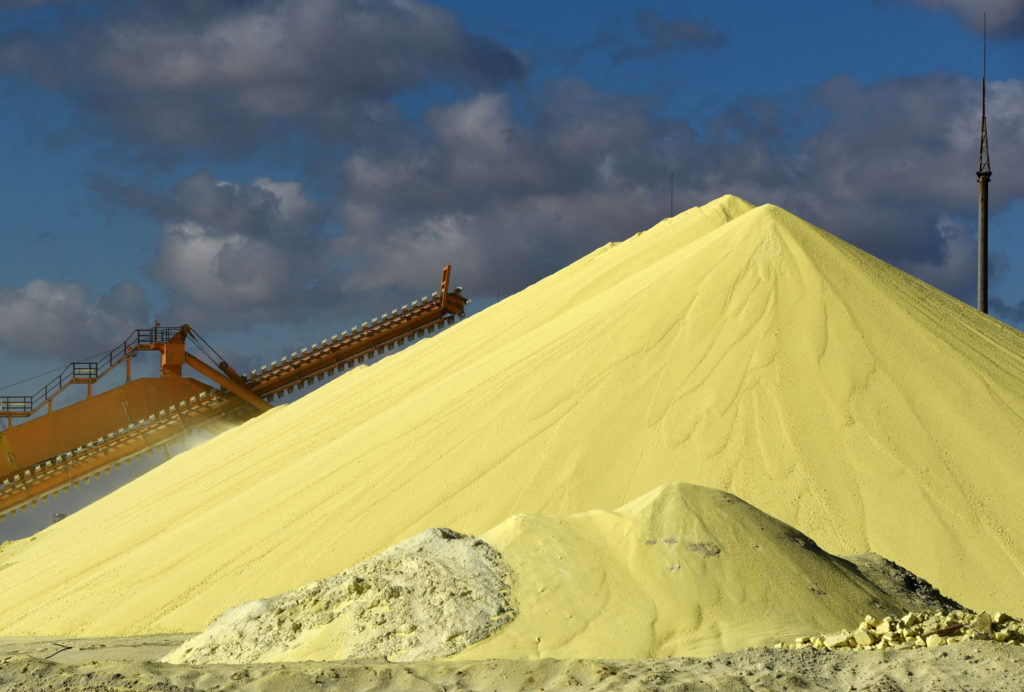
The conduit is sulfur, a by-product of the Gulf’s oil and gas industry that has been effectively trapped since the Strait of Hormuz closed on February 28. The region accounts for around a quarter of global production, according to the US Geological Survey.
Sulfuric acid is a key input for copper miners using solvent-extraction technology on oxide ores and for nickel production from high-pressure-acid-leach (HPAL) plants.
Unfortunately for metals producers, sulfur is also used for fertilizers, a sector that accounts for around two-thirds of global demand and one which governments will prioritize over everything else.
That is why China, the world’s largest sulfuric acid producer, will ban exports from next month. Turkey has already done so, according to Argus Media, and India is considering doing the same.
The result is an intensifying sulfur squeeze with prices rallying to record highs.
A multi-dimensional copper threat
Around a fifth of global primary refined copper production comes from solvent extraction and electrowinning (SX-EW) operations, which use sulfuric acid as a leaching reagent, according to the International Copper Study Group.
The Democratic Republic of Congo is particularly exposed. SX-EW technology accounts for around half of copper production in the world’s second-largest producer, and the country relies on the Gulf for the majority of its sulfur imports.
Miners are already cutting consumption to eke out chemical stocks as import prices surge, and some shipments are cancelled altogether.
China’s export ban threatens similar problems for Chilean producers. Chile generates around 1.125 million metric tons of copper through the SX-EW process and relies on China for around 20% of its sulfuric acid requirements, according to Morgan Stanley.
The leaching process is slow, which means there will be a time-lag before any tangible hit to production rates. Chile also generates its own sulfuric acid as a by-product of copper smelting, providing some cushion against import disruptions.
That cushion, though, may be a problem for China itself.
The country’s copper smelters have become increasingly reliant on sulfuric acid as a revenue generator. Treatment charges for converting concentrate to refined metal are at historic lows and trading at negative numbers, turning conventional smelter economics on their head.
The export ban is likely to stall or even reverse the rally in domestic sulfur pricing.
That’s good news for the country’s agricultural sector but spells trouble for its copper smelters, some of which are expected to trim output or take maintenance downtime in the weeks and months ahead.
Indonesian nickel producers
Indonesia, the world’s largest nickel producer, is also a major importer of sulfur, sourcing around 75% of its requirements from the Middle East. It also imports sulfuric acid from China.
The HPAL production process needs 25 to 30 tons of acid, equivalent to around 10 tons of sulfur, to generate one ton of mixed hydroxide precipitate (MHP), an intermediate product containing both nickel and cobalt, Morgan Stanley estimates.
MHP production was around 450,000 tons last year and was expected to rise by another 100,000 tons this year as new projects ramp up, according to Macquarie.
The flow-through from the sulfur squeeze to nickel production will play out faster than in the copper market. With stocks already low, some Indonesian producers have started to reduce run-rates.
Cost impact
It remains to be seen just how big an impact the unfolding sulfur squeeze has on global output of either nickel or copper. But the effect on production costs is more certain.
Macquarie estimates that the rise in sulfur prices since the start of the year has added $4,000 per ton to Indonesian HPAL nickel production costs, lifting the cost curve to $14,500 to $18,000 per ton.
That helps explain this week’s sharp jump in the London Metal Exchange (LME) nickel price to an 11-week high of $18,655 per ton.
Natixis, meanwhile, calculates that sulfur accounts for 20% of cash production costs for Congo’s SX-EW copper producers. The bank estimates that every $100-per-ton rise in the sulfur price translates into a 4% rise in cash operating costs.
Those numbers are now feeding into copper’s bull narrative, helping lift the LME three-month price back above the $13,000-per-ton level for the first time in a month.
Clearly much now depends on whether the just-announced 10-day ceasefire leads to a lasting peace deal and the full reopening of the Strait of Hormuz.
Even then, copper and nickel producers will be competing with agriculture for sulfur supplies. There’s always only going to be one winner in that particular race.
More News

Bomb attack damages Ecuador mining agency probing illegal gold
It’s the second blast in recent weeks affecting Arcom offices.
June 29, 2026 | 12:28 pm
{{ commodity.name }}
{{ post.title }}
{{ post.date }}
Comments