Column: Resurgent London Metal Exchange rides speculative tsunami
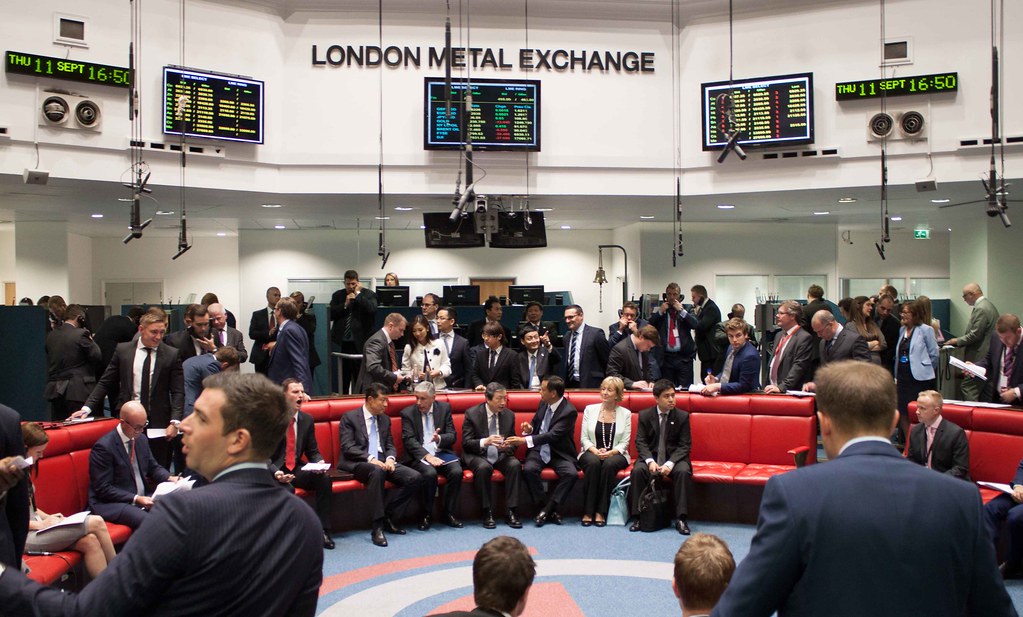
The London Metal Exchange (LME) posted record trading volumes last year, a remarkable recovery from the dark days of the nickel crisis four years ago, when the venerable 149-year-old institution was teetering on the brink of collapse.
The London market, owned by Hong Kong Exchanges and Clearing, has reaped the rewards of the physical market turbulence that has been a defining feature of US President Donald Trump’s current term in office.
Then the funds arrived.
A flood of speculative buying washed into the LME base metals complex in the fourth quarter. Average daily volumes of 777,016 contracts in the last three months of 2025 were a new quarterly record, surpassing the previous peak of 735,604 contracts back in the second quarter of 2014.
LME futures open interest ended the year up 15% relative to 2024 and at its highest level since early 2021.
The speculative fever spilled over to both China, where Shanghai Futures Exchange (ShFE) activity exploded in December, and the US, where retail investors swarmed into some of the CME’s smaller copper contracts.

Tariff boost
US import tariffs, actual in the case of aluminum and threatened in the case of copper, have had a massive impact on physical flows of metal around the world.
Copper is still being stripped out of the global supply chain to send to the US as the market bets (again) on a Trump tariff on imports of refined metal. A decision looms in June.
LME copper trading moved up a gear in February, when Trump first launched an investigation into US copper imports, and stayed there. Average daily volumes rose 12% in 2025 relative to 2024.
The CME’s flagship copper contract, by contrast, experienced a sharp 33% contraction in activity as funds took fright at the unprecedented volatility in arbitrage pricing with London.
But the US exchange enjoyed some offset from the dislocation in the aluminum market following the hike in US import tariffs to 50% in June.
CME contracts for physical aluminum premiums in the Midwest US and Europe posted record volumes last year with year-on-year growth of 47% and 72% respectively.

Return of the funds
While institutional investors remain leery of the CME copper contract, they have been flooding into the LME since September.
Renewed fund interest in the base metals complex is in part spillover from the red-hot precious metals sector but money has also been drawn in by copper’s record-breaking run and strong rallies in just about every LME metal other than lead.
The rekindled enthusiasm for all things metallic caused a step change in LME trading during the fourth quarter.
Copper and tin volumes were the highest since 2013 and 2014 respectively. Lead activity hit all-time highs and nickel posted its second-best quarterly volumes ever.
Indeed, LME nickel activity last year was the strongest since 2019, underlining the return of confidence in the London market after the 2022 crisis.
Most funds, it seems, have forgiven the exchange for cancelling nickel trades, a controversial decision that was upheld by the British High Court.

Shanghai gripped by metals fever
The metals excitement spread to China in December.
Business had been slow on the Shanghai market up until then with base metal futures volumes down across the board.
But a surge of liquidity swept through the market in the last month of 2025 as Chinese investors joined the bull party.
Aluminum volumes were the highest monthly tally in three years, nickel turnover the highest in four years and the Shanghai copper contract hasn’t seen so much action since November 2015.
A record 9 million tons of tin traded in December, prompting the state-backed China Nonferrous Metals Industry Association (CNMIA) to sternly warn against “blindly following the trend” in an “unreasonable” price rally.
Not that anyone has paid much attention. The Shanghai tin market notched up turnover of almost 739,000 tons on Tuesday, equivalent to two years’ worth of global usage.
Going small in the US
Shanghai has a long history of such speculative excess, driven by an army of retail investors trying to capture the next hot market move.
There is no equivalent in London, where very few individuals are wealthy enough to clear the credit thresholds for direct LME trading.
But there are signs that speculators are starting to join the action on the CME, not on the main copper contract but on some of the exchange’s smaller, retail-oriented products.
The CME micro copper contract, which at 2,500 lb. is a tenth the size of the primary contract, saw volumes grow 20% year-on-year to almost four million metric tons in 2025.
CME copper “event options”, which offer a simple binary punt on the underlying price, registered turnover of 31,000 lots in December, more than was traded over the whole 12 months of 2024.
These contracts, both launched in 2022, seem to be serving as a bridge for retail players to cross from investing in precious to industrial metals.
China’s CNMIA may be right to worry about excess speculation in previously fringe commodity markets such as tin but the bull narrative around industrial metals is attracting ever more converts to the metallic cause.
(The opinions expressed here are those of the author, Andy Home, a columnist for Reuters.)
(Editing by Marguerita Choy)
{{ commodity.name }}
{{ post.title }}
{{ post.date }}
Comments